

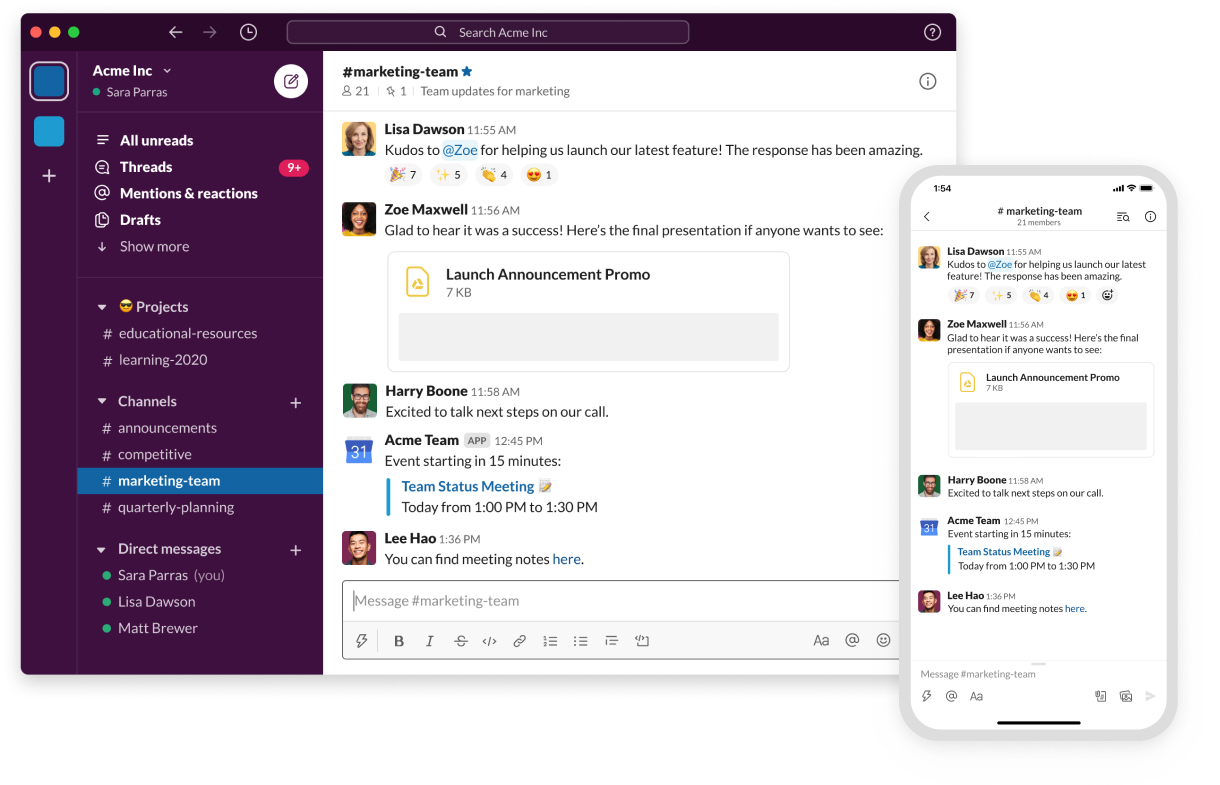
As businesses race to integrate artificial intelligence into daily operations, a growing number of executives are encouraging employees to shift workplace conversations from private Slack direct messages into public company channels. The rationale is straightforward: AI agents perform better when they have access to broader organizational context, allowing them to summarize discussions, retrieve institutional knowledge, generate presentations, write code, and answer questions with greater accuracy. Companies embracing this model argue that making internal communications more accessible strengthens collaboration and preserves corporate knowledge. Critics, however, warn that the same practices could discourage candid conversations, reduce honest brainstorming, and further erode employee privacy. The trend highlights an emerging tension between maximizing AI productivity and maintaining workplace trust, with many organizations now redefining long-standing norms surrounding internal communication.
Key Takeaways
- • Companies increasingly view employee communications as valuable organizational data that can significantly improve AI performance, leading executives to encourage public Slack discussions over private direct messages.
- • AI-powered workplace tools are evolving beyond simple chatbots, enabling organizations to search institutional knowledge, summarize meetings, generate documents, and automate knowledge retrieval in real time.
- • The growing emphasis on AI-readable communications raises legitimate concerns about employee privacy, candid discussion, and the long-term cultural effects of making more workplace conversations permanently accessible to AI systems.
In-Depth
Artificial intelligence is beginning to reshape not only how work is performed but also how employees communicate with one another. A growing number of corporate leaders believe that the traditional reliance on private workplace messaging limits the effectiveness of AI systems by trapping valuable institutional knowledge inside direct conversations that software agents cannot easily leverage.
The emerging philosophy encourages employees to conduct more discussions in open Slack channels where AI can continuously analyze conversations, summarize developments, answer questions, prepare reports, generate presentations, and preserve organizational knowledge for future use. Executives argue that this approach reduces duplicated work, accelerates onboarding, and allows AI assistants to produce more accurate results because they possess richer context about ongoing projects and company priorities. Companies adopting the strategy increasingly see communication itself as a strategic corporate asset rather than merely a method of exchanging information.
At the same time, the movement raises important questions about workplace culture. Private conversations have traditionally provided employees an opportunity to test ideas, debate strategy candidly, or discuss sensitive issues before presenting polished recommendations. Critics argue that moving those discussions into publicly searchable channels could discourage honest dialogue and reduce creativity if workers become more cautious about every message they send.
From a conservative perspective, the development also illustrates a broader reality of the AI revolution: organizations naturally seek to maximize the value of information already under their control. While improved efficiency and institutional memory are worthwhile goals, companies will likely need clear policies governing privacy, data retention, and appropriate AI access if they hope to maintain employee trust while realizing AI’s considerable productivity gains.