

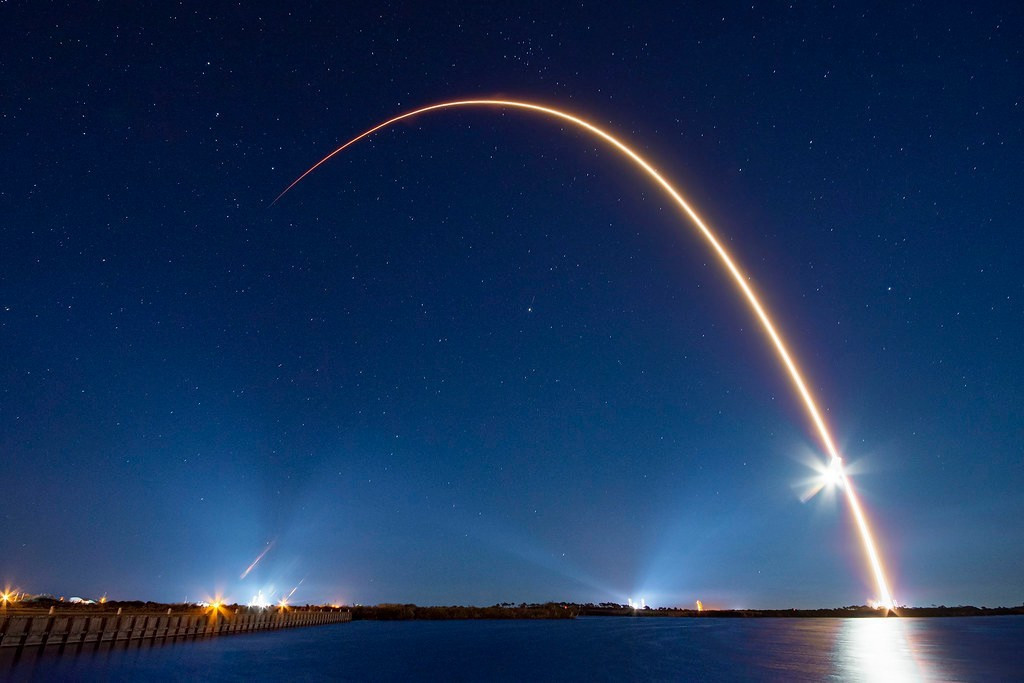
A Georgia aerospace startup is preparing to put a new form of American-made satellite protection into orbit, with Atomic-6’s lightweight Space Armor scheduled for its first operational deployment aboard Portal Space Systems’ Starburst-1 satellite on SpaceX‘s Transporter-18 mission in October. The composite tile, less than an inch thick and roughly the weight of a smartphone, is designed to withstand impacts from tiny pieces of orbital debris traveling around 17,000 miles per hour while producing far less secondary debris than traditional metallic shielding. The technology addresses an increasingly serious problem as commercial, civilian and military activity expands in low Earth orbit: millions of pieces of debris are too small to reliably track but remain capable of damaging or destroying expensive spacecraft. The flight represents an important transition from terrestrial testing to real-world orbital use and could ultimately provide American satellite operators with a lighter, more adaptable means of protecting communications, navigation, defense and other critical space infrastructure.
Key Takeaways
- Atomic-6’s Space Armor will receive its first operational orbital deployment on Portal Space Systems’ Starburst-1 satellite, scheduled to launch aboard SpaceX’s Transporter-18 mission in October 2026.
- The composite shielding is designed to protect critical spacecraft components from otherwise difficult-to-track debris while reducing the secondary fragmentation that can result when conventional metallic shielding is struck.
- The technology could have significant commercial and national-security applications as the United States becomes increasingly dependent upon satellites and other orbital infrastructure that must operate in a rapidly more congested space environment.
In-Depth
Atomic-6’s orbital deployment is a reminder that America’s expanding space economy depends not only on bigger rockets and more satellites, but on protecting the hardware already overhead. The Georgia company’s Space Armor tile is scheduled to fly aboard Portal Space Systems’ Starburst-1 satellite on SpaceX’s Transporter-18 mission in October. The lightweight composite shield is designed to absorb impacts from tiny, high-velocity debris while avoiding the secondary fragmentation associated with traditional metallic shielding.
That matters because the most dangerous orbital threats are often the ones operators cannot see coming. NASA estimates that more than 100 million debris particles larger than one millimeter orbit Earth, while hundreds of thousands more measure between one and ten centimeters. At orbital velocities, even small objects can damage fuel tanks, batteries, communications equipment and other mission-critical systems. Atomic-6 says its lighter Space Armor configuration can withstand impacts from particles up to three millimeters, the class of debris that is particularly difficult to track.
The technology also carries national-security implications. Satellites have become indispensable infrastructure for communications, navigation, intelligence, missile warning and military operations. Protecting those assets without increasing launch mass could strengthen American resilience in an increasingly contested orbital environment.
The October mission will therefore be more than a technology demonstration. It will test whether a private American composite can move from laboratory success to practical protection in orbit. If Space Armor performs as advertised, it could give commercial operators and the military another tool for defending valuable spacecraft while reducing the creation of additional debris.