

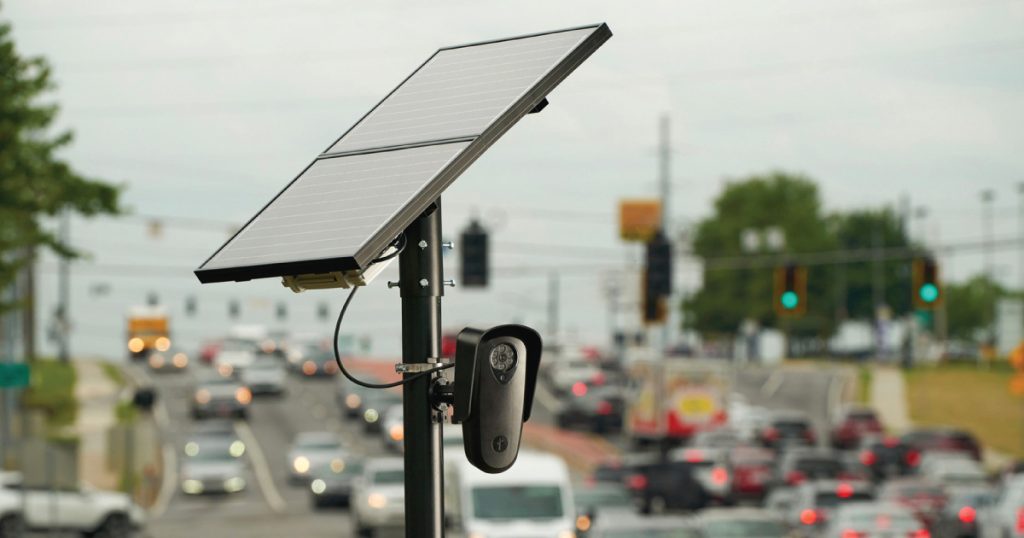
There is nothing inherently sinister about a camera photographing a license plate on a public road. Police officers have observed license plates since license plates existed. A patrol officer can see a plate, run it through a database, discover that the vehicle is stolen, and take appropriate action. Few Americans would describe that routine police work as an intolerable invasion of privacy.
Flock Safety cameras complicate that equation because they dramatically increase the government’s ability to remember, search, correlate, and reconstruct what it sees.
That distinction should be at the center of the ethical debate over automated license plate readers. The question is not simply whether police should be permitted to observe vehicles traveling on public streets. The more important question is how much information government should accumulate about innocent citizens, how easily officials should be permitted to search it, and what safeguards should exist before an ordinary law-enforcement tool becomes a mechanism for persistent surveillance.
The public-safety argument for Flock cameras is substantial. Police departments use automated license plate readers to locate stolen automobiles, identify vehicles associated with violent crimes, find missing or endangered people, and develop investigative leads. Flock says its technology records license plates, vehicle characteristics, timestamps, and camera locations rather than facial-recognition or demographic information. Searches are logged and associated with individual users, creating an audit trail that theoretically allows inappropriate searches to be identified.
Those capabilities can be extraordinarily useful. A murder suspect fleeing across several jurisdictions does not become less dangerous because he crossed a municipal boundary. Neither should investigators be forced to ignore readily available evidence merely because technology gathered it more efficiently than a police officer standing beside the highway.
Conservatives, however, should be particularly cautious about allowing the usefulness of government technology to become the sole justification for its expansion.
The American constitutional tradition does not assume that government officials will always act improperly. It recognizes that concentrated power eventually can be used improperly. The appropriate question, therefore, is not whether today’s police chief, sheriff, mayor, or prosecutor can be trusted with a surveillance system. It is whether we would be comfortable giving precisely the same capabilities to officials we distrust.
Recent allegations demonstrate that this concern is not theoretical. A former Texas police officer has been charged with allegedly using Flock cameras to track his ex-wife, while another officer in Massachusetts has faced allegations involving unauthorized database searches. Whatever the eventual outcomes of individual cases, they illustrate the fundamental problem: technology created for legitimate investigations can also provide extraordinary capabilities to someone willing to abuse his authority.
Flock has responded to growing criticism by announcing stronger safeguards. In August, the company said it was moving toward a recommended seven-day retention period, requiring case codes for law-enforcement searches, expanding mandatory misuse-detection systems, implementing automatic account lockouts when suspicious activity is detected, and strengthening security requirements. These are sensible measures.
But protecting constitutional liberty cannot ultimately be outsourced to the manufacturer.
The government agency deploying the cameras should bear the primary responsibility. Communities should know where cameras are generally deployed, what information they collect, how long information is retained, who may search it, which outside agencies can obtain access, and what happens when someone abuses the system. Searches should require documented law-enforcement purposes, and meaningful audit logs should be routinely reviewed rather than examined only after a scandal occurs.
Data sharing deserves particular scrutiny. Flock maintains that customers control their data and determine whether information is shared with other agencies, including federal authorities. That makes local policy enormously important. A camera system purchased to investigate carjackings in one community should not quietly evolve into a nationwide mechanism through which thousands of officials can reconstruct someone’s movements without meaningful limitations.
The ethical boundary should therefore be drawn around purpose, proportionality, accountability, and retention.
Police investigating serious crimes should have powerful investigative tools. Someone suspected of murder, kidnapping, human trafficking, armed robbery, or another substantial offense should not receive an artificial technological advantage because government voluntarily refuses to examine evidence legitimately collected in public.
But government should not maintain an effectively permanent record of everyone’s movements merely because storage is inexpensive and someday the information might prove useful. Nor should officers be permitted to search databases out of curiosity, personal interest, political motivation, or generalized suspicion.
That principle transcends partisan politics. Americans should not have to decide between living in dangerous communities and living under continuous government observation.
The conservative answer should be limited government rather than powerless government.
Law enforcement needs sufficient authority to pursue criminals and protect the innocent. At the same time, government power should remain defined, transparent, reviewable, and punishable when abused. Short retention periods, case-specific searches, strict access controls, independent auditing, disclosure of interagency sharing arrangements, meaningful penalties for misuse, and elected oversight can preserve much of the legitimate value of license plate readers without accepting unlimited surveillance as the inevitable price of modern policing.
Flock cameras themselves are neither the constitutional problem nor the constitutional solution. They are tools. What matters is the architecture of authority constructed around them.
Technology has given government the ability to observe and remember more than the Founders could possibly have imagined. The constitutional response should not be to reject technology, but neither should it be to surrender old principles because new technology makes surveillance convenient.
The proper boundary is straightforward: use technology aggressively against crime, cautiously around the innocent, and never without accountability.
Public safety and individual liberty are not opposing American values. A government worthy of public trust should be capable of defending both.