

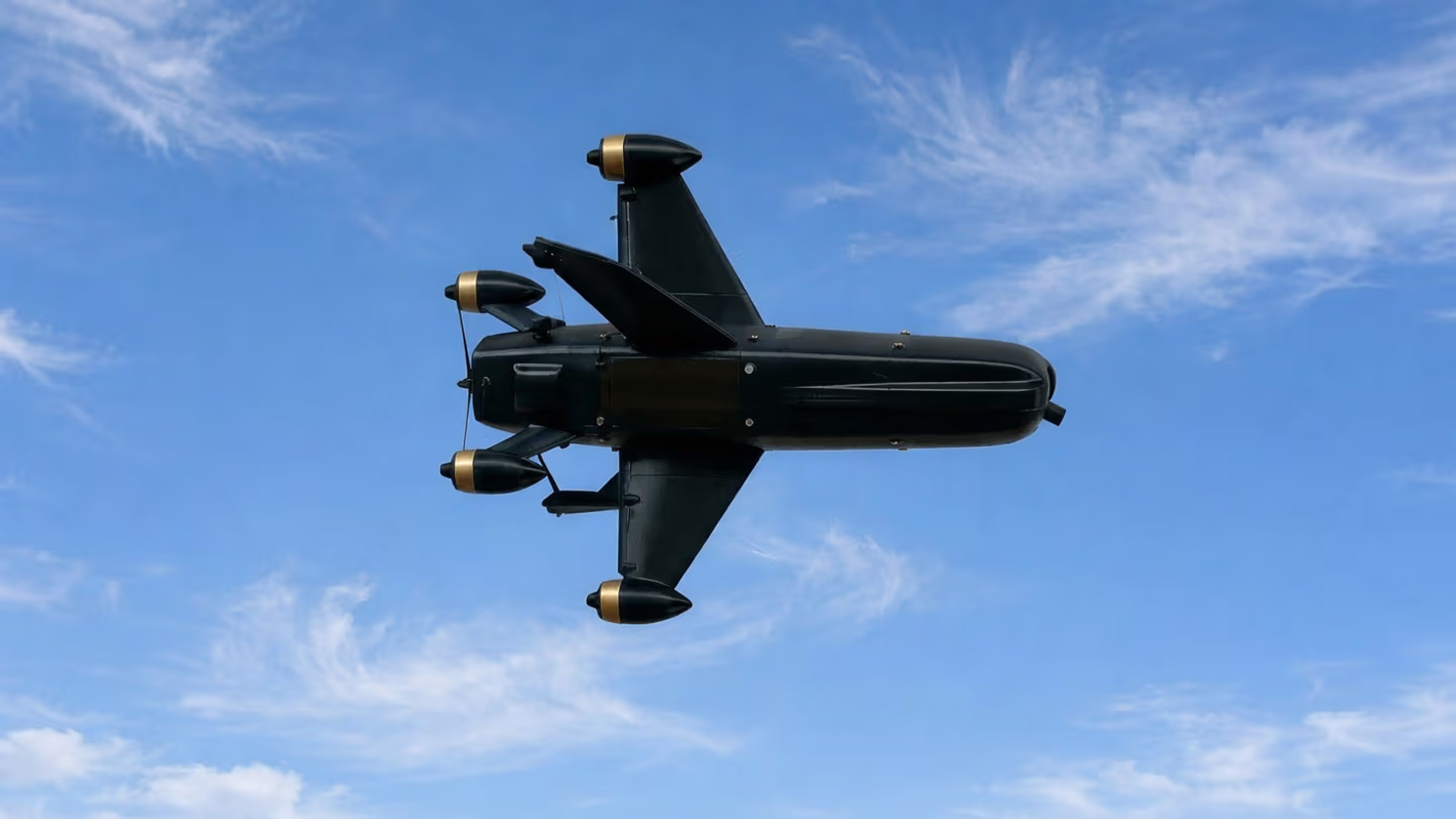
U.S.-based defense company Powerus has begun manufacturing its Guardian counter-drone interceptor in the United Arab Emirates, reflecting a broader Gulf effort to reduce reliance on costly imported air-defense munitions and build domestic capacity against Iranian-style drone attacks. Powerus has supplied training, components, and software to an Emirati manufacturer assembling the Guardian, with production reportedly starting at roughly 30 interceptors per day and expected to reach 100 daily. The Guardian is a relatively inexpensive, high-speed interceptor designed primarily to destroy Shahed-class one-way attack drones and similar unmanned threats. The program highlights an increasingly important lesson from recent Middle Eastern conflicts: firing multimillion-dollar missiles at inexpensive drones is economically unsustainable, making lower-cost, mass-produced interceptors and localized manufacturing increasingly important components of layered air defense.
Key Takeaways
- Powerus is manufacturing Guardian counter-drone interceptors in the UAE, with initial production of approximately 30 units per day and plans to increase output to roughly 100 per day.
- The Guardian is designed to counter Shahed-class and other relatively inexpensive unmanned aircraft, providing Gulf states with a lower-cost alternative to using sophisticated multimillion-dollar missiles against comparatively cheap drones.
- Local production represents a broader strategic shift toward Gulf defense self-sufficiency, shorter supply chains, faster replenishment, and preservation of advanced American-made interceptors for ballistic missiles and other higher-end threats.
In-Depth
Powerus has begun manufacturing its Guardian counter-drone interceptors in the United Arab Emirates, a significant step in the Gulf’s effort to build a more durable, locally based defense industrial capacity. The move addresses a basic problem exposed by recent Iranian drone and missile attacks: using multimillion-dollar air-defense missiles against inexpensive attack drones is financially and logistically unsustainable over a prolonged conflict.
The Guardian offers a different economic model. Designed to defeat Shahed-class one-way attack drones and other Group 1 through 3 unmanned threats, the interceptor costs roughly $5,000 and can reach burst speeds of about 340 kilometers per hour. Production in the UAE reportedly began at approximately 30 interceptors per day, with plans to increase output to 100 daily. That local capacity could shorten delivery times while reducing dependence on long overseas supply chains during a crisis.
The broader significance extends beyond one interceptor. Gulf governments increasingly recognize that national security requires not merely purchasing American weapons, but developing the ability to manufacture, assemble, maintain, and replenish critical systems inside the region. The UAE has already pursued similar localization efforts involving other counter-drone systems.
This approach also preserves expensive Patriot-class interceptors and other sophisticated weapons for ballistic missiles and higher-end threats they were designed to defeat. Cheap drones have altered the economics of air defense, allowing an attacker to impose disproportionate costs on defenders. Producing lower-cost interceptors at scale offers a practical response: match inexpensive threats with comparatively inexpensive defenses while reserving premium weapons for targets that truly require them.
Sources
- https://www.jpost.com/defense-and-tech/article-906338
- https://www.sofx.com/air-force-special-warfare-tests-kinetic-drone-interceptor-in-counter-uas-exercise/
- https://gulfnews.com/world/americas/iran-war-s-new-defence-lesson-from-india-to-us-race-to-build-5-000-drone-killers-1.500649959
- https://www.nasdaq.com/press-release/powerus-begins-guardian-counter-uas-manufacturing-gulf-announces-aureus-greenway
- https://www.unmannedairspace.info/counter-uas-systems-and-policies/powerus-to-protect-oil-and-gas-infrastructure-in-the-middle-east-from-uas-threats/