

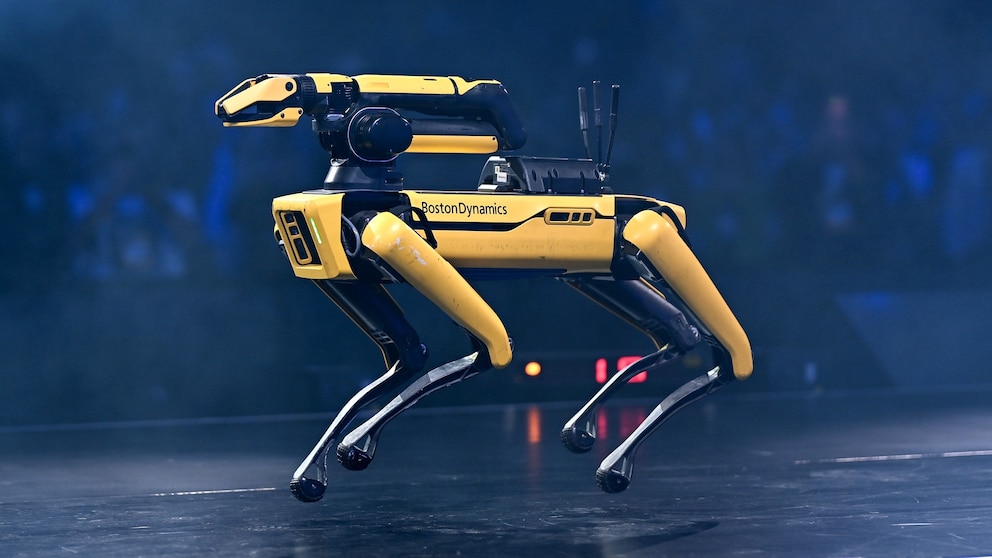
U.S. Immigration and Customs Enforcement is exploring the purchase of robotic “dogs” as part of a broader technological expansion supporting the Trump administration’s stepped-up immigration enforcement operations. An August 28 market-research notice seeks information on quadruped unmanned ground vehicles capable of inspection, surveillance, situational awareness, and hazard assessment in dangerous environments, with a potential acquisition estimated at $1 million to $2 million. The robots under consideration include Boston Dynamics’ Spot, a remotely operated platform already used by law enforcement and protective agencies for hazardous situations. The proposal remains preliminary rather than a completed purchase, but it illustrates ICE’s growing interest in technology that can reduce risks to agents while expanding operational capabilities during arrests, searches, border-security missions, and infrastructure protection.
Key Takeaways
- ICE is conducting market research for quadruped robotic systems that could enter dangerous, confined, unstable, or difficult-to-access locations before federal agents, potentially reducing officers’ exposure to gunfire, explosives, structural hazards, and other threats.
- The potential acquisition is estimated at roughly $1 million to $2 million and could involve Boston Dynamics’ Spot platform, which can use 360-degree cameras, navigate difficult terrain, open doors with a robotic arm, and remotely inspect locations without placing an officer immediately in harm’s way.
- The robot-dog initiative is part of a wider ICE technology and equipment expansion accompanying increased immigration enforcement, making reasonable oversight of surveillance, data collection, permissible equipment, and deployment policies important without dismissing technology that could legitimately protect federal officers.
In-Depth
U.S. Immigration and Customs Enforcement is exploring the purchase of quadruped unmanned ground vehicles—robot dogs—as the Trump administration expands immigration enforcement and seeks technology to reduce risks to federal officers. The market-research notice is important: it is not yet a final contract or guaranteed purchase. ICE is assessing vendors and capabilities, with estimates ranging from $1 million to $2 million.
The proposed systems appear aimed primarily at inspection, situational awareness, and hazard assessment. Boston Dynamics’ Spot platform can carry 360-degree cameras, navigate stairs and uneven terrain, open doors with an optional robotic arm, and enter confined or dangerous spaces ahead of human officers. Similar machines have already been deployed in bomb investigations, armed standoffs, and other high-risk law-enforcement situations.
From a public-safety standpoint, the rationale is straightforward. Sending a remotely operated machine into a dangerous building, suspected ambush location, or unstable area can provide officers with intelligence without exposing them to gunfire, explosives, or structural hazards. Used properly, that is a defensible application of technology and an extension of tools already employed by police and protective agencies.
The broader concern should be accountability rather than reflexive opposition to technology. ICE’s enforcement expansion has drawn political scrutiny, and the robot-dog proposal arrives alongside major spending on other equipment, including electric-shock gloves. Congress and the public should demand rules governing surveillance, data retention, deployment, and permissible attachments. Strong immigration enforcement and officer safety are legitimate government functions, but advanced tools should remain controlled by transparent policy, constitutional safeguards, and human decision-making.