

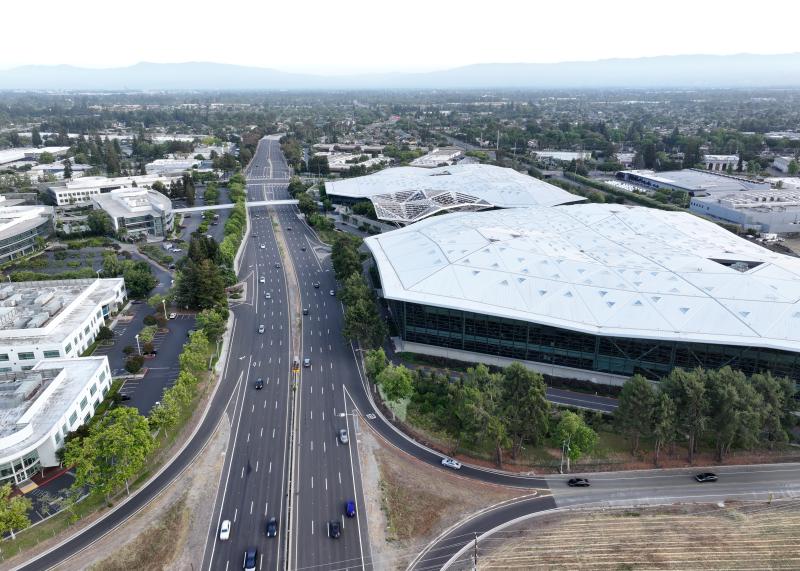
San Francisco and Santa Clara are taking sharply different approaches to the infrastructure powering artificial intelligence and the digital economy. San Francisco lawmakers have introduced an urgency ordinance that would impose a 45-day citywide moratorium on new data centers while officials consider environmental, energy, land-use, and neighborhood concerns. Santa Clara, meanwhile, continues investing heavily in electrical infrastructure intended to accommodate data centers and other large power users. Its municipally owned utility, Silicon Valley Power, is pursuing a $459 million expansion program designed to double system capacity, while the city is experimenting with technology that could allow data centers to reduce electricity consumption when the grid is strained. The contrast illustrates an emerging policy divide: whether cities should restrict energy-intensive AI infrastructure because of its local costs or treat electricity generation, transmission, and grid expansion as infrastructure problems that can be solved while capturing investment and tax revenue.
Key Takeaways
- San Francisco supervisors introduced legislation on September 15 that would establish a 45-day citywide moratorium on new data centers, giving officials time to consider longer-term regulations addressing power demand, environmental effects, land use, and neighborhood impacts.
- Santa Clara is moving in the opposite direction, expanding its municipally owned electrical system through a $459 million program intended to double capacity while developing grid-management strategies specifically designed to accommodate growing AI and data-center demand.
- The competing approaches highlight a larger economic question confronting American cities: whether governments should respond to AI’s enormous electricity requirements primarily by restricting new facilities or by expanding power infrastructure while requiring developers to address grid, water, environmental, and community costs.
In-Depth
The artificial-intelligence boom is forcing local governments to confront a basic infrastructure question: build the capacity required for technological growth or restrict development when existing systems appear inadequate. San Francisco and Santa Clara now provide strikingly different examples.
San Francisco supervisors introduced an urgency ordinance September 15 proposing a 45-day citywide moratorium on data centers. The measure remains under consideration rather than constituting a permanent ban. Supporters are raising concerns about electricity consumption, environmental consequences, land availability and impacts on neighborhoods, including historically industrial areas already carrying environmental burdens.
Santa Clara has chosen a substantially different course. Silicon Valley Power, the city’s municipal utility, says it is pursuing a $459 million system expansion designed to double electrical-load capacity. The city has also partnered on a pilot project examining whether data centers can operate more flexibly, reducing consumption during periods of grid stress without interrupting critical computing workloads.
That approach treats electricity scarcity less as justification for stopping development than as an infrastructure challenge requiring investment and innovation. Data centers can bring substantial tax and utility revenue, but their enormous power requirements also impose real costs that governments cannot responsibly ignore. Water consumption, transmission capacity, backup generation and effects on residential electricity customers deserve scrutiny.
The broader policy choice therefore need not be unlimited development versus prohibition. Cities can demand that developers bear appropriate infrastructure costs, establish transparent environmental standards and protect residential customers while still permitting investment.
As AI becomes increasingly important to economic competition, communities capable of supplying reliable power efficiently may possess a significant advantage. San Francisco’s restrictive approach and Santa Clara’s expansion strategy offer a real-world test of which municipal response produces stronger long-term economic and infrastructure results.
Sources
- https://sfgov.legistar.com/LegislationDetail.aspx?GUID=AF7EB213-B55E-4BC5-9F8F-0F965226CB04&ID=8217305&Options=&Search=
- https://www.siliconvalleypower.com/Home/Components/News/News/45542/6271?backlist=%2F
- https://www.santaclaraca.gov/Home/Components/News/News/45589/
- https://www.siliconvalleypower.com/Home/Components/News/News/45620/6271?backlist=%2F
- https://santaclara.legistar.com/LegislationDetail.aspx?GUID=161F4AAA-FD45-4D4B-B16C-C9A0C332E696&ID=7987607&Options=&Search=