

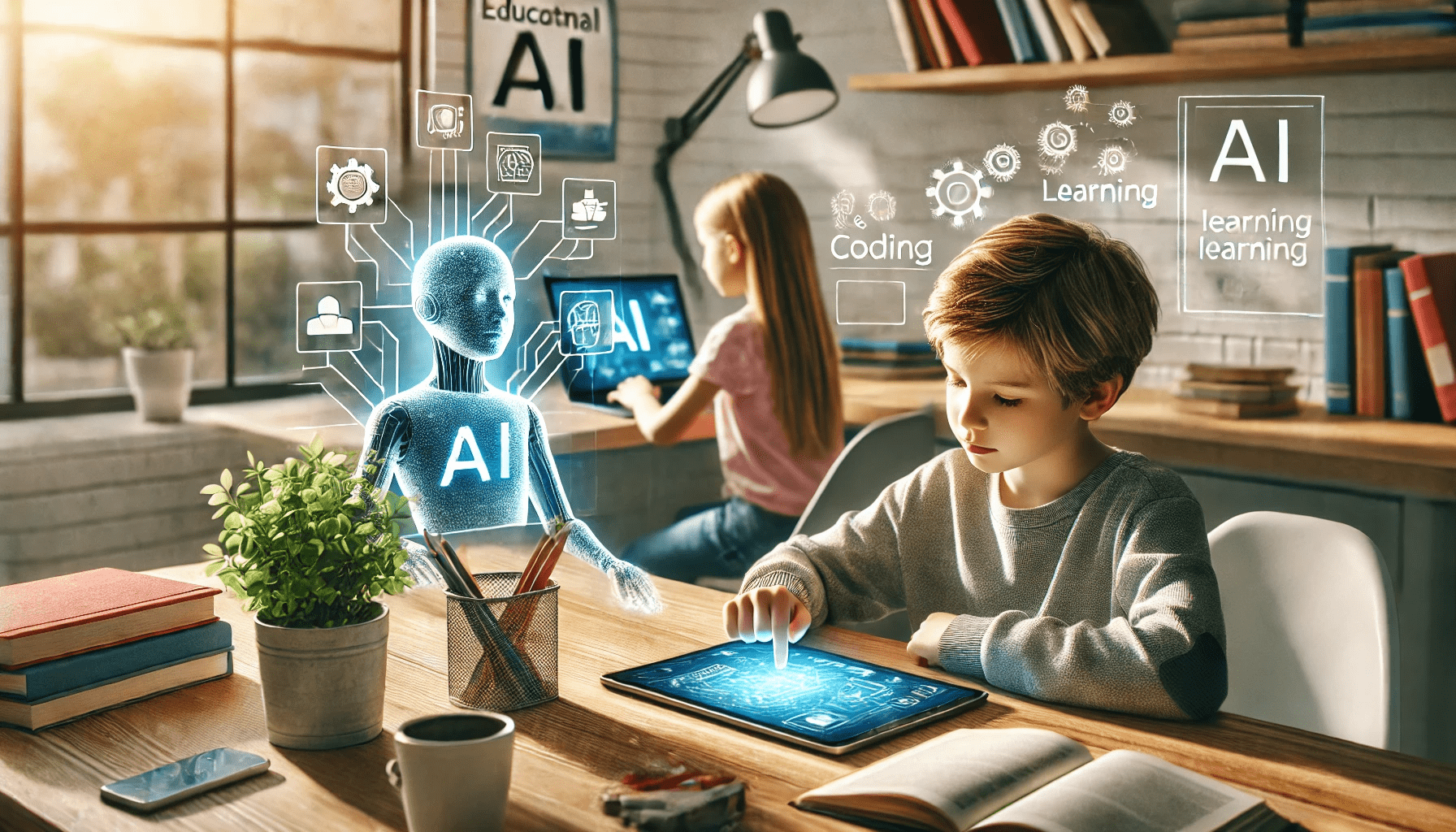
For generations, American education has operated on an industrial-age premise: put students of roughly the same age in the same room, give them the same material, move them through it at roughly the same pace, and assign a teacher to manage the process. Technology has changed dramatically around that classroom, but the basic architecture has remained remarkably stubborn. Artificial intelligence may finally break it.
The most significant educational consequence of AI may not be smarter homework apps or automated grading. It could be the destruction of the assumption that education must be organized around one teacher delivering standardized instruction to 20 or 30 students simultaneously. If AI systems become capable of providing reliable, individualized tutoring at negligible marginal cost, America could find itself reconsidering not merely how teachers teach, but what a teacher is.
For decades, individualized instruction has been an educational ideal constrained by economics. Wealthy families can hire tutors. Schools cannot provide every child with a personal instructor for mathematics, science, history, writing, and foreign languages. AI potentially changes that equation by giving every student something resembling an always-available tutor capable of adjusting explanations, generating exercises, identifying weaknesses, and moving at the student’s pace.
A child struggling with fractions would no longer necessarily have to wait until tomorrow to ask a teacher for help. An AI tutor could recognize the misunderstanding immediately, explain the concept five different ways, generate practice problems, and continue until the student demonstrates mastery. Meanwhile, the student three desks away who mastered fractions weeks earlier could advance to algebra rather than waiting for the rest of the class.
That would challenge one of public education’s most entrenched conventions: teaching to the calendar instead of teaching to mastery.
AI could also dramatically expand educational choice. A student in a rural school with limited course offerings could potentially receive sophisticated instruction in calculus, computer programming, economics, Mandarin, engineering, or classical literature without the district hiring specialists in every subject. Homeschooling families could gain access to instructional capabilities previously available only through expensive curricula and tutors. Small private and charter schools could offer broader academic programs without dramatically expanding payroll.
None of this necessarily makes teachers obsolete. It does, however, suggest that their jobs could change profoundly.
The teacher of the AI era may become less lecturer and more mentor, diagnostician, discussion leader, disciplinarian, motivator, and intellectual guide. Machines can explain quadratic equations. They cannot easily replace the adult who recognizes that a student has stopped trying because his parents are divorcing, who inspires a teenager to take history seriously, or who teaches children how to disagree civilly with someone sitting across the table.
Indeed, removing some routine instructional and administrative burdens could make good teachers more valuable. AI could generate lesson materials, create individualized assignments, provide preliminary grading assistance, identify patterns in student performance, and handle repetitive tutoring. Teachers could spend more time doing what human beings are uniquely positioned to do: cultivating judgment, curiosity, discipline, character, conversation, and relationships.
But there is another side to this revolution.
America’s education establishment employs millions of people and is supported by enormous bureaucratic structures built around the existing classroom model. If AI allows one teacher to effectively supervise considerably more individualized learning, economic pressure will eventually collide with institutional resistance. School districts could begin asking uncomfortable questions about staffing levels, administrative overhead, class structures, credentialing requirements, and whether every educational function currently performed by a licensed professional actually requires one.
Teachers unions will understandably have strong interests in how that transition occurs. Yet policymakers should resist treating preservation of the existing employment structure as the primary objective of education policy. Schools exist principally to educate children. Technology should ultimately be judged by whether it improves that mission, not whether it preserves every job description created under an earlier technological paradigm.
There are legitimate dangers. AI systems can make mistakes, reproduce biases embedded in data, encourage intellectual dependency, and tempt students to outsource thinking rather than develop it. A generation that asks a machine to write every essay may become extraordinarily efficient at producing words while becoming considerably worse at thinking. Schools therefore cannot simply hand children AI systems and call it innovation.
The deeper opportunity is to use AI to restore rigor rather than eliminate it.
Imagine education in which students advance after demonstrating mastery rather than accumulating seat time; teachers receive immediate information about where every student is struggling; parents can see meaningful measures of progress; exceptional students are no longer held back by the pace of the classroom; struggling students receive unlimited additional instruction; and geography no longer determines access to advanced coursework.
That model would not eliminate teachers. It could separate teaching from the century-old machinery surrounding teaching.
The greatest mistake America could make would be trying to force artificial intelligence into the existing education system without reconsidering the system itself. Putting an AI chatbot beside the textbook while preserving every assumption about grade levels, schedules, staffing, curriculum, assessment, and classroom organization would be like attaching a jet engine to a horse-drawn carriage.
AI gives the United States an opportunity to ask a more fundamental question: If we were designing American education today, with individualized artificial intelligence available to virtually every child, would we build the system we currently have?
Almost certainly, we would not.
The coming debate, therefore, should not be whether AI replaces teachers. That question is too simplistic. The real question is what parts of education require a human being, what parts technology can perform better, and how schools can combine the two.
The teachers who thrive in that environment may ultimately be more important than ever. But their profession—and the American classroom surrounding it—could become almost unrecognizable.