

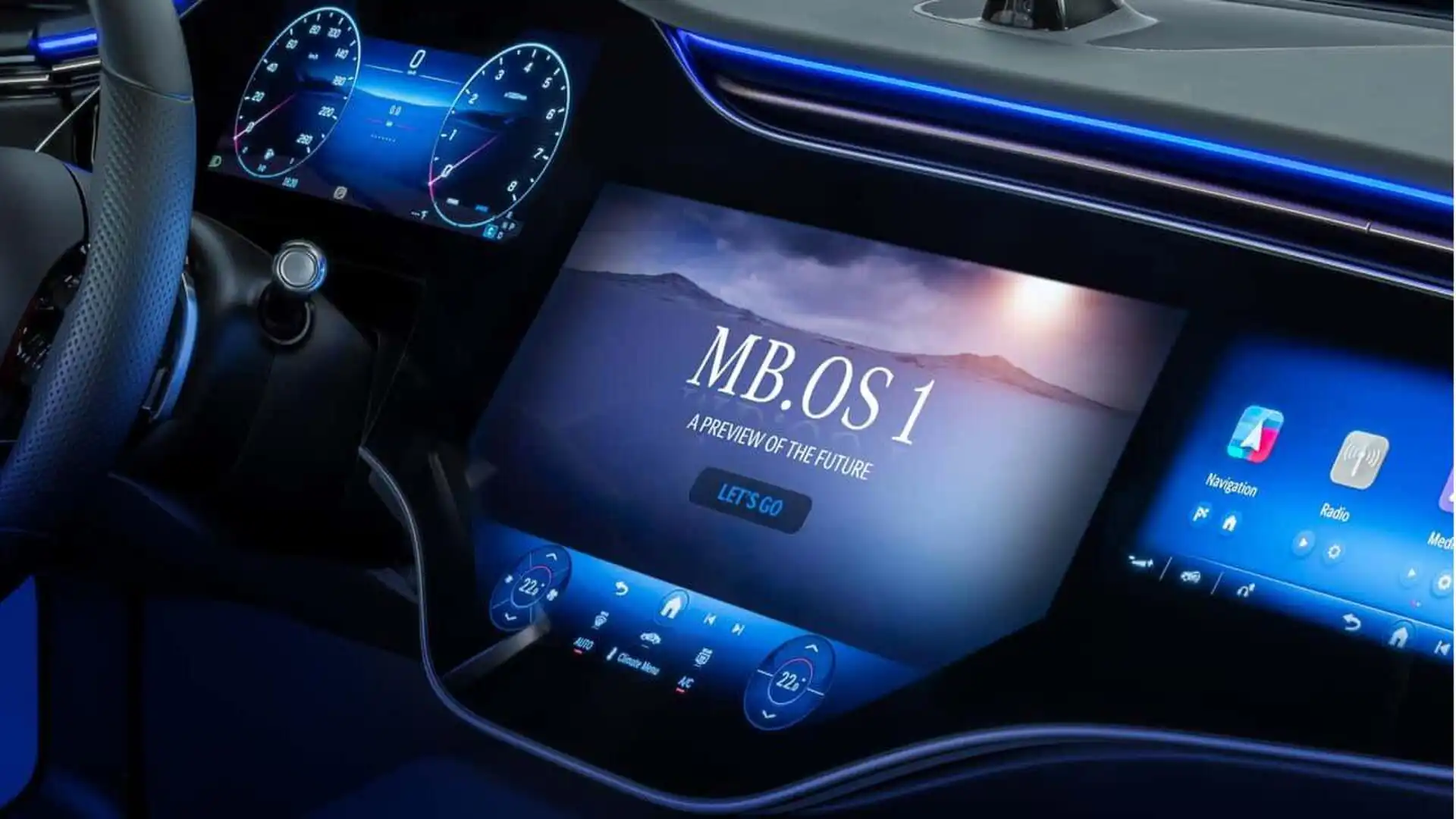
– Mercedes-Benz is introducing conversational artificial intelligence from Liquid AI that processes voice commands inside vehicles, reducing dependence on cloud servers and improving response times, privacy and reliability.
– The technology began reaching eligible North American vehicles in October 2026, with expanded availability planned for 2027 models, including the E-Class, CLE, S-Class, GLC and GLE.
– The AI-powered system manages navigation, climate settings, music and calls, while more complex requests use cloud services. Mercedes-Benz says the upgrade comes without additional subscription fees.
Mercedes-Benz is introducing conversational artificial intelligence developed with Liquid AI, a Massachusetts Institute of Technology spinout, to make vehicle controls more responsive without depending on a constant internet connection. The automaker began distributing the technology to eligible North American vehicles through software updates in October. The system supports spoken requests involving navigation, cabin settings, music and phone calls, using compact models that process many commands directly inside the vehicle.
The initial rollout includes the 2027 E-Class and CLE, with availability planned for the second quarter of 2027 across models including the S-Class, electric GLC and GLE. Mercedes says the upgrade carries no additional charge. Local processing is intended to reduce delays, improve recognition of different accents and limit transmission of information to remote servers. More demanding requests, such as restaurant recommendations, can still use cloud-based AI. The technology improves the vehicle’s conversational interface rather than operating as a self-driving system.
Why It Matters
Mercedes-Benz’s decision to put artificial intelligence inside the vehicle instead of relying exclusively on remote servers represents a meaningful shift in how automakers compete. Customers increasingly expect digital convenience, but they should not have to sacrifice privacy, reliability or control merely to adjust a seat or request directions. Processing routine commands locally offers a practical alternative to systems that depend on a continuous connection and transmit information beyond the car.
The significance extends beyond luxury vehicles. Efficient AI models could help manufacturers deliver technology without forcing every interaction through costly cloud infrastructure. That competition may encourage better service, faster responses and fewer subscriptions. Still, automakers should explain which requests remain local, when information leaves the vehicle and how software changes affect owners. Mercedes must demonstrate that conversational features do not distract drivers or compromise essential controls. Innovation earns consumer confidence through performance and transparency, not marketing promises or technological novelty alone.
Sources
- https://www.wsj.com/cio-journal/mercedes-gives-its-cars-an-ai-upgrade-607daae2
- https://www.liquid.ai/press/liquid-ai-and-mercedes-benz-partner-to-scale-embedded-in-car-intelligence
- https://media.mbusa.com/news/mercedes-benz-and-liquid-ai-partner-to-scale-embedded-in-car-intelligence-in-north-america
- https://group.mercedes-benz.com/technology/innovation/collaboration/liquid-ai.html