

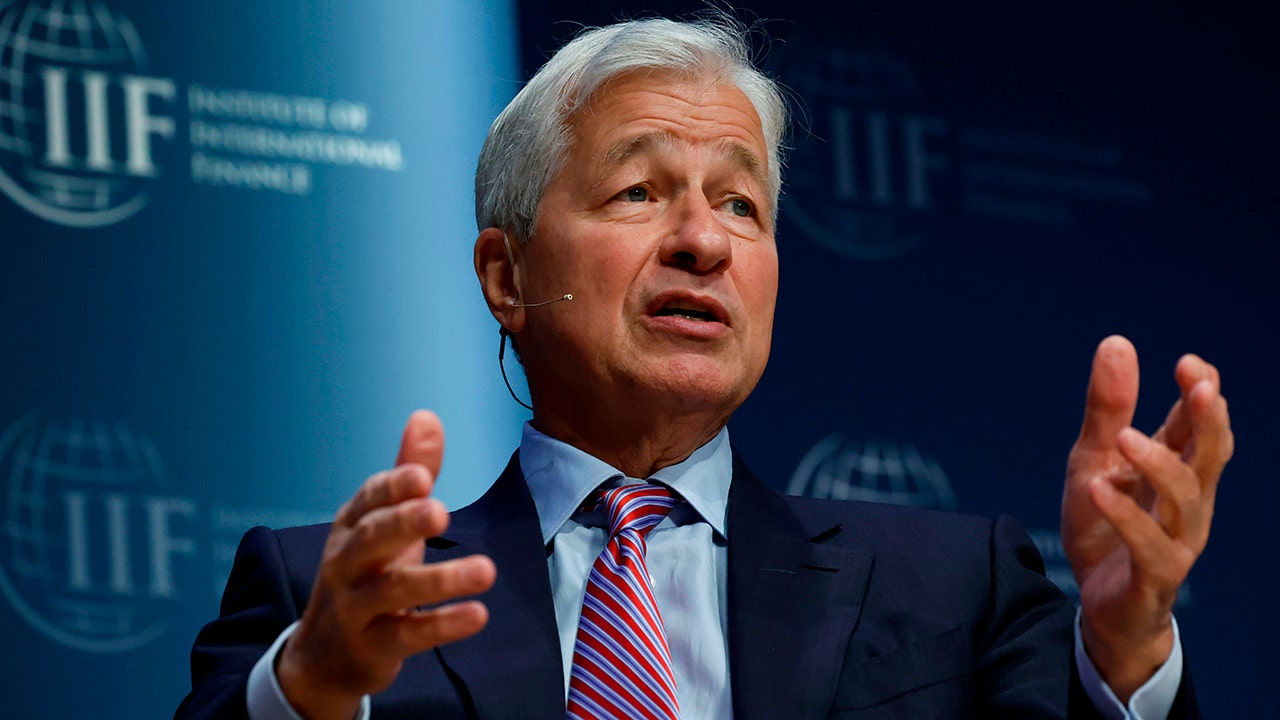
JPMorgan Chase Chairman and CEO Jamie Dimon is urging American business leaders to strengthen cybersecurity defenses immediately, warning that increasingly powerful artificial intelligence systems have dramatically escalated the threat to financial institutions, corporations, and critical infrastructure. Dimon identified cyberattacks as his bank’s single greatest risk, emphasizing that the emergence of advanced AI models, including Anthropic‘s Claude Mythos, has made the danger substantially more serious. His warning comes as major financial institutions, federal regulators, and industry executives confront the possibility that AI-powered attacks could exploit software vulnerabilities, compromise sensitive information, and disrupt interconnected economic systems. The growing threat is prompting renewed demands for stronger corporate security practices, tighter controls over autonomous AI agents, and greater cooperation between private industry and government.
Key Takeaways
• AI Escalates Cyber Threats: Dimon warns that increasingly sophisticated artificial intelligence can expose and exploit vulnerabilities faster than traditional security systems can respond.
• Corporate Leadership Must Act: Businesses are being urged to strengthen network segmentation, identity management, software testing, and protections against unauthorized AI agents.
• National Economic Security Is at Stake: Financial institutions and critical infrastructure operators are coordinating defenses against cyberattacks capable of disrupting essential services and undermining economic stability.
In-Depth
JPMorgan Chase CEO Jamie Dimon is sounding an increasingly urgent alarm about cybersecurity, warning corporate executives that artificial intelligence has fundamentally changed the threat environment. What was already his institution’s greatest operational concern has become considerably more dangerous with the development of AI systems capable of identifying sophisticated software vulnerabilities.
Dimon’s concerns center partly on advanced models such as Anthropic’s Claude Mythos, whose capabilities demonstrate how artificial intelligence can accelerate the discovery of weaknesses in widely used computer systems. Although these technologies offer legitimate defensive applications, their potential exploitation by criminals and hostile foreign governments raises serious questions about corporate preparedness.
The banking executive is advocating practical security improvements, including stronger network segmentation, identity and access management, rigorous software testing, and tighter protection of sensitive information. These measures reflect a fundamental reality: technological innovation cannot substitute for disciplined security practices and responsible executive oversight.
The threat extends beyond banking. Financial institutions depend on telecommunications networks, energy providers, payment processors, and other interconnected systems. A successful attack against one vulnerable organization could potentially disrupt businesses and consumers far removed from the original target.
Dimon is also helping organize cooperation among major corporations through the Alliance for Critical Infrastructure, an initiative designed to improve information sharing and coordinated responses to emerging technological threats.
For American businesses, the implications are unmistakable. Cybersecurity can no longer be treated merely as an information technology expense or delegated exclusively to technical personnel. It is an essential responsibility of corporate leadership, directly connected to economic competitiveness, customer confidence, and national security.
As artificial intelligence advances, organizations that fail to invest in preventive safeguards risk exposing themselves, their customers, and the broader economy to increasingly consequential attacks.
Sources
• https://www.wsj.com/cio-journal/jamie-dimon-tells-leaders-to-ramp-up-cyber-defenses-04ac235f
• https://qz.com/jamie-dimon-cyber-defenses-ai-threats-jpmorgan-101926