

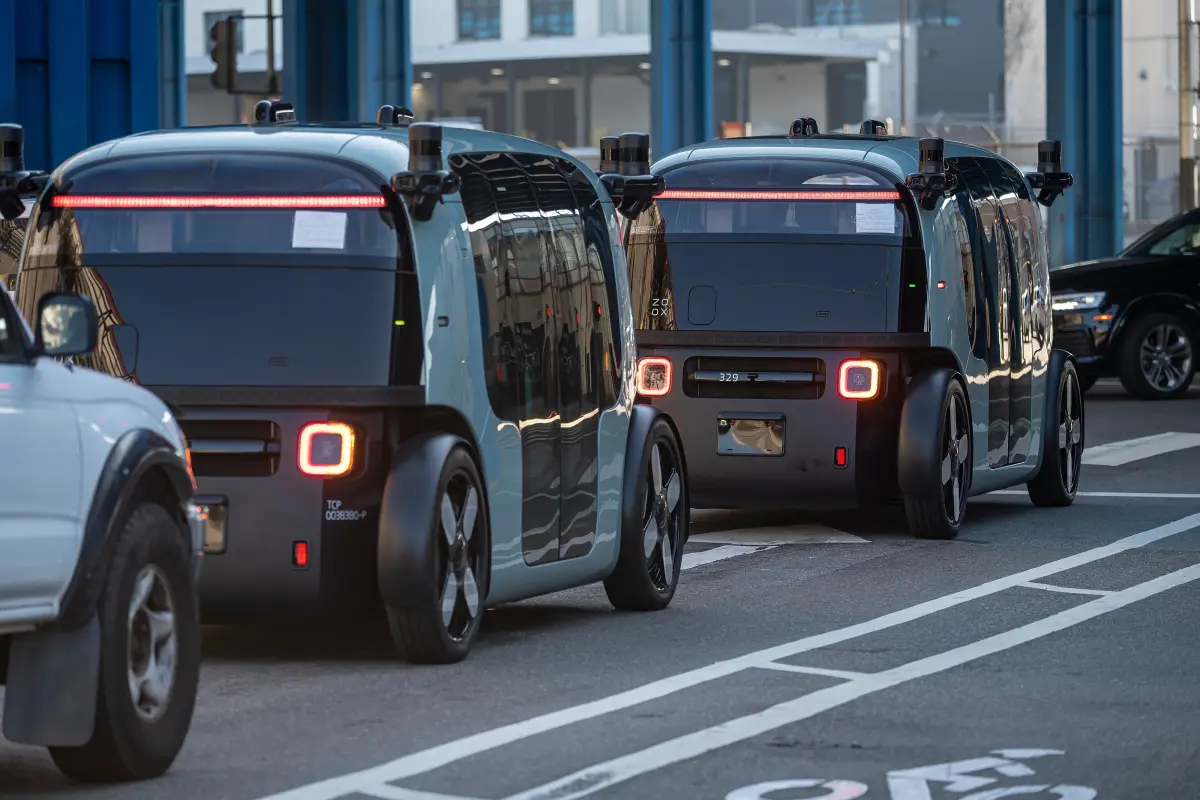
• Uber has integrated Amazon-owned Zoox robotaxis into its Las Vegas app, allowing eligible passengers to receive fully autonomous rides at no additional cost.
• Uber and Zoox announced a multiyear partnership with MGM Resorts, expanding driverless transportation access while preparing to introduce the service in Los Angeles in 2027.
• The agreement intensifies competition with Alphabet’s Waymo as Uber pursues a multibillion-dollar autonomous transportation strategy built around partnerships rather than proprietary vehicles.
Uber has added Amazon-owned Zoox robotaxis to its ride-hailing app in Las Vegas, intensifying competition with Alphabet’s Waymo in the expanding autonomous transportation market. Beginning Monday, customers requesting eligible Uber rides may be matched with a fully driverless Zoox vehicle at no additional charge. Passengers cannot directly select a Zoox car yet, although enabling autonomous rides in their app preferences can improve their chances. Zoox will also continue accepting bookings through its own app.
The launch marks Zoox’s first integration with an outside ride-hailing platform and extends Uber’s strategy of distributing rides supplied by autonomous vehicle developers. Uber and Zoox also announced an agreement with MGM Resorts to improve pickups, drop-offs and navigation at Las Vegas properties. The partners expect to expand their collaboration to Los Angeles in 2027, following Zoox’s planned initial operations there later this year. Meanwhile, Uber’s exclusive Waymo arrangement in Austin and Atlanta is scheduled to end in January 2028.
Why It Matters
The Las Vegas launch illustrates a market-driven contest over who will control the next generation of transportation: companies developing driverless vehicles or platforms connecting them with paying customers. Uber is betting that its established customer base and relationships with multiple manufacturers can remain valuable without spending billions developing a proprietary self-driving fleet. Zoox gains immediate exposure to riders who might never download another transportation app.
For consumers, additional competition could eventually bring more choices, better service and competitive prices, but those benefits depend on reliable operations rather than promotional promises. Driverless fleets also raise practical questions about accident liability, public safety, insurance and the future of driving jobs. Policymakers should insist on transparent safety standards while avoiding regulations that unnecessarily protect established competitors. With Waymo expanding independently and Uber pursuing multiple suppliers, Las Vegas offers an early test of whether open competition or exclusive networks better serve passengers and taxpayers.
Sources
• https://techcrunch.com/2026/11/16/zoox-robotaxis-are-now-on-the-uber-app-in-las-vegas/
• https://www.fox5vegas.com/2026/11/16/zoox-robotaxis-available-uber-app-las-vegas/
• https://www.axios.com/2026/11/16/uber-vegas-robotaxi-crapshoot