

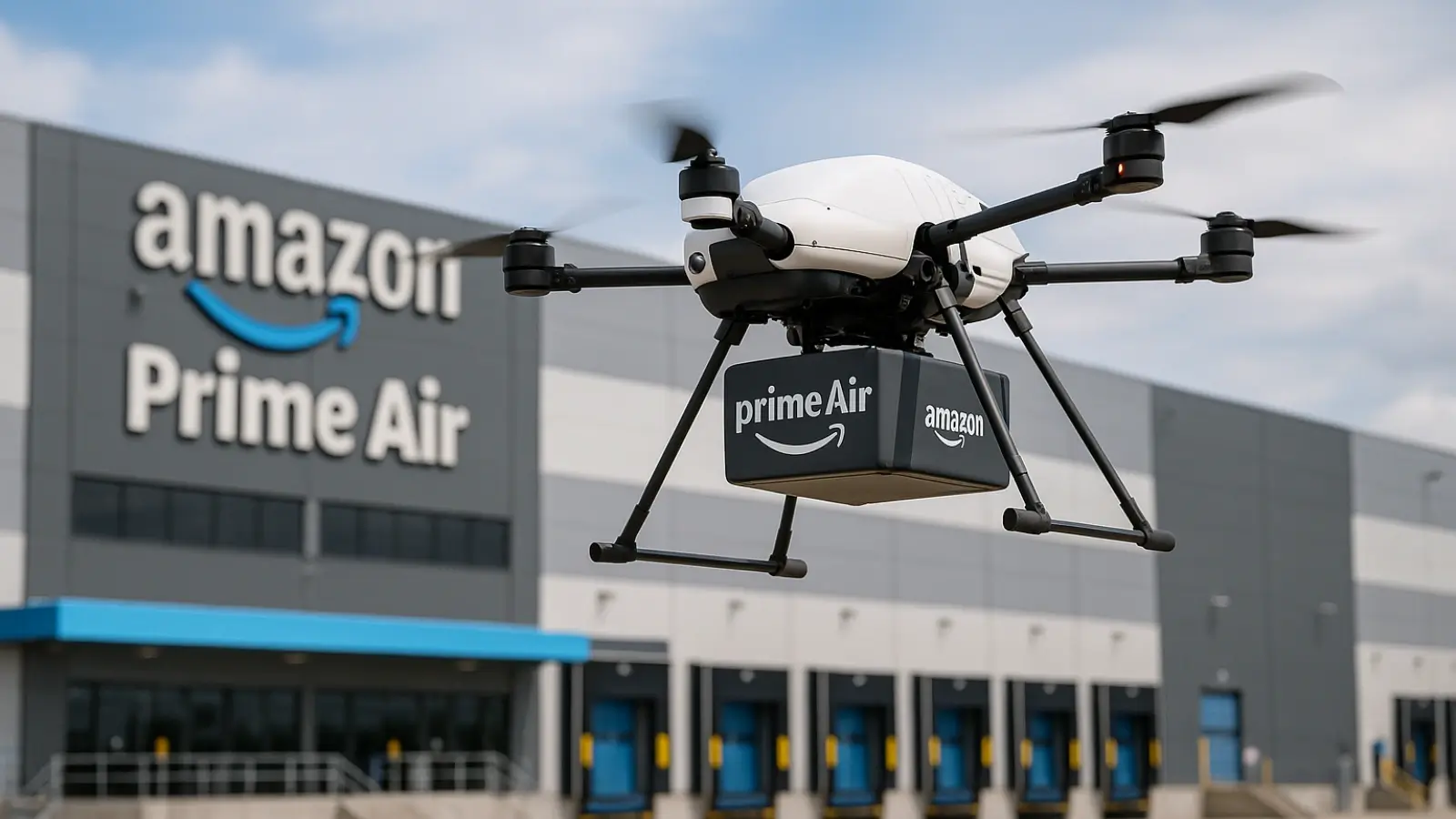
- Amazon‘s expanding Prime Air drone delivery service is drawing complaints from homeowners over persistent noise, privacy concerns and disruptions to residential neighborhoods.
- Amazon plans to expand drone deliveries to nearly 500 U.S. cities and towns by the end of 2026, offering deliveries in as little as 30 minutes despite growing community opposition.
- Residents and local officials are questioning whether federal aviation approvals adequately protect property owners, neighborhood tranquility and local authority over commercial drone operations.
Amazon’s rapidly expanding drone delivery program is generating resistance from homeowners who say the convenience of airborne package deliveries comes at the expense of neighborhood peace and privacy. In Baton Rouge, Louisiana, residents near Amazon’s distribution facility have complained about frequent flights, persistent buzzing and low-flying aircraft. Some residents welcome the technology, while others argue that commercial deliveries should not routinely disrupt residential communities. Local officials have organized meetings involving residents, company representatives and federal aviation authorities to address complaints about flight paths, noise and safety.
Amazon intends to expand Prime Air service to nearly 500 American cities and towns by the end of 2026, using autonomous MK30 drones capable of delivering eligible packages within approximately 30 minutes. Although Amazon maintains that its aircraft incorporate advanced safety systems and reduced noise levels, homeowners continue questioning their impact. Federal regulators are reviewing operational proposals as communities confront the consequences of increasingly crowded residential airspace.
Why It Matters
Amazon’s drone delivery expansion raises fundamental questions about private property rights, local self-government and the appropriate boundaries of corporate innovation. Faster package delivery offers undeniable consumer benefits, but those advantages should not automatically outweigh homeowners’ reasonable expectations of privacy, safety and peaceful enjoyment of their property. Residents who invested in quiet neighborhoods should have meaningful opportunities to influence commercial activity conducted repeatedly above their homes.
The controversy also highlights tensions between federal aviation authority and local communities seeking greater control over neighborhood conditions. Federal approval of drone operations does not eliminate concerns about noise, emergency landings or the cumulative consequences of thousands of potential daily flights. As autonomous delivery networks expand, policymakers face mounting pressure to establish transparent operational standards, enforceable protections and meaningful public accountability. Technological progress and free enterprise remain important, but their success ultimately depends on respecting the communities in which businesses operate and maintaining public confidence in innovation.
Sources
• The Wall Street Journal — The Backyard Battle Over Amazon Delivery Drones ‘Stealing the Sky’
https://www.wsj.com/lifestyle/amazon-delivery-drones-4807e976
• WAFB — Baton Rouge Residents Raise Noise Concerns Over Amazon Drone Deliveries at Community Meeting
https://www.wafb.com/2026/10/02/baton-rouge-residents-raise-noise-concerns-over-amazon-drone-deliveries-community-meeting/
• Reuters — Amazon Plans Drone Delivery Expansion to About 500 US Locales
https://www.reuters.com/business/amazon-plans-drone-delivery-expansion-about-500-us-locales-2026-08-19/
• Federal Aviation Administration — Public Involvement and Environmental Review for Drone Operations
https://www.faa.gov/uas/advanced_operations/nepa_and_drones
• WBRZ — Baton Rouge Residents Raise Noise and Safety Concerns as Amazon Drone Flights Increase
https://www.wbrz.com/news/baton-rouge-residents-concerned-after/