

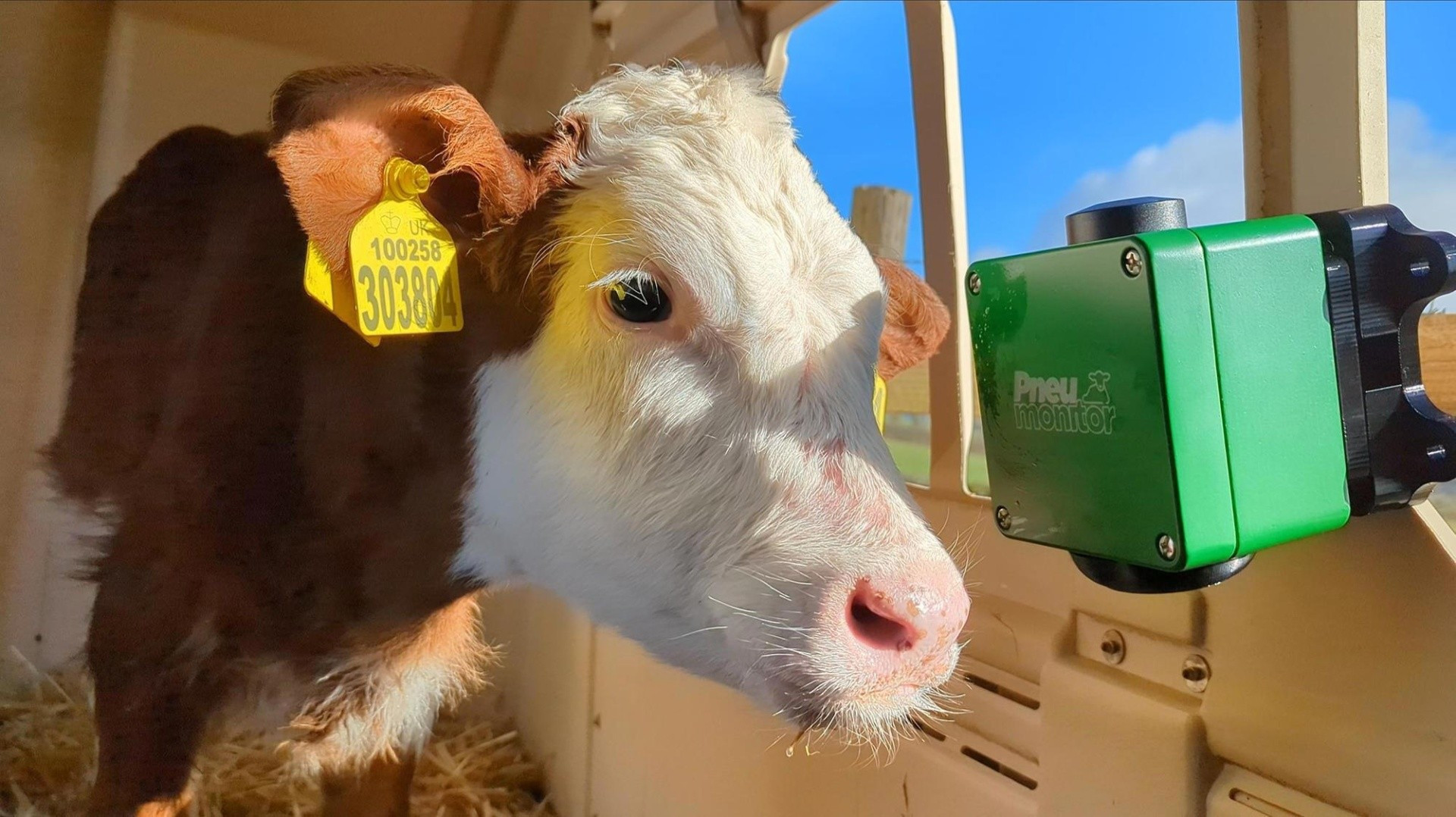
A team of U.S. university researchers is developing an artificial intelligence system to detect bovine respiratory disease (BRD), a severe pneumonia in calves that costs the cattle industry over $1 billion annually, by using wearable sensors, robotic feeders, and deep-learning algorithms to monitor breathing, feeding and activity patterns so farmers can intervene earlier and reduce deaths and economic losses.
Sources: FeedStuffs, PSU.edu
Key Takeaways
– The CalfHealth project is funded by a multi-year grant from the U.S. National Science Foundation to apply AI and sensors to early disease detection in dairy calves.
– Bovine respiratory disease is a leading cause of calf mortality and drives more than $1 billion in industry losses by the time symptoms are visible and treated.
– The system integrates multimodal monitoring and farmer-facing tools to build trust and encourage adoption of precision technologies on farms.
In-Depth
In the world of animal agriculture, innovation often moves at a pace that lags behind the challenges facing producers. Bovine respiratory disease, or BRD, is one of those challenges — a form of pneumonia that tends to strike young calves shortly after weaning and is infamous for its stealthy onset and heavy toll. It’s not a fringe problem; industry estimates put the annual economic impact well over $1 billion, and that’s before factoring in lost productivity, increased veterinary costs and higher reliance on broad-spectrum antibiotics once symptoms take hold. Traditional methods of spotting illness depend on human observation, clinical signs and reactive treatment, which means farmers are often a step behind the disease. That’s where a new AI-driven approach comes in, supported by federal research funds and grounded in a pragmatic goal: detect sickness before it becomes a crisis.
Researchers from Penn State, the University of Kentucky and the University of Delaware are collaborating on an AI system dubbed “CalfHealth,” backed by a multi-year, roughly $1 million grant from the National Science Foundation. The premise is straightforward but technologically ambitious: combine wearable and environmental sensors with robotic feeders and Wi-Fi-based breathing monitors to track calves’ behavior and physiology in real time. Instead of waiting for visible symptoms — coughing, lethargy, reduced feeding — the system will analyze patterns in movement, feeding and breathing that tend to precede clinical illness. Deep learning and attention-based AI models will sift through this data to flag subtle changes that might escape even the most attentive human observer.
In a sector where margins are tight and every loss counts, early detection isn’t just about animal welfare; it’s about bolstering profitability and competitiveness. Farmers who adopt tools like CalfHealth could reduce death rates, lower antibiotic use by intervening earlier and make better-informed management decisions. But technology alone won’t solve the problem. One of the project’s explicit aims is to build systems that farmers trust and will actually use. That includes an interactive, explainable AI interface that helps producers understand why an animal was flagged as at risk and explore “what-if” scenarios to guide their responses. Researchers recognize that explaining the technology and earning user trust are as important as the AI’s predictive accuracy.
This initiative sits at the intersection of agriculture, computer science and economics, and it reflects a broader trend toward precision livestock farming. By shifting from reactive to proactive disease management, the industry can sharpen its competitive edge and reduce unnecessary losses. For policy-minded conservatives who care about rural communities and domestic food production, supporting innovation that helps farmers stay ahead of disease — without imposing heavy regulatory burdens — makes practical sense. Technology that increases efficiency and resilience helps safeguard not just individual operations but the national food supply chain.
As CalfHealth moves from research to field trials, its success will hinge on measurable outcomes: fewer calf deaths, reduced disease spread, improved profits and tangible benefits that justify investment in new hardware and data systems. If these goals are met, it could mark a meaningful step forward in integrating smart technology with traditional farming — preserving livelihoods and strengthening an industry that’s a cornerstone of the rural economy.