

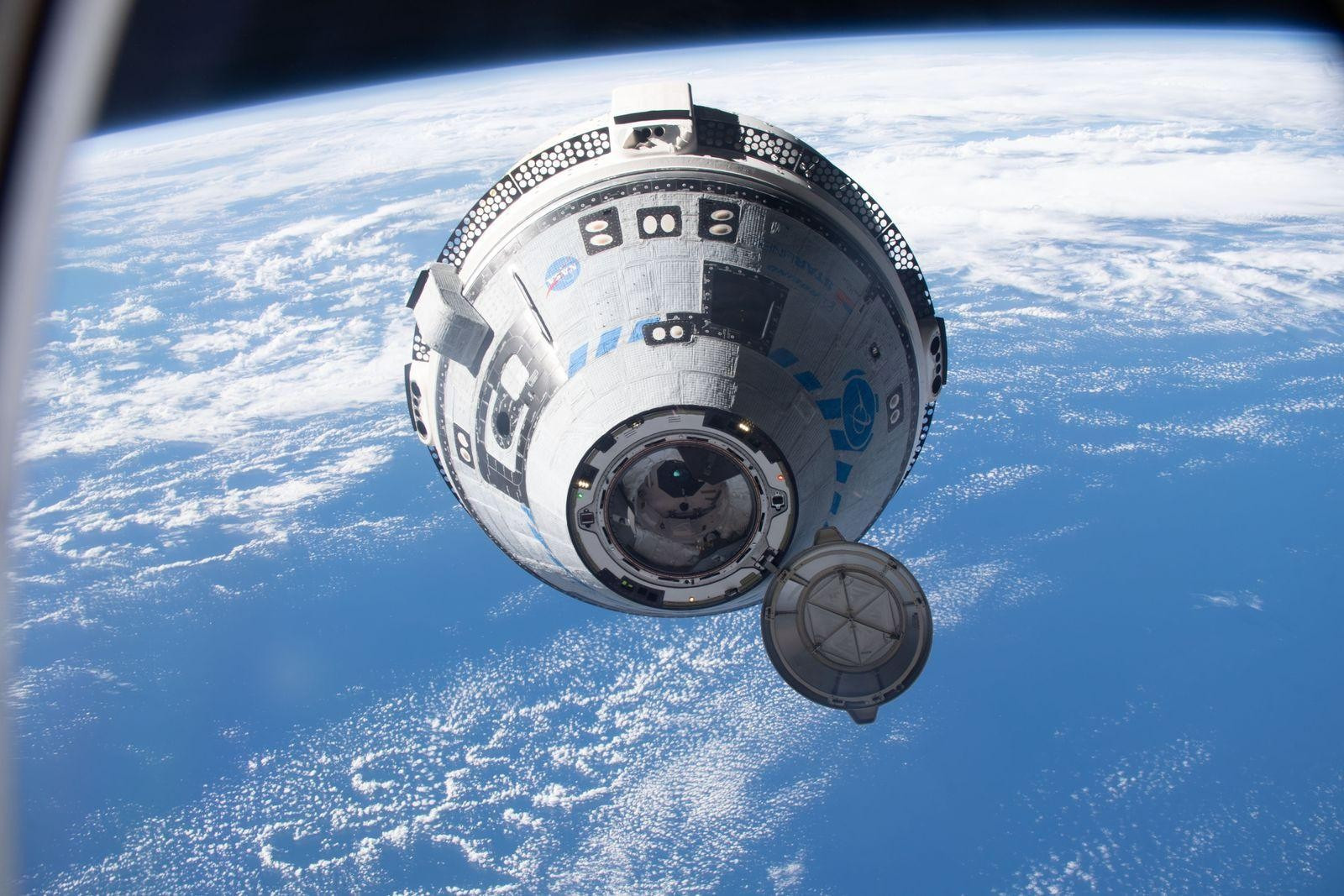
NASA and Boeing have officially confirmed that the upcoming flight of the Starliner capsule — dubbed Starliner-1 — will carry only cargo to the International Space Station (ISS), with no astronauts aboard. The mission is now targeted for no earlier than April 2026, pending extensive testing and certification. In parallel, NASA has renegotiated its Commercial Crew Program contract with Boeing, reducing the number of guaranteed crewed missions from six to four, with the final two now optional.
Key Takeaways
– The next flight of Starliner (Starliner-1) will be uncrewed — only delivering cargo — while engineers address persistent thruster and propulsion issues.
– NASA has reduced its commitment to Starliner crewed flights, trimming the guaranteed mission count from six down to four, reflecting growing doubts about the vehicle’s reliability.
– The cargo-only mission is slated no earlier than April 2026 and functions as a critical validation step before any future crewed missions can resume.
In-Depth
The decision by NASA and Boeing to send Boeing Starliner back to the International Space Station with cargo only — and without astronauts — marks a significant pivot in what once was among America’s most ambitious efforts to restore crewed access to low Earth orbit. The upcoming mission, dubbed Starliner-1, had originally been slated to carry a full crew under the long-standing Commercial Crew Program. Now, it’s been recast as a cautious, uncrewed cargo run to test whether Starliner’s propulsion and thruster systems are finally stable after repeated failures.
Over the last several years, Starliner has endured a string of setbacks. Its first test flight back in December 2019 was cut short by software issues, preventing it from even reaching the ISS. The follow-up uncrewed test in 2022 fared better — it docked — but still revealed thruster irregularities. NASA thought Boeing had resolved the problems and proceeded with the first crewed flight in 2024, sending astronauts to the ISS. While the crew successfully reached the station, serious problems with the capsule’s thrusters and service module forced NASA to call off the plan to return them in Starliner, opting instead to fly them home aboard a rival vehicle. The result: the astronauts spent an unplanned nine months on the ISS before returning safely via another provider.
That near-catastrophic malfunction — which investigators described as “life and death” for the crew — shook NASA’s confidence. The space agency insisted on further testing, grounded future crew flights, and renegotiated its contract with Boeing. Under the revised deal, Starliner is now only guaranteed a maximum of four crewed missions, down from six. Starliner-1 will instead deliver supplies: its first real-world task in its intended role, but without the riskiest element — humans aboard. If that flight succeeds, Boeing and NASA could resume crew rotations; if not, Starliner may get phased out entirely.
For Boeing and its engineers, this cargo-only run is now a make-or-break moment. The company reportedly has already absorbed more than $2 billion in cost overruns as the program dragged on. With the space station scheduled for retirement around 2030, time is running short. Starliner must prove itself soon — not just to maintain a contract, but to uphold Boeing’s reputation for aerospace reliability.
For NASA and conservative-minded taxpayers, the move is prudent and overdue. After all, a space capsule’s primary purpose is to protect lives. Failed thrusters and jettisoned service modules during reentry — both reported issues — pose unacceptable risks. The cargo-only plan shows NASA isn’t willing to gamble a single life to keep a schedule or validate a half-done vehicle. It demonstrates that even with billions spent, a tolerant budget, and lofty visions, some hardware failures demand humility and a return to basics.
If Starliner-1 launches and delivers safely, it may well revive hope for Boeing’s human-transport ambitions. But if the mission falters — especially under the scrutiny that now surrounds it — Starliner could be relegated to a footnote in the history of American spaceflight, overshadowed by the success streak of its private-sector rival. For now, the cautious course is clear: test, certify, and only when the capsule proves itself beyond doubt should astronauts climb aboard again.