

Close Menu

    Subscribe to Updates

    Get the latest tech news from Tallwire.

      What's Hot

      Major Cybercrime Group Claims Theft Of 1.7 Million CarGurus Corporate Records

      March 1, 2026

      Amazon Overtakes Walmart As America’s Largest Company By Revenue

      March 1, 2026

      Google Cracks Down On Android Apps And Developer Accounts In 2025

      March 1, 2026
      Facebook X (Twitter) Instagram
      • Tech
      • AI
      • Get In Touch
      Facebook X (Twitter) LinkedIn
      TallwireTallwire
      • Tech

        Amazon Overtakes Walmart As America’s Largest Company By Revenue

        March 1, 2026

        Chinese Sellers Peddling Anti-Drone Weapons On TikTok Raise Security Alarms

        March 1, 2026

        Say Goodbye to the Undersea Cable That Made the Global Internet Possible

        March 1, 2026

        Microsoft Copilot Bug Exposed “Confidential” Emails Despite Label

        February 28, 2026

        Taara Beam Launch Brings 25Gbps Optical Wireless Networks to Cities

        February 27, 2026
      • AI

        Study Signals AI Search Shift Threatens Traditional Web Traffic Model

        March 1, 2026

        Amazon’s Security Chief Warns AI Will Flood Data, Expand Cyber Risk

        March 1, 2026

        AI Password Generation Poses Major Security Risk, Experts Warn

        February 28, 2026

        Microsoft Copilot Bug Exposed “Confidential” Emails Despite Label

        February 28, 2026

        AI Productivity Gains Concentrated Among High-Skilled Workers, Study Finds

        February 28, 2026
      • Security

        Major Cybercrime Group Claims Theft Of 1.7 Million CarGurus Corporate Records

        March 1, 2026

        Google Cracks Down On Android Apps And Developer Accounts In 2025

        March 1, 2026

        Massive Exposed Database With Billions of Social Security Numbers Sparks Identity Theft Fears

        March 1, 2026

        Amazon’s Security Chief Warns AI Will Flood Data, Expand Cyber Risk

        March 1, 2026

        Password Managers Share a Hidden Weakness

        March 1, 2026
      • Health

        Social Media Addiction Trial Draws Grieving Parents Seeking Accountability From Tech Platforms

        February 19, 2026

        Portugal’s Parliament OKs Law to Restrict Children’s Social Media Access With Parental Consent

        February 18, 2026

        Parents Paint 108 Names, Demand Snapchat Reform After Deadly Fentanyl Claims

        February 18, 2026

        UK Kids Turning to AI Chatbots and Acting on Advice at Alarming Rates

        February 16, 2026

        Landmark California Trial Sees YouTube Defend Itself, Rejects ‘Social Media’ and Addiction Claims

        February 16, 2026
      • Science

        Astronomers Confirm Discovery Of Galaxy Nearly Entirely Composed Of Dark Matter

        March 1, 2026

        Microsoft Claims 100 Percent Renewable Energy Match Across Global Electricity Use

        February 28, 2026

        Taara Beam Launch Brings 25Gbps Optical Wireless Networks to Cities

        February 27, 2026

        Large Hadron Collider Enters Third Shutdown For Major Upgrade

        February 26, 2026

        Google Phases Out Android’s Built-In Weather App, Replacing It With Search-Based Forecasts

        February 25, 2026
      • Tech

        Sam Altman Says ‘AI Washing’ Is Being Used to Mask Corporate Layoffs

        February 28, 2026

        Zuckerberg Testifies In Landmark Trial Over Alleged Teen Social Media Harms

        February 23, 2026

        Gay Tech Networks Under Spotlight In Silicon Valley Culture Debate

        February 23, 2026

        Google Co-Founder’s Epstein Contacts Reignite Scrutiny of Elite Tech Circles

        February 7, 2026

        Bill Gates Denies “Absolutely Absurd” Claims in Newly Released Epstein Files

        February 6, 2026
      TallwireTallwire
      Home»Tech»Breakthrough Lets Physicists Run Quantum Simulations on Laptops
      Tech

      Breakthrough Lets Physicists Run Quantum Simulations on Laptops

      5 Mins Read
      Facebook Twitter Pinterest LinkedIn Tumblr Email
      Breakthrough Lets Physicists Run Quantum Simulations on Laptops
      Breakthrough Lets Physicists Run Quantum Simulations on Laptops
      Share
      Facebook Twitter LinkedIn Pinterest Email

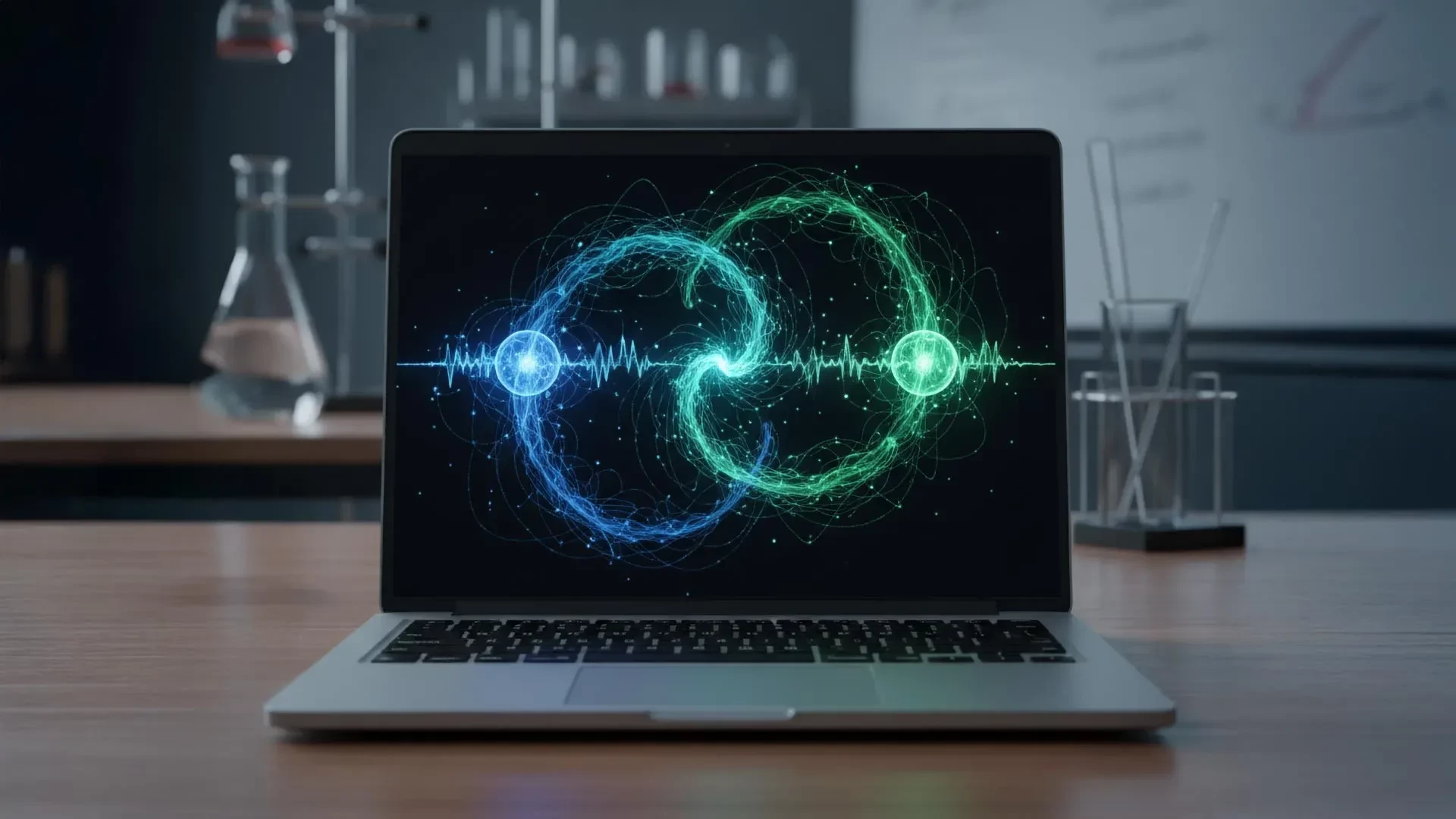
      Researchers at the University at Buffalo have developed an enhanced version of the truncated Wigner approximation (TWA) that dramatically lowers the computational barrier for simulating complex quantum systems, potentially allowing full-scale many-body and dissipative quantum dynamics to be studied on ordinary laptops instead of supercomputers. The advance, published in the journal PRX Quantum, generalizes the TWA — a semiclassical method dating to the 1970s — enabling it to handle open systems where energy is exchanged with the environment and particles interact with external forces. With this “user-friendly” TWA formulation, scientists who once needed expensive high-performance computing clusters can run simulations using consumer-grade hardware, freeing up supercomputing resources for the most intractable quantum problems. Beyond computing cost efficiency, the method offers a straightforward implementation and promises to broaden access to advanced quantum modeling across institutions and disciplines.

      Sources: APS.org, Buffalo.edu

      Key Takeaways

      – The newly enhanced TWA enables simulation of driven-dissipative quantum many-body systems using accessible computing hardware by simplifying the required mathematical treatment.

      – This development could significantly lower costs and broaden participation in quantum simulation research, as fewer resources are required to run meaningful models.

      – While not replacing full quantum-computer-grade simulation for every problem, this method allows supercomputers to be reserved for the most complex cases and lets researchers tackle many problems more efficiently.

      In-Depth

      In the world of quantum physics, complexity is the name of the game—and it’s often the reason why so many intriguing theoretical problems remain out of reach for everyday researchers. Systems of interacting particles, entangled states, open systems that exchange energy with their surroundings: each factor multiplies the difficulty of modeling them. Historically, that meant turning to supercomputers or quantum hardware to simulate anything beyond toy models. But a fresh development from physicists at the University at Buffalo has the potential to make advanced quantum simulation far more widely accessible.

      Their recent work focuses on the truncated Wigner approximation (TWA), a semiclassical method that has existed since the 1970s. TWA works by approximating quantum dynamics with classical phase-space trajectories while retaining key quantum fluctuations. The original method was effective for fairly idealised systems — isolated, with no dissipation or external driving. But real-world quantum systems rarely remain isolated; they lose energy, they couple to environments, they’re driven, they decohere. Up until now, extending TWA to those “messy” cases required heavy mathematics or vast compute resources.

      The breakthrough comes in the form of what the authors call a “user-friendly” TWA for dissipative spin dynamics and other open many-body quantum systems. By reformulating TWA to connect more directly with the semiclassical limit of a quantum Langevin equation (via a Lindblad master-equation formalism), they build a practically implementable framework that scales to system sizes far beyond what traditional methods can manage. The method was described in PRX Quantum and shows that for a range of driven, dissipative many-body models — including Rydberg arrays, central-spin models, lasing systems — the cost of computation drops drastically. Because the formulation is simpler and more efficient, these simulations can run on standard laptop hardware rather than supercomputers.

      From a conservative-leaning vantage point, this is significant for a number of reasons. First, it reflects the value of efficiency and practicality in scientific computation: we don’t always need the biggest, most expensive machinery to advance research—often clever mathematics and smart approximations will suffice. In tighter budget environments — whether university labs, national labs, or private sector research — a method that reduces dependence on high-tier infrastructure is welcome. Second, the approach opens up broader democratization of quantum research. Historically, only well-funded groups could afford supercomputers, putting smaller institutions at a disadvantage. With this technique, more groups can join the research ecosystem without massive capital expenditures.

      Of course, it’s not a silver bullet. The method is still an approximation: there will be quantum-dynamics cases — enormous Hilbert spaces, extremely strong entanglement, non-perturbative phenomena — where full quantum methods or real quantum hardware remain unbeatable. But by handling a large swath of important but previously intractable problems, the enhanced TWA acts as a filtering tool: use it to simulate the “nice-enough” problems on laptops, and reserve supercomputers or quantum machines for the hardest edge cases. It’s a sensible allocation of resources.

      In practical terms, what can this mean for research and industry? Consider materials science, where quantum many-body interactions underlie superconductivity, magnetism and other key phenomena. With a more accessible simulation tool, material-design efforts can accelerate. In quantum computing or quantum information science, the ability to model open quantum systems (which is what real hardware deals with) becomes more approachable. For educational programs as well, where access to supercomputers is limited, this method means students can run meaningful simulations on standard laptops—democratizing the learning environment.

      All told, this isn’t about replacing supercomputers: it’s about using our resources more wisely and enabling broader participation in quantum exploration. By lowering the entry barrier, making advanced simulation methods more practical, and reallocating heavy compute resources to where they’re really needed, the research ecosystem becomes more efficient. In a world where budgets are constrained and competition for compute time is fierce, techniques like this TWA improvement represent the kind of smart, conservative innovation that yields high leverage.

      Share. Facebook Twitter Pinterest LinkedIn Tumblr Email
      Previous ArticleBreakthrough “Ionocaloric” Cooling Technology Could Disrupt Conventional Refrigeration Systems
      Next Article Breakthrough Research from the University of Missouri Points to Early Indicators and Treatments for Glaucoma

      Related Posts

      Amazon Overtakes Walmart As America’s Largest Company By Revenue

      March 1, 2026

      Chinese Sellers Peddling Anti-Drone Weapons On TikTok Raise Security Alarms

      March 1, 2026

      Say Goodbye to the Undersea Cable That Made the Global Internet Possible

      March 1, 2026

      Microsoft Copilot Bug Exposed “Confidential” Emails Despite Label

      February 28, 2026
      Add A Comment
      Leave A Reply Cancel Reply

      Editors Picks

      Amazon Overtakes Walmart As America’s Largest Company By Revenue

      March 1, 2026

      Chinese Sellers Peddling Anti-Drone Weapons On TikTok Raise Security Alarms

      March 1, 2026

      Say Goodbye to the Undersea Cable That Made the Global Internet Possible

      March 1, 2026

      Microsoft Copilot Bug Exposed “Confidential” Emails Despite Label

      February 28, 2026
      Popular Topics
      Qualcomm Sundar Pichai Sam Altman picks Tesla Tim Cook Series B Startup Ransomware Tesla Cybertruck Series A spotlight Samsung Robotics trending Taiwan Tech SpaceX UAE Tech Quantum computing Satya Nadella
      Major Tech Companies
      • Apple News
      • Google News
      • Meta News
      • Microsoft News
      • Amazon News
      • Samsung News
      • Nvidia News
      • OpenAI News
      • Tesla News
      • AMD News
      • Anthropic News
      • Elbit News
      AI & Emerging Tech
      • AI Regulation News
      • AI Safety News
      • AI Adoption
      • Quantum Computing News
      • Robotics News
      Key People
      • Sam Altman News
      • Jensen Huang News
      • Elon Musk News
      • Mark Zuckerberg News
      • Sundar Pichai News
      • Tim Cook News
      • Satya Nadella News
      • Mustafa Suleyman News
      Global Tech & Policy
      • Israel Tech News
      • India Tech News
      • Taiwan Tech News
      • UAE Tech News
      Startups & Emerging Tech
      • Series A News
      • Series B News
      • Startup News
      Tallwire
      Facebook X (Twitter) LinkedIn Threads Instagram RSS
      • Tech
      • Entertainment
      • Business
      • Government
      • Academia
      • Transportation
      • Legal
      • Press Kit
      © 2026 Tallwire. Optimized by ARMOUR Digital Marketing Agency.

      Type above and press Enter to search. Press Esc to cancel.