

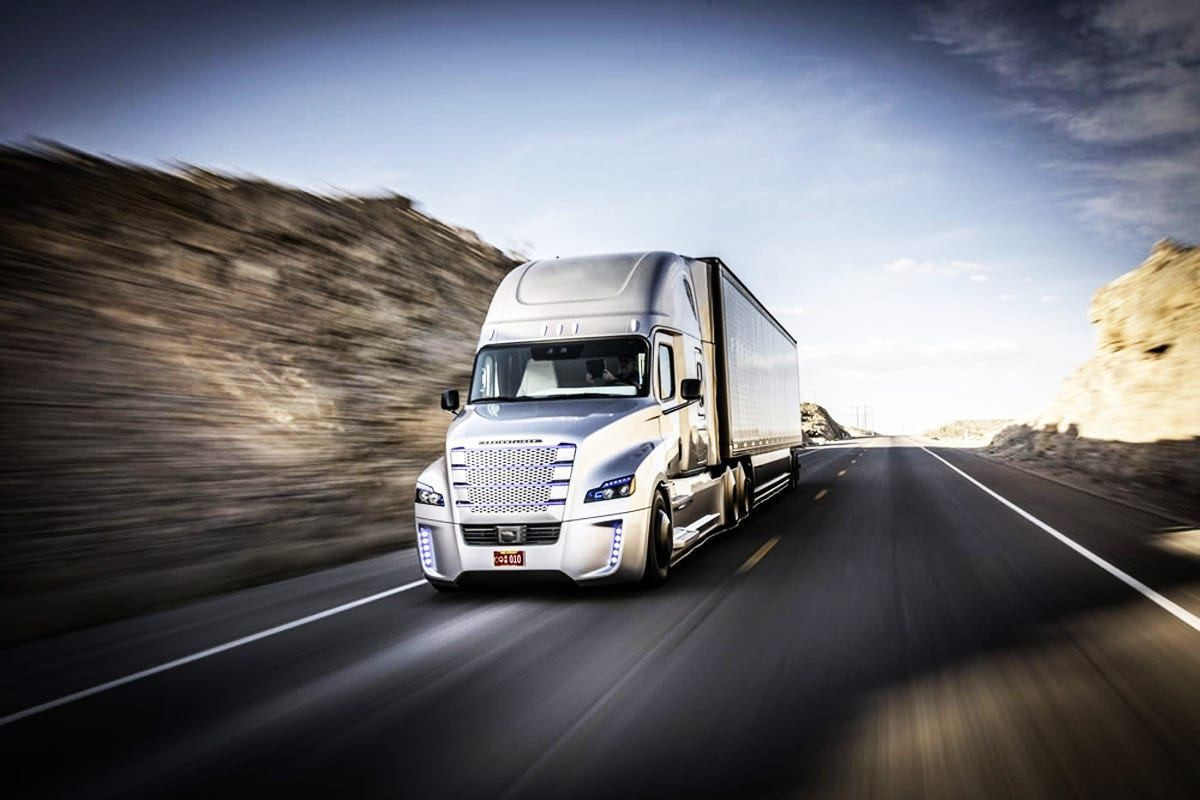
California regulators have proposed new rules at the state’s Department of Motor Vehicles (DMV) that would allow self-driving trucks to test—and eventually operate—on public highways, potentially ending a long-standing prohibition on heavy autonomous vehicles. The draft regulations include a phased permitting process similar to that for robotaxis: companies would first be allowed to test with a human safety operator, then gradually move to driverless testing and deployment once certain criteria—such as logging 500,000 miles of autonomous driving, including a required portion in California—are met. The changes would also allow law enforcement to issue traffic tickets to driverless vehicles, closing a legal loophole that has frustrated authorities. Although many AV companies and industry stakeholders applaud the move as a major step forward, labor groups like the Teamsters remain firmly opposed, arguing that the deployment threatens jobs and road safety.
Sources: WebPro News, SFist.com
Key Takeaways
– The DMV’s proposed regulations mark a dramatic shift by lifting the ban on autonomous trucks over 10,000 pounds, allowing them to test and eventually operate on California’s public highways under a phased permitting system.
– Before fully driverless deployment, companies must accumulate extensive test miles—including a significant portion within California—under human supervision; this is designed to build safety data and give regulators confidence in performance.
– The proposal includes new legal clarity: law enforcement will gain the authority to cite driverless trucks for traffic violations, addressing a critical enforcement gap that previously hindered accountability.
In-Depth
For years, California—despite being a hub for autonomous vehicle development—has effectively barred driverless trucks from roaming its highways, limiting tests to lighter robotaxis or forcing heavy truck trials to occur in more permissive states like Texas and Arizona. But that may be changing soon. On December 4, 2025, the state’s DMV unveiled a fresh regulatory framework that, if finalized, could allow self-driving trucks weighing over 10,000 pounds to begin operations on public roads by as early as 2026.
The proposed rules are structured around a phased permitting approach designed to balance innovation and public safety. In the first phase, companies would test their trucks with a human safety driver behind the wheel. Once they’ve completed a substantial amount of autonomous miles—including a required minimum within California’s operational design domain—they may apply for “driverless testing” and later “deployment” permits. The threshold: roughly 500,000 autonomous miles, with a sizable share conducted in-state.
This isn’t just about letting trucks run autonomously—it’s about building a scalable, defensible regulatory model. The DMV’s draft includes provisions allowing state police to issue traffic citations to driverless vehicles, eliminating a major grey area that previously allowed autonomous vehicles to bypass enforcement.
For companies developing autonomous freight technology, such as those already based in California, this shift opens the door to leveraging local infrastructure and logistics corridors, potentially speeding up testing, data collection, and eventual commercialization. Industry representatives see this as a critical inflection point that could help bring coast-to-coast autonomous trucking to life.
But not everyone’s on board. Labor organizations—most prominently the Teamsters—are threatening legal and political pushback. They’ve already urged the passage of legislation demanding a human safety operator in every autonomous truck, regardless of the DMV’s rulemaking. Their argument: automated trucks could displace thousands of driving jobs and pose safety risks on the road.
The final outcome hinges on the public comment window, which closes December 18. If regulators move forward, California could soon become the first major freight corridor to approve fully driverless commercial trucking—setting a precedent that might reshape national freight logistics and raise fresh debates about jobs, safety, and the future of transportation.