

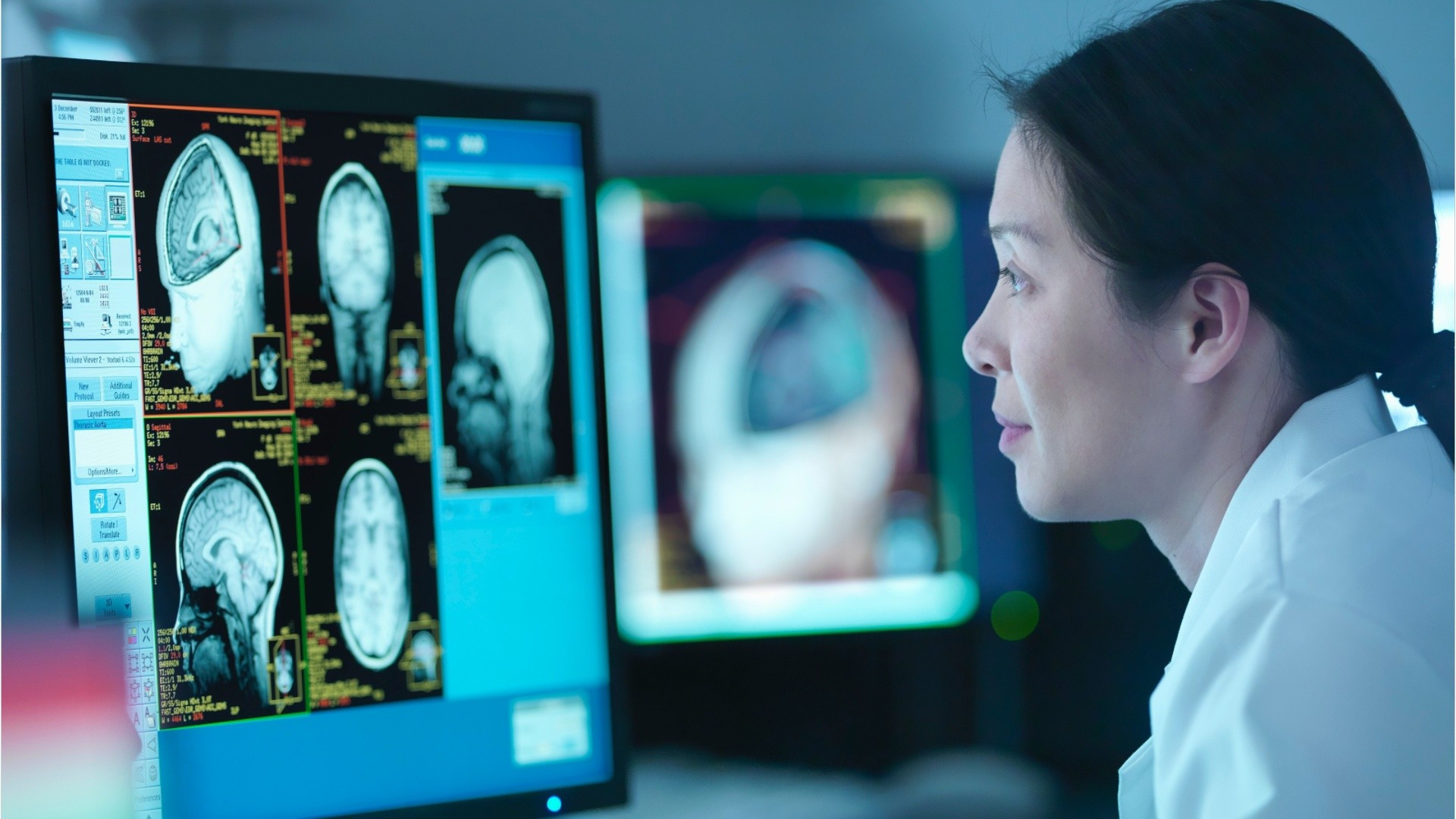
The hottest job at AI companies right now isn’t prompt-engineering or multimodal design — it’s neuroscience. Firms like Meta and others are actively recruiting scientists with brain-research backgrounds, motivated by a push to make AI more energy-efficient and interpretable. Neuroscience offers tools to study how our brain accomplishes massive computational feats using just ~20 watts, and AI firms hope to apply those efficiency lessons to large models. For many neuroscientists, especially in light of shrinking public-sector funding, private-sector roles offer not just big salaries but the potential for real-world impact.
Sources: Yahoo Tech, Semafor
Key Takeaways
– AI firms are recruiting neuroscientists en masse, signaling a shift from traditional software-only talent toward biologically-inspired research.
– The rationale: the human brain performs immense computation at roughly 20 watts — a benchmark for energy efficiency and interpretability that current AI hardware struggles to meet.
– Budget cuts to public neuroscience funding are pushing academics toward private AI jobs, creating an influx of talent with expertise in human cognition and neural systems.
In-Depth
The transformation happening right now in AI staffing reflects a deeper shift in how companies are thinking about artificial intelligence — not simply as lines of code or stacks of servers, but as systems that might draw on lessons from one of nature’s most efficient computers: the human brain. A new wave of hiring is underway. According to recent reporting, neuroscientists are now among the most sought-after candidates at leading AI firms.
This pivot stems from a growing acknowledgment that many of the inefficiencies in modern AI — in power usage, interpretability, and scaling — stem from the way models are structured: massive networks of artificial neurons running on frequently wasteful hardware. Meanwhile, the human brain performs mind-boggling computational feats using roughly the equivalent of twenty watts. If AI companies can understand and replicate even a fraction of that efficiency, the payoff could be enormous: models that are cheaper to run, more scalable, and — critically — more “understandable,” in terms of why they make the decisions they do.
Enter the neuroscientists. Researchers trained in studying how neurons connect, how cognition emerges, and how decision-making works in the brain are now being recruited to help design AI architecture that more closely mirrors human cognition. One striking example: a scholar from a well-regarded academic neuroscience center recently left to join a major tech company. There he works not on laboratory experiments or theoretical cognition models — but on social-media algorithms and neural-network backends. In his words, he moved because he wanted real-world impact. In a corporate environment, he receives immediate feedback on his modifications: Did the model perform better? Did users respond positively? The contrast with slow-moving academia is clear.
For the companies hiring, it’s two-fold: first, they get fresh brains with deep understanding of biological neural systems; second, they’re tapping a talent pool that’s increasingly available. As government and public funding for neuroscience — much of it through institutions like the NIH — have shrunk, researchers have fewer incentives to stay in academia. That structural shift, combined with the allure of generous compensation and real-world influence, is shifting the balance toward the private sector.
In effect, this marks a turning point. Rather than relying solely on traditional machine-learning engineers, AI firms are betting that the next wave of breakthroughs will come from cross-disciplinary thinkers — neuroscientists who can translate principles of brain function into more efficient, interpretable, and powerful AI. If they succeed, we might see a future in which artificial intelligence isn’t just computationally impressive — it’s biologically inspired, lean, and far more aligned with how real brains work.