

Close Menu

    Subscribe to Updates

    Get the latest creative news from FooBar about art, design and business.

    What's Hot

    Hidden Leak Undercuts “Miracle” Electronics Insulator Discovery

    January 28, 2026

    Robot Lip-Sync Breakthrough: Machine Learns Realistic Speech Movement from YouTube

    January 28, 2026

    New Malicious Chrome Extensions Steal Enterprise HR Credentials and Enable Full Account Takeovers

    January 27, 2026
    Facebook X (Twitter) Instagram
    • Tech
    • AI News
    • Get In Touch
    Facebook X (Twitter) LinkedIn
    TallwireTallwire
    • Tech

      Robot Lip-Sync Breakthrough: Machine Learns Realistic Speech Movement from YouTube

      January 28, 2026

      Hidden Leak Undercuts “Miracle” Electronics Insulator Discovery

      January 28, 2026

      New Malicious Chrome Extensions Steal Enterprise HR Credentials and Enable Full Account Takeovers

      January 27, 2026

      Patent Data Reveals U.S. Tech Growth Shifting to Batteries and Sustainable Materials

      January 27, 2026

      Meta’s Metaverse Retreat Signals VR Era Is Fading

      January 27, 2026
    • AI News

      Robot Lip-Sync Breakthrough: Machine Learns Realistic Speech Movement from YouTube

      January 28, 2026

      Adobe Rolls Out New AI-Powered Video Editing Tools in Premiere and After Effects

      January 27, 2026

      Patent Data Reveals U.S. Tech Growth Shifting to Batteries and Sustainable Materials

      January 27, 2026

      Google Temporarily Disables YouTube’s Advanced Captions, Triggering Backlash

      January 27, 2026

      Meta’s Metaverse Retreat Signals VR Era Is Fading

      January 27, 2026
    • Security

      New Malicious Chrome Extensions Steal Enterprise HR Credentials and Enable Full Account Takeovers

      January 27, 2026

      Chinese AI Leaders Warn US Lead Is Widening in Tech Race

      January 25, 2026

      Emergency Windows 11 Shutdown Bug Prompts Microsoft To Release Urgent Fix

      January 25, 2026

      Pentagon Integrates Elon Musk’s Grok AI Into U.S. Military Systems Amid Innovation Push

      January 25, 2026

      Starlink Becomes Critical Internet Lifeline Amid Iran Protest Crackdown

      January 25, 2026
    • Health

      Biotics AI Secures FDA Clearance for AI-Driven Fetal Ultrasound Tool

      January 27, 2026

      Israeli Defense Corps Unveils AI-Driven PTSD Tools and Blood-Delivering Drones

      January 26, 2026

      New AI Model Flags Hidden Risks in Drinking Water Disinfection

      January 24, 2026

      Anthropic Launches Claude for Healthcare to Rival OpenAI’s ChatGPT Health

      January 20, 2026

      Goldman Sachs Says Young Workers Better Poised for Tech-Era Changes

      January 18, 2026
    • Science

      Robot Lip-Sync Breakthrough: Machine Learns Realistic Speech Movement from YouTube

      January 28, 2026

      Hidden Leak Undercuts “Miracle” Electronics Insulator Discovery

      January 28, 2026

      Biotics AI Secures FDA Clearance for AI-Driven Fetal Ultrasound Tool

      January 27, 2026

      Israeli Defense Corps Unveils AI-Driven PTSD Tools and Blood-Delivering Drones

      January 26, 2026

      New AI Model Flags Hidden Risks in Drinking Water Disinfection

      January 24, 2026
    • People

      Starlink Becomes Critical Internet Lifeline Amid Iran Protest Crackdown

      January 25, 2026

      Musk Pledges to Open-Source X’s Recommendation Algorithm, Promising Transparency

      January 21, 2026

      Meta Taps Former Trump National Security Advisor Dina Powell McCormick as New President, Vice Chair

      January 19, 2026

      Big Tech Scores a Win as Europe Softens Digital Rule Overhaul

      January 18, 2026

      Google’s John Mueller Tells Marketers to Prioritize Real Audience Data Over SEO vs. GEO Buzz

      January 17, 2026
    TallwireTallwire
    Home»AI News»Chinese AI Leaders Warn US Lead Is Widening in Tech Race
    AI News

    Chinese AI Leaders Warn US Lead Is Widening in Tech Race

    4 Mins Read
    Facebook Twitter Pinterest LinkedIn Tumblr Email
    White House Defends Sending Nvidia AI Chips to China Amid Security Debate
    White House Defends Sending Nvidia AI Chips to China Amid Security Debate
    Share
    Facebook Twitter LinkedIn Pinterest Email

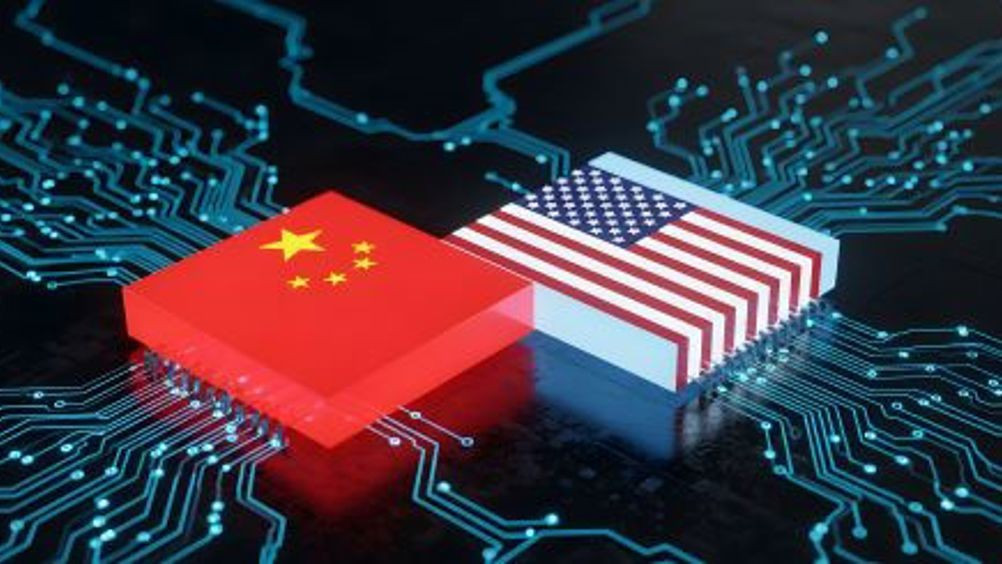
    Some of China’s top artificial intelligence executives publicly acknowledged that despite recent optimism and major IPOs exceeding $1 billion in domestic listings, China remains unlikely to overtake the United States in cutting-edge AI research and development in the near term, with limited access to advanced chips and compute cited as major obstacles and leaders assigning less than a 20 percent chance of leapfrogging American firms like OpenAI and Anthropic over the next three to five years. Sources report that Alibaba, Tencent, and Zhipu AI leadership at recent industry summits emphasized that the gap may actually be widening due to structural challenges such as export controls on high-end semiconductors and the U.S.’s deeper investment in foundational AI technologies, even as Chinese companies cultivate open-source models and capture IPO capital. The comments signal a nuanced phase in the U.S.–China AI competition in which Chinese firms acknowledge significant hurdles to matching U.S. compute and innovation leadership despite progress in deployment and market growth.

    Sources:

    https://www.semafor.com/article/01/11/2026/chinese-ai-leaders-warn-the-us-lead-is-widening
    https://www.bloomberg.com/news/articles/2026-01-10/china-ai-leaders-warn-of-widening-gap-with-us-after-1b-ipo-week
    https://m.economictimes.com/news/international/us/chinas-ai-reality-check-why-tech-leaders-say-beating-us-ai-giants-is-unlikely-anytime-soon/articleshow/126457670.cms

    Key Takeaways

    • China’s own AI executives concede that overtaking U.S. AI firms in fundamental research breakthroughs in the next three to five years is unlikely, citing less than a 20 percent chance.
    • Structural constraints—especially restricted access to advanced semiconductors and limited compute capacity—are viewed by Chinese tech leaders as key factors widening the gap with U.S. AI leadership.
    • Despite successful IPOs and strong domestic investment, Chinese firms still lag in core foundational AI capabilities relative to U.S. competitors.

    In-Depth

    In the global competition for supremacy in artificial intelligence, a telling narrative has emerged from within China’s own technology elite: the United States continues to hold a meaningful and possibly widening lead over Chinese AI developers. At recent industry forums and summits, top executives from major Chinese technology companies—including leaders from Alibaba, Tencent, and Zhipu AI—have openly discussed the limits of China’s near-term prospects for overtaking U.S. advances in foundational AI technologies. These candid assessments, highlighted by the fact that China’s leaders give their own industry less than a one-in-five chance of leapfrogging U.S. firms like OpenAI and Anthropic over the next three to five years, paint a picture of a fierce but uneven AI race that favors enduring American advantages.

    At the heart of these sober assessments are structural impediments, chief among them the persistent constraints on cutting-edge semiconductors. U.S. export controls on advanced chips and lithography equipment have forced Chinese developers to rely on more limited domestic hardware or costly workarounds, hampering their ability to train and scale next-generation models at the same pace as American competitors. These hardware bottlenecks, combined with the massive investment in data centers, cloud infrastructure, and foundational research in the United States, mean that Chinese firms find themselves playing catch-up even as they attract significant capital through high-profile initial public offerings.

    This dynamic was underscored in recent coverage of a succession of billion-dollar AI IPOs in Hong Kong, which, while boosting investor confidence and injecting capital into China’s tech ecosystem, did not erase the recognition among industry veterans that funding alone cannot swiftly bridge the gap to U.S. innovation leadership. The comments from Chinese AI leaders—some of whom oversee major open-source model initiatives—reflect both pride in the progress made and realism about the challenges ahead.
    China’s ecosystem has seen rapid growth in deployment and adoption of AI models, particularly open-source variants that have gained traction globally. But foundational breakthroughs in large language models, generative AI, and underlying architectures continue to cluster around U.S. research hubs, in part because of deeper compute resources, more expansive venture and private capital pools, and broader access to cutting-edge hardware.

    The debate also highlights a key tension in the broader AI competition: while headline figures on model downloads, patent filings, or IPO valuations suggest a vibrant, accelerating Chinese AI scene, these indicators do not necessarily equate to leadership in the basic scientific and technological work that underpins frontier innovation. The candid warnings from Chinese executives suggest that the narrative of a head-to-head race is more complex than binary claims about who will “win” AI might imply. Chinese firms may continue to close specific performance gaps in targeted areas, but significant obstacles remain for Beijing’s ambitions to match or surpass U.S. capacity across the full spectrum of foundational AI research and development.

    Share. Facebook Twitter Pinterest LinkedIn Tumblr Email
    Previous ArticleWorkday Study Finds Workers Waste Substantial Time Fixing AI Errors
    Next Article Emergency Windows 11 Shutdown Bug Prompts Microsoft To Release Urgent Fix

    Related Posts

    Robot Lip-Sync Breakthrough: Machine Learns Realistic Speech Movement from YouTube

    January 28, 2026

    Hidden Leak Undercuts “Miracle” Electronics Insulator Discovery

    January 28, 2026

    Adobe Rolls Out New AI-Powered Video Editing Tools in Premiere and After Effects

    January 27, 2026

    New Malicious Chrome Extensions Steal Enterprise HR Credentials and Enable Full Account Takeovers

    January 27, 2026
    Add A Comment
    Leave A Reply Cancel Reply

    Editors Picks

    Robot Lip-Sync Breakthrough: Machine Learns Realistic Speech Movement from YouTube

    January 28, 2026

    Hidden Leak Undercuts “Miracle” Electronics Insulator Discovery

    January 28, 2026

    New Malicious Chrome Extensions Steal Enterprise HR Credentials and Enable Full Account Takeovers

    January 27, 2026

    Patent Data Reveals U.S. Tech Growth Shifting to Batteries and Sustainable Materials

    January 27, 2026
    Top Reviews
    Tallwire
    Facebook X (Twitter) LinkedIn Threads Instagram RSS
    • Tech
    • Entertainment
    • Business
    • Government
    • Academia
    • Transportation
    • Legal
    • Press Kit
    © 2026 Tallwire. Optimized by ARMOUR Digital Marketing Agency.

    Type above and press Enter to search. Press Esc to cancel.