

Close Menu

    Subscribe to Updates

    Get the latest creative news from FooBar about art, design and business.

    What's Hot

    Intel Quietly Pulls Plug on Controversial Pay-to-Unlock CPU Feature Model

    February 13, 2026

    Hobbyist Finds $500 Worth Of RAM In Landfill As Memory Shortages Bite Hardware Market

    February 13, 2026

    Toyota Announces Open-Source “Console-Grade” Game Engine For Vehicle Systems And Beyond

    February 13, 2026
    Facebook X (Twitter) Instagram
    • Tech
    • AI News
    • Get In Touch
    Facebook X (Twitter) LinkedIn
    TallwireTallwire
    • Tech

      Hobbyist Finds $500 Worth Of RAM In Landfill As Memory Shortages Bite Hardware Market

      February 13, 2026

      Intel Quietly Pulls Plug on Controversial Pay-to-Unlock CPU Feature Model

      February 13, 2026

      Toyota Announces Open-Source “Console-Grade” Game Engine For Vehicle Systems And Beyond

      February 13, 2026

      Snapchat Rolls Out Expanded Arrival Notifications Beyond Home

      February 13, 2026

      AI Agents Build Their Own MMO Playground After Moltbook Ignites Agent-Only Web Communities

      February 12, 2026
    • AI News

      Hobbyist Finds $500 Worth Of RAM In Landfill As Memory Shortages Bite Hardware Market

      February 13, 2026

      Chinese Firms Expand Chip Production As Global Memory Shortage Deepens

      February 12, 2026

      AI Agents Build Their Own MMO Playground After Moltbook Ignites Agent-Only Web Communities

      February 12, 2026

      Struggling AI Startups Kept Afloat Despite Never Becoming Profitable

      February 12, 2026

      Maybe AI Agents Can Be Lawyers After All

      February 12, 2026
    • Security

      China’s Salt Typhoon Hackers Penetrate Norwegian Networks in Espionage Push

      February 12, 2026

      Reality Losing the Deepfake War as C2PA Labels Falter

      February 11, 2026

      Global Android Security Alert: Over One Billion Devices Vulnerable to Malware and Spyware Risks

      February 11, 2026

      Small Water Systems Face Rising Cyber Threats As Experts Warn National Security Risk

      February 9, 2026

      EU Drove Global Censorship Through Tech Platforms: House Judiciary Report

      February 8, 2026
    • Health

      AI Advances Aim to Bridge Labor Gaps in Rare Disease Treatment

      February 12, 2026

      Boeing and Israel’s Technion Forge Clean Fuel Partnership to Reduce Aviation Carbon Footprints

      February 11, 2026

      OpenAI’s Drug Royalties Model Draws Skepticism as Unworkable in Biotech Reality

      February 10, 2026

      New AI Health App From Fitbit Founders Aims To Transform Family Care

      February 9, 2026

      Startups Deploy Underwater Robots to Radically Expand Ocean Tracking Capabilities

      February 9, 2026
    • Science

      NASA Artemis II Spacesuit Mobility Concerns Ahead Of Historic Mission

      February 13, 2026

      AI Agents Build Their Own MMO Playground After Moltbook Ignites Agent-Only Web Communities

      February 12, 2026

      AI Advances Aim to Bridge Labor Gaps in Rare Disease Treatment

      February 12, 2026

      Boeing and Israel’s Technion Forge Clean Fuel Partnership to Reduce Aviation Carbon Footprints

      February 11, 2026

      Companies Soften Robot Design to Ease Public Acceptance

      February 10, 2026
    • People

      Google Co-Founder’s Epstein Contacts Reignite Scrutiny of Elite Tech Circles

      February 7, 2026

      Bill Gates Denies “Absolutely Absurd” Claims in Newly Released Epstein Files

      February 6, 2026

      Informant Claims Epstein Employed Personal Hacker With Zero-Day Skills

      February 5, 2026

      Starlink Becomes Critical Internet Lifeline Amid Iran Protest Crackdown

      January 25, 2026

      Musk Pledges to Open-Source X’s Recommendation Algorithm, Promising Transparency

      January 21, 2026
    TallwireTallwire
    Home»AI News»SpaceX Seeks FCC Approval for Ambitious 1 Million Solar-Powered Satellite Orbital Data Center Network
    AI News

    SpaceX Seeks FCC Approval for Ambitious 1 Million Solar-Powered Satellite Orbital Data Center Network

    4 Mins Read
    Facebook Twitter Pinterest LinkedIn Tumblr Email
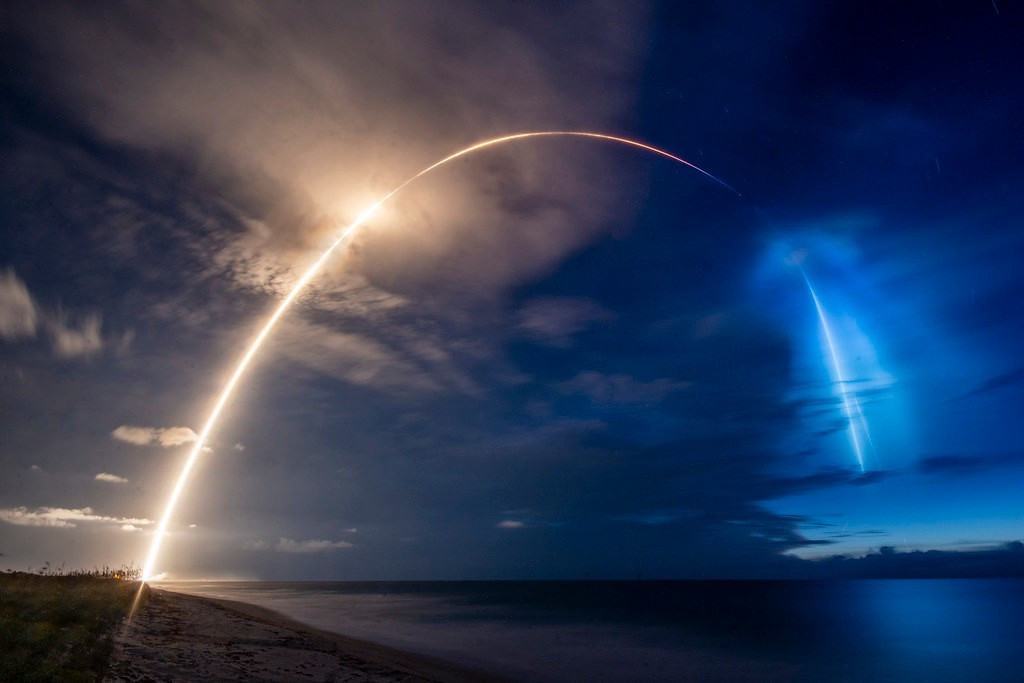
    SpaceX Plans Historic 2026 IPO Targeting $1.5 Trillion Valuation
    SpaceX Plans Historic 2026 IPO Targeting $1.5 Trillion Valuation
    Share
    Facebook Twitter LinkedIn Pinterest Email

    SpaceX has filed a sweeping proposal with the U.S. Federal Communications Commission seeking permission to deploy as many as 1 million solar-powered satellites into low Earth orbit to serve as artificial intelligence (AI) data centers powered directly by solar energy—a plan it describes as a way to meet surging AI computing demand, tap near-constant solar power, and even frame as a step toward humanity harnessing the Sun’s full energy potential. According to multiple reports, the filing pitches this massive orbital network as offering cost and energy efficiencies compared with traditional ground-based data centers while relying on SpaceX’s advancing Starship launch system to make such deployment technically and economically possible. Critics and analysts note that the “1 million” figure is widely viewed as an upper-bound regulatory filing strategy, far beyond what’s likely to be approved or deployed, and that such a constellation would dramatically expand orbital congestion given that only about 15 000 satellites currently encircle Earth. The request also comes amid SpaceX’s broader strategic moves in AI infrastructure, including discussions of merging with Elon Musk’s AI company, xAI, and efforts by rival tech and space players to advance competing orbital computing concepts. The proposal is expected to trigger intense regulatory reviews over space traffic management, environmental impacts, and the feasibility of operating compute infrastructure hundreds of miles above Earth’s surface.

    Sources

    https://www.reuters.com/business/aerospace-defense/spacex-seeks-fcc-nod-solar-powered-satellite-data-centers-ai-2026-01-31/
    https://www.theverge.com/tech/871641/spacex-fcc-1-million-solar-powered-data-centers-satellites-orbit
    https://www.933thedrive.com/2026/01/31/spacex-seeks-fcc-nod-for-solar-powered-satellite-data-centers-for-ai/

    Key Takeaways

    • SpaceX is petitioning the Federal Communications Commission to authorize up to one million solar-powered satellites designed to function as AI data centers in orbit, leveraging near-constant sunlight and potential efficiencies in power and cooling.
    • The figure of one million satellites is broadly regarded as a regulatory starting point rather than a literal near-term deployment target, reflecting SpaceX’s approach to securing spectrum and orbital rights.
    • The proposal raises concerns over orbital congestion, regulatory oversight, and technical challenges even as it positions SpaceX to compete aggressively in the expanding AI infrastructure market.

    In-Depth

    SpaceX’s regulatory filing to the Federal Communications Commission represents one of the boldest and most futuristic infrastructure proposals ever submitted by a private aerospace company. Rather than incremental additions to its existing Starlink broadband constellation, SpaceX’s request seeks authority to launch a truly unprecedented constellation of up to 1 million satellites, each equipped with solar panels and computing hardware to serve as orbital data centers for artificial intelligence workloads. These satellites would rely on solar power harvested above the atmosphere’s attenuating effects, potentially offering near constant generation of electricity and minimizing the massive energy and water requirements that terrestrial data centers face, particularly those powering AI training and inference workloads. The FCC filing frames the idea not merely as a commercial undertaking but as a long-term vision for transforming how humanity computes and harnesses energy, tapping into concepts like the Kardashev scale of civilization advancement.

    On a practical level, experts and industry observers view the “1 million” number with skepticism, interpreting it as a regulatory strategy to secure broad design flexibility rather than a definitive plan for launching that exact number of satellites. SpaceX has used similar tactics in past filings, such as when seeking permission for tens of thousands of Starlink satellites, then deploying smaller subsets initially. Current estimates place the total number of human-made satellites in orbit at around 15 000, with SpaceX already operating roughly two-thirds of them through Starlink. A leap to hundreds of thousands—or even a fraction of a million—would represent a seismic shift in orbital traffic and demand rigorous space-traffic management protocols to avoid collisions and mitigate space debris risks.

    The proposal is also intertwined with SpaceX’s broader corporate strategy, which appears increasingly focused on AI infrastructure and commercial scaling. Reports indicate that SpaceX is in talks about a merger with xAI, Elon Musk’s artificial intelligence company, which could help align capital and technological development toward space-based computing. This comes at a time when competitors, including Amazon and other space ventures, are pursuing their own orbital computing and data center projects, intensifying competition in what might be the next frontier of AI infrastructure.

    Regulators, meanwhile, face the difficult task of balancing innovation and national interest against the potential for orbital congestion, interference with astronomical research, and the environmental and safety implications of large-scale satellite deployments. The FCC will likely review technical, legal, and environmental aspects of the filing closely, and many analysts predict significant revisions to the proposal before any approval is granted. Nonetheless, SpaceX’s bold vision underscores how the convergence of space technology, AI, and renewable power generation is reshaping expectations about where and how humanity will build the backbone of tomorrow’s digital economy.

    Share. Facebook Twitter Pinterest LinkedIn Tumblr Email
    Previous ArticleRussian Hackers Exploit Weak Security to Breach Polish Power Infrastructure
    Next Article AI CEOs Condemn ICE Violence While Expressing Support for Trump Leadership

    Related Posts

    Intel Quietly Pulls Plug on Controversial Pay-to-Unlock CPU Feature Model

    February 13, 2026

    Hobbyist Finds $500 Worth Of RAM In Landfill As Memory Shortages Bite Hardware Market

    February 13, 2026

    Snapchat Rolls Out Expanded Arrival Notifications Beyond Home

    February 13, 2026

    Toyota Announces Open-Source “Console-Grade” Game Engine For Vehicle Systems And Beyond

    February 13, 2026
    Add A Comment
    Leave A Reply Cancel Reply

    Editors Picks

    Hobbyist Finds $500 Worth Of RAM In Landfill As Memory Shortages Bite Hardware Market

    February 13, 2026

    Intel Quietly Pulls Plug on Controversial Pay-to-Unlock CPU Feature Model

    February 13, 2026

    Toyota Announces Open-Source “Console-Grade” Game Engine For Vehicle Systems And Beyond

    February 13, 2026

    Snapchat Rolls Out Expanded Arrival Notifications Beyond Home

    February 13, 2026
    Top Reviews
    Tallwire
    Facebook X (Twitter) LinkedIn Threads Instagram RSS
    • Tech
    • Entertainment
    • Business
    • Government
    • Academia
    • Transportation
    • Legal
    • Press Kit
    © 2026 Tallwire. Optimized by ARMOUR Digital Marketing Agency.

    Type above and press Enter to search. Press Esc to cancel.