

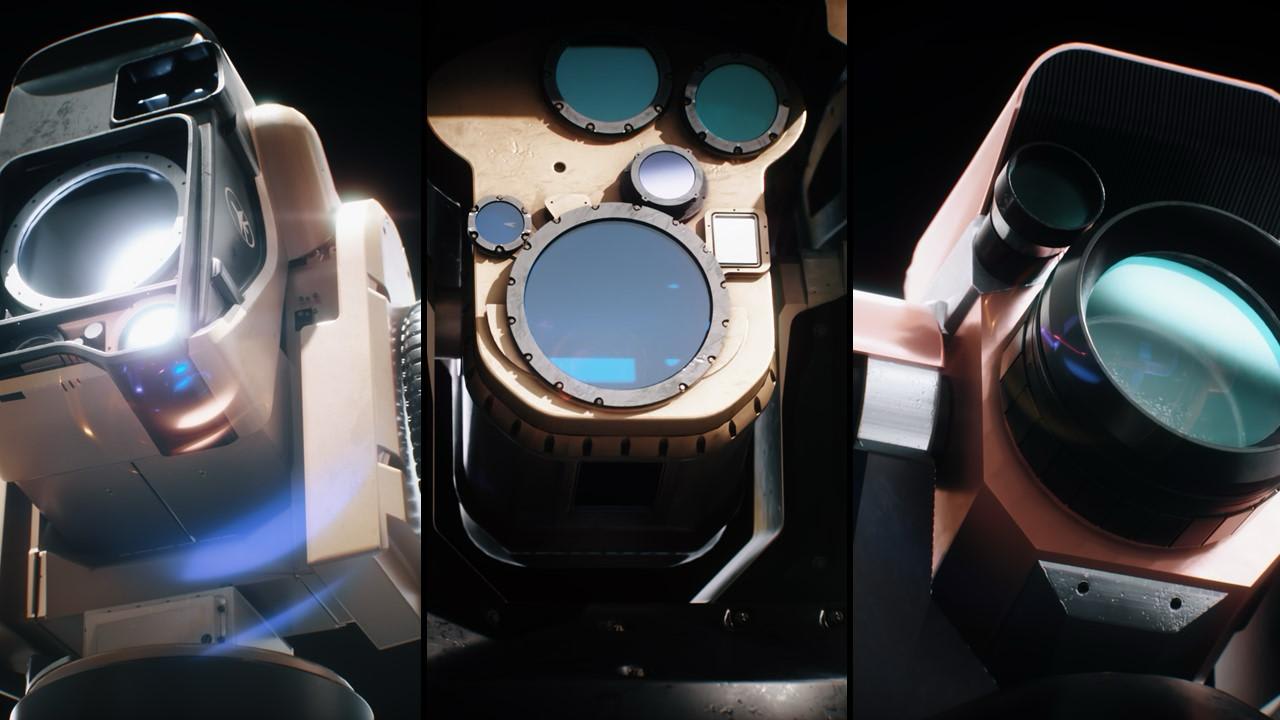
Israel’s emerging laser-based air defense capability, known as Iron Beam, represents a major technological step in the country’s layered missile-defense strategy, designed to complement existing systems such as Iron Dome, David’s Sling, and Arrow. The system uses high-energy lasers to intercept rockets, drones, and mortar rounds at short range, offering a dramatically cheaper alternative to traditional interceptor missiles and potentially reshaping the economics of modern warfare. Developed after decades of research into directed-energy weapons, the system is now entering operational deployment and has reportedly intercepted aerial threats during wartime testing and operations. However, despite its promise, the technology still faces practical limitations including range restrictions, weather interference, and the challenge of engaging large numbers of incoming targets simultaneously. While some viral videos have suggested that lasers have already been used against rockets launched from Lebanon, analysts caution that such footage has not conclusively demonstrated laser intercepts. Still, the deployment of operational laser defense platforms marks a historic milestone in military technology and underscores Israel’s broader effort to maintain an edge against adversaries that increasingly rely on inexpensive rockets and drones to overwhelm traditional missile defenses.
Sources
https://www.jpost.com/israel-news/defense-news/article-888515
https://www.jpost.com/israel-news/defense-news/article-861631
https://www.reuters.com/world/middle-east/israel-developing-iron-beam-laser-air-defense-system-2022-04-14/
Key Takeaways
- Israel’s Iron Beam laser system is designed to complement existing missile defenses by intercepting rockets, drones, and mortars using high-energy directed-energy beams rather than expensive interceptor missiles.
- The technology dramatically lowers the cost of air defense, potentially countering the strategy used by groups such as Hezbollah and Hamas that rely on large volumes of inexpensive rockets and drones.
- Despite its promise, laser defenses remain limited by range, weather conditions, and the ability to engage large numbers of incoming threats simultaneously, meaning they will supplement rather than replace traditional missile interceptors for the foreseeable future.
In-Depth
Israel’s pursuit of directed-energy weapons reflects a broader shift in modern warfare toward technologies that change the economic balance between attack and defense. For years, Israel’s adversaries have relied on cheap rockets, drones, and mortars to overwhelm defensive systems. A crude rocket costing a few hundred dollars could force Israel to fire an interceptor missile costing tens of thousands of dollars. That imbalance created a strategic problem: even successful defenses could be financially unsustainable during prolonged conflicts. The Iron Beam concept attempts to flip that equation.
Instead of firing a missile to destroy an incoming projectile, Iron Beam uses a high-energy laser to burn through the target’s structure, causing it to fail in flight. Because the system uses electricity rather than physical interceptors, the cost of each engagement is dramatically lower. Analysts often compare it to flipping on a powerful spotlight rather than launching a rocket. In an environment where adversaries increasingly deploy large numbers of inexpensive drones and rockets, such a system could fundamentally alter the battlefield economics.
The technology has been in development for decades. Early laser weapon programs faced major obstacles related to power generation, beam stability, and targeting accuracy. Only in recent years have advances in energy generation, optics, and computing made it feasible to deploy laser weapons in compact, mobile systems capable of battlefield use. Israel, the United States, and several other countries have been experimenting with similar systems, but Israel appears to be among the first to move toward operational deployment in a real combat environment.
Iron Beam is designed to operate as part of Israel’s multi-layered air defense network. At the lowest tier, Iron Dome intercepts short-range rockets and artillery shells. David’s Sling handles medium-range threats, while the Arrow systems intercept long-range ballistic missiles high in the atmosphere. Iron Beam fits into this structure as a short-range supplement, especially useful against drones, mortars, and rockets during the early phases of their flight path.
The advantage of a laser in this context is speed. Because a laser beam travels at the speed of light, it can strike a target almost instantly once the system locks onto it. This could allow defenders to intercept threats almost immediately after launch, potentially even before they travel far enough to trigger air-raid sirens in populated areas. That capability has both operational and psychological implications. If rockets can be destroyed seconds after launch, attackers lose not only their weapons but also the ability to disrupt daily life through air-raid alarms and civilian panic.
Still, the technology is far from a perfect solution. Directed-energy systems have several inherent limitations. One of the most important is range. Current battlefield laser systems typically have an effective range of roughly ten kilometers, meaning they can only engage targets relatively close to the defender. That makes them ideal for short-range threats but less useful against long-range ballistic missiles or high-altitude aircraft.
Weather conditions also present a challenge. Lasers must maintain a stable beam on a target long enough to heat and destroy it. Atmospheric interference such as dust, clouds, or heavy rain can weaken the beam or disrupt its focus. Terrain can also block the line of sight, since lasers cannot travel through buildings, mountains, or other obstacles. For these reasons, laser systems will likely operate alongside traditional missile interceptors rather than replacing them entirely.
Another challenge involves the number of targets that can be engaged simultaneously. Missile defense systems like Iron Dome can launch multiple interceptors at multiple targets at the same time. A laser weapon, by contrast, typically needs to remain focused on one target for several seconds before it destroys it. In a large swarm attack involving dozens of rockets or drones, that limitation could become significant unless multiple laser systems are deployed across the defensive network.
Despite these challenges, the potential advantages of laser air defense are significant enough that many analysts view the technology as a turning point. The ability to neutralize cheap drones and rockets at minimal cost could blunt one of the most effective asymmetric strategies used against technologically advanced militaries. Groups that rely on mass rocket launches to overwhelm defenses may find their tactics less effective if each incoming projectile can be destroyed for the price of a few kilowatts of electricity.
For Israel, which faces threats from multiple directions and from adversaries that frequently deploy large numbers of low-cost weapons, the stakes are particularly high. The integration of laser systems into its defense network could reduce the financial burden of constant missile defense while providing another layer of protection for civilian populations.
Whether Iron Beam ultimately proves to be a revolutionary weapon or simply a useful complement to existing systems remains to be seen. But its deployment signals that the long-anticipated era of directed-energy weapons is no longer theoretical. The technology that once seemed confined to science fiction is now moving onto real battlefields, and its evolution will likely shape the next generation of air defense strategies around the world.