

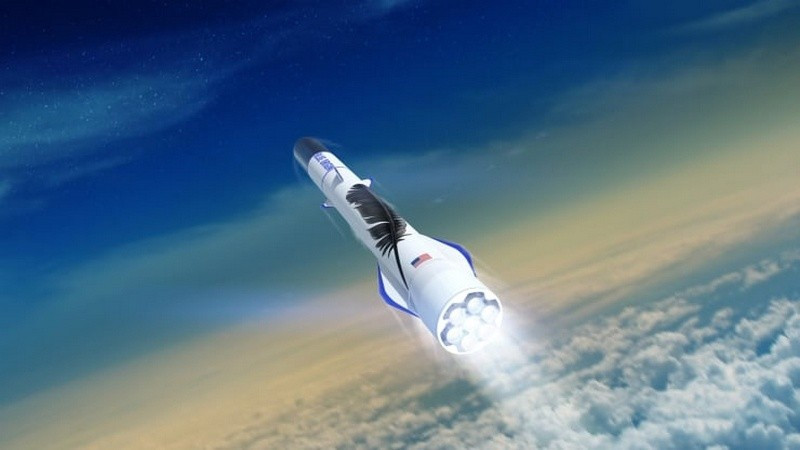
Blue Origin has reached a significant milestone in the commercial space race by successfully landing a reused New Shepard rocket booster for the first time, marking a step forward in its pursuit of cost-efficient, reusable spaceflight technology. The mission demonstrated that the booster, which had previously flown, could be refurbished and launched again before executing a controlled vertical landing back on Earth, reinforcing the company’s long-standing emphasis on reusability as a path to lowering launch costs and increasing flight frequency. While competitors have already made strides in orbital-class rocket reuse, this achievement strengthens Blue Origin’s position in the suborbital tourism and research market, where reliability and repeatability are essential for long-term viability. The successful mission underscores the growing maturity of reusable rocket systems and highlights the broader shift in the private space sector toward sustainability, operational efficiency, and commercial scalability.
Sources
https://www.theepochtimes.com/business/blue-origin-successfully-lands-reused-rocket-booster-for-first-time-6014125
https://www.reuters.com/technology/space/blue-origin-lands-reused-new-shepard-booster-first-time-2026-04-18/
https://www.cnbc.com/2026/04/18/blue-origin-reuses-new-shepard-booster-in-successful-landing.html
Key Takeaways
- Blue Origin successfully launched and landed a previously flown New Shepard booster, demonstrating repeat-use capability.
- The milestone reinforces the company’s strategy of lowering costs through reusability in the suborbital space market.
- The achievement signals intensifying competition in the private space industry, particularly around efficiency and scalability.
In-Depth
Blue Origin’s successful reuse and landing of its New Shepard booster represents more than just a technical achievement; it signals a continued evolution in how private space companies approach cost control, reliability, and long-term sustainability. For years, the promise of reusable rockets has been central to reducing the financial barriers associated with spaceflight. While others in the industry have focused on orbital missions, Blue Origin has methodically advanced its suborbital platform, and this latest development shows that its deliberate pace is beginning to yield tangible results.
At its core, the successful mission demonstrates that a booster can endure the stresses of launch, reentry, refurbishment, and relaunch without compromising performance. That’s a critical benchmark for any company aiming to scale operations. If boosters can be flown multiple times with minimal turnaround costs, it changes the economics of space access entirely. Suborbital missions, whether for tourism or research payloads, become more viable as repeatability improves and costs decline.
This also comes at a time when the broader commercial space sector is becoming more competitive and more pragmatic. Investors and stakeholders are no longer satisfied with ambitious promises; they are looking for operational proof points. Blue Origin’s achievement provides one such proof point, showing that the company is not just developing technology but successfully executing on it.
There is also a strategic angle here. By strengthening its position in suborbital flight, Blue Origin is building a foundation that could support more ambitious projects down the line. Reusability is not just a feature; it’s a necessity for any serious player in space. This milestone reinforces the idea that disciplined engineering and long-term focus can still compete effectively in a sector often dominated by headline-grabbing announcements.