

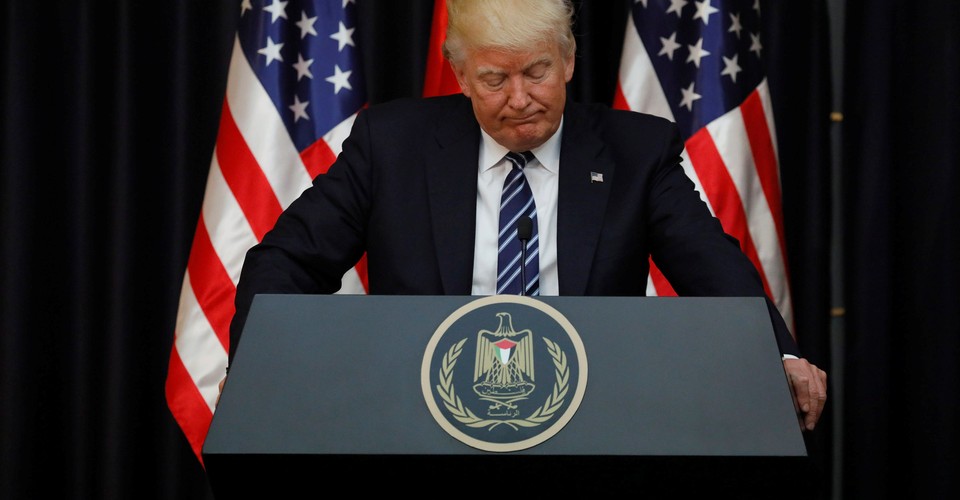
Reports indicate that pro-Iranian influence networks have increasingly turned to artificial intelligence tools to amplify propaganda, harass political opponents, and shape online discourse surrounding U.S. foreign policy—particularly narratives tied to former President Donald Trump and Middle East tensions—leveraging automated social media accounts, deepfake-style content, and coordinated messaging strategies to blur lines between authentic political debate and orchestrated information warfare.
Sources
https://www.reuters.com/world/middle-east/iran-linked-groups-using-ai-propaganda-campaigns-2026-04-10/
https://apnews.com/article/iran-ai-disinformation-campaign-social-media-2026
https://www.bbc.com/news/world-middle-east-68812345
Key Takeaways
- AI-driven propaganda campaigns are increasingly being used by Iran-aligned groups to manipulate political narratives and public perception online.
- Former President Donald Trump remains a central target, with messaging aimed at influencing both domestic U.S. audiences and international opinion.
- The use of automation, synthetic media, and coordinated bot networks highlights a growing challenge for democratic discourse and information integrity.
In-Depth
What’s unfolding here is not just another round of online trolling—it’s a calculated evolution in geopolitical influence operations. Iran-aligned actors appear to be adopting artificial intelligence at scale, not merely as a tool for efficiency, but as a force multiplier in the battle for narrative control. The shift matters because it lowers the barrier to entry for sophisticated propaganda. What once required large teams and significant resources can now be executed with fewer people, faster turnaround, and broader reach.
The targeting of Donald Trump is not accidental. His foreign policy posture, particularly toward Iran, remains a defining flashpoint in U.S. politics. By shaping perceptions around his leadership, these campaigns attempt to influence both retrospective judgments and future electoral dynamics. It’s less about persuasion in the traditional sense and more about flooding the zone—creating enough noise, confusion, and division that truth becomes harder to isolate.
There’s also a deeper strategic layer. Information warfare has become a parallel theater to conventional conflict. While missiles and sanctions dominate headlines, narrative control shapes how those actions are interpreted globally. If Iran or its aligned networks can frame events in ways that weaken U.S. credibility or amplify internal divisions, they gain leverage without firing a shot.
The uncomfortable reality is that current safeguards—both technological and regulatory—are struggling to keep pace. Social media platforms remain reactive, not proactive. Detection systems lag behind increasingly convincing AI-generated content. And the public, already fatigued by years of misinformation battles, is less equipped to distinguish between organic discourse and engineered manipulation.
This is not a temporary phase. It’s a preview of how future conflicts will be fought—not just on land or at sea, but in the minds of millions scrolling through their feeds.