

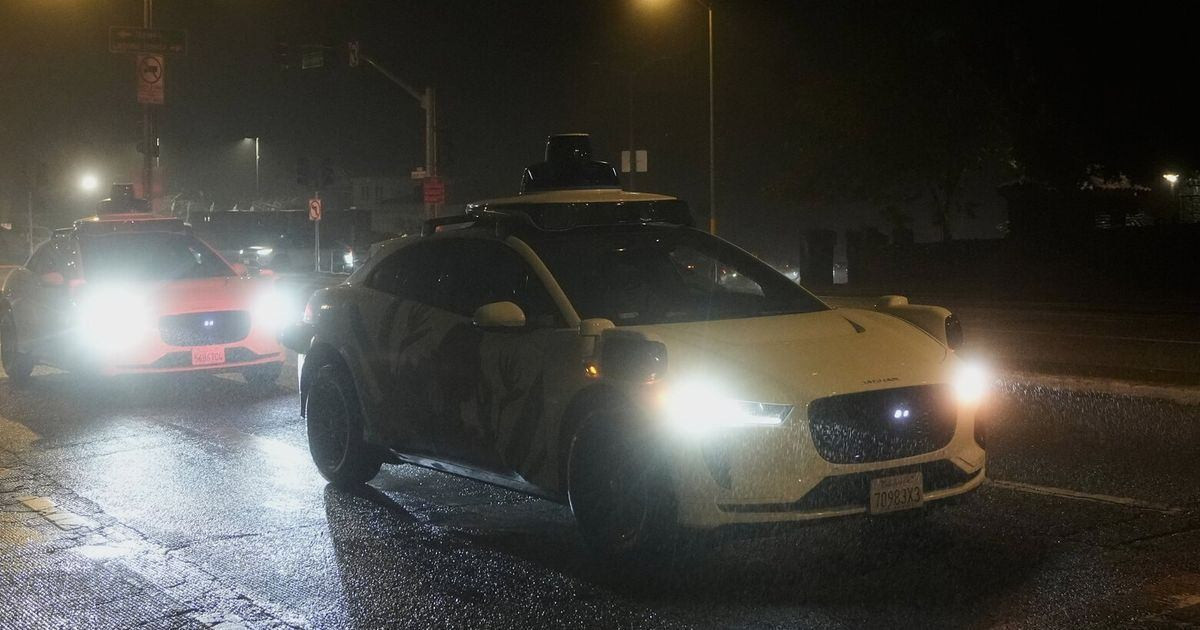
California lawmakers are advancing a controversial bill aimed at tightening oversight of autonomous robotaxi services, requiring companies like Waymo to deploy locally based human operators capable of responding rapidly to emergencies and equipping vehicles with manual override systems accessible to first responders, a move supporters argue is necessary after high-profile incidents where driverless vehicles obstructed traffic and emergency operations, while critics—including industry leaders—warn the measure is overly rigid, duplicative of pending regulations, and could effectively cripple or even halt the expansion of autonomous vehicle services in the state by imposing costly operational mandates and punitive enforcement mechanisms that go beyond existing safety frameworks.
Sources
https://www.sfchronicle.com/california/article/waymo-robotaxis-bill-safer-22197713.php
https://nypost.com/2026/04/10/business/california-bill-aims-to-put-more-human-operators-on-robotaxis-like-waymos/
https://www.sfchronicle.com/opinion/openforum/article/pedestrian-death-driver-accident-22210904.php
Key Takeaways
- California’s proposed legislation would require human oversight infrastructure for robotaxis, including rapid-response personnel and manual override capabilities.
- Industry leaders argue the bill duplicates existing regulatory requirements and could function as a de facto ban on autonomous vehicle operations.
- The broader debate reflects tension between technological innovation and public safety concerns, with policymakers responding to incidents involving traffic disruption and emergency interference.
In-Depth
The legislative push unfolding in California underscores a growing friction between innovation and governance, particularly as autonomous vehicle technology moves from experimental novelty to widespread deployment. At the center of the debate is a proposal that would impose stricter operational requirements on robotaxi operators, mandating that companies maintain locally based human teams capable of intervening quickly when systems fail or conditions deteriorate. It also introduces provisions allowing emergency personnel to directly disable vehicles—an acknowledgment that, despite technological advances, autonomy is not yet infallible.
Supporters of the measure argue that the bill is a necessary corrective to real-world failures that have already disrupted public safety systems. Incidents involving stalled vehicles blocking intersections or impeding emergency responders have raised legitimate concerns about whether current safeguards are sufficient. From this perspective, requiring a human backstop is not an overreach but a baseline expectation in a system where lives may depend on rapid intervention.
However, critics see something different: a regulatory framework that risks strangling a promising industry under the weight of political caution and labor-driven interests. They point out that new statewide rules are already scheduled to take effect, requiring timely remote responses to incidents, making additional mandates redundant. More significantly, the cost and logistical burden of maintaining on-the-ground personnel for fleets of autonomous vehicles could render the business model economically unworkable, effectively sidelining companies that have invested billions into the technology.
There is also a broader philosophical divide at play. Data increasingly suggests that autonomous systems may outperform human drivers in reducing certain types of accidents, yet public perception remains shaped by isolated incidents involving machines rather than the far more common failures of human drivers. This asymmetry in scrutiny has influenced policymakers, who are under pressure to act decisively—even if that action risks slowing technological progress.
Ultimately, the outcome of this legislative effort will signal whether California intends to remain a proving ground for autonomous innovation or pivot toward a more restrictive model that prioritizes control over speed of advancement.