

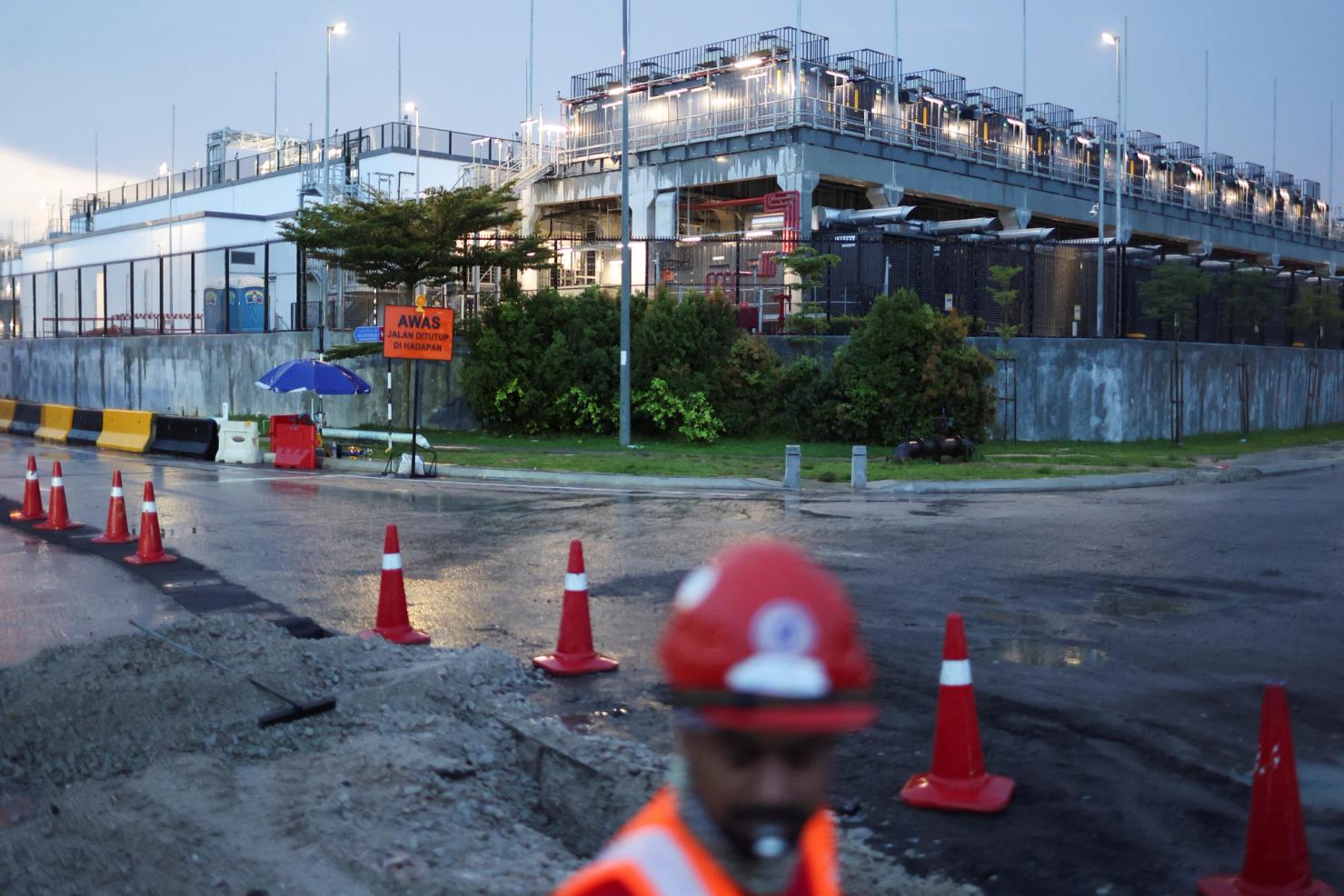
The global artificial-intelligence buildout is delivering a powerful economic windfall to Asia’s manufacturing-heavy economies as unprecedented spending on data centers drives demand for semiconductors, memory chips, servers, networking equipment and other infrastructure. Taiwan, South Korea, Malaysia and Vietnam are benefiting from surging exports, while Japan is gaining through its semiconductor-equipment industry. Taiwan’s central role in advanced chips and AI servers has produced particularly dramatic trade gains, while Singapore recently reported a 131.8% year-over-year jump in electronics exports. The expansion demonstrates that AI’s economic benefits are spreading well beyond software developers and American technology companies to the industrial economies capable of manufacturing the physical infrastructure that makes AI possible. At the same time, countries less integrated into these supply chains face greater economic pressure, underscoring the growing importance of manufacturing capacity, reliable energy and technological self-sufficiency in the AI era.
Key Takeaways
- AI infrastructure spending is producing an enormous manufacturing dividend across Asia, with Taiwan, South Korea, Malaysia, Vietnam, Singapore and Japan benefiting from demand for chips, servers, memory, semiconductor equipment and data-center components.
- Taiwan has emerged as one of the clearest beneficiaries: exports increased roughly 45% year-over-year in the 12 months through June, while its trade surplus nearly doubled to approximately $198 billion, demonstrating how strategically valuable advanced manufacturing has become.
- The boom provides a warning for Western policymakers: leadership in AI software does not automatically translate into industrial leadership when much of the hardware, semiconductor capacity and sophisticated manufacturing required to build AI infrastructure remains concentrated abroad.
In-Depth
The artificial-intelligence boom is no longer merely a story about software companies and technology valuations. It is becoming an industrial story, and Asian manufacturing economies are capturing a substantial share of the physical buildout. Data centers require advanced chips, high-bandwidth memory, servers, networking hardware, cooling systems, power equipment and semiconductor-manufacturing machinery. Countries positioned in those supply chains are seeing the payoff.
Taiwan sits near the center of this expansion. Its strength in advanced semiconductors, servers and data-center hardware has helped produce extraordinary export growth and a larger trade surplus. South Korea is benefiting from demand for memory chips, while Japan supplies semiconductor-manufacturing and testing equipment. Malaysia and Vietnam are gaining from electronics manufacturing and assembly. Singapore’s recent export figures likewise show how dramatically AI-related electronics can move national trade numbers.
This carries an important lesson for the United States and other Western economies. The AI race is not simply about who builds the best models. It is also about who manufactures equipment, controls critical supply chains, produces sufficient electricity and possesses the industrial capacity to turn computing demand into infrastructure. Asia’s gains demonstrate the economic value of maintaining a serious manufacturing base.
The boom carries risks. Heavy dependence on one technology investment cycle can leave export-driven economies vulnerable if spending slows. Energy constraints, semiconductor bottlenecks and geopolitical tensions could disrupt growth. Still, for countries with established industrial capacity, AI is functioning as a powerful manufacturing and export engine, converting digital innovation into factories, tax revenue, trade surpluses and economic growth.
Sources
- https://www.mufgresearch.com/fx/fx-focus-how-ai-is-reshaping-fx-markets-23rd-july-2026/
- https://focustaiwan.tw/business/202607210027
- https://www.mckinsey.com/mgi/our-research/global-trade-regional-updates
- https://www.thestar.com.my/business/business-news/2026/06/24/surging-ai-demand-fuels-asian-tech-export-boom-malaysia039s-growth—sp-global