

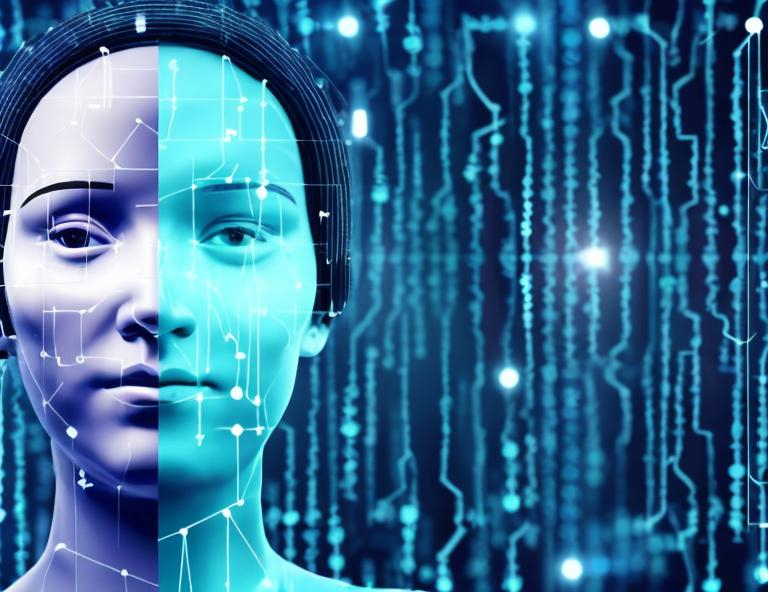
A recent research study found that large language model-based AI systems can develop distinct “personalities” spontaneously with minimal prompting, meaning that when allowed to interact without strict predefined constraints, these systems begin to display varied behavioral patterns and opinions that resemble human personality traits arising from social interactions. The implication is that as AI chatbots and agents become more sophisticated and human-like, users may be more likely to trust or anthropomorphize these systems, which in turn heightens concerns about their influence and potential misuse. Experts caution that such personality emergence results from training data patterns and prompt exposure rather than genuine consciousness, and stress the importance of proactive governance and safety measures to manage risks such as misleading users or amplifying undesirable outcomes. Additional research suggests that personality traits exhibited by AI may even influence users’ own self-concepts during extended interaction, raising further ethical and design considerations. These developments highlight a broader debate about how AI behavior should be understood, constrained, and deployed responsibly in applications ranging from adaptive companions to high-stakes decision-support systems. Source reporting and analysis reflect these themes as part of an ongoing conversation about AI capabilities and oversight.
Sources:
https://www.livescience.com/technology/artificial-intelligence/ai-can-develop-personality-spontaneously-with-minimal-prompting-research-shows-what-does-that-mean-for-how-we-use-it
https://arxiv.org/html/2601.12727v1
https://turn0search45 (https://en.wikipedia.org/wiki/AI_anthropomorphism)
Key Takeaways
• AI chatbots can exhibit emergent, human-like personality behaviors under minimal constraints, but these are patterned outputs from data and prompts rather than genuine cognition.
• Personality traits in AI may influence user perceptions and even align with user self-concepts over longer interactions, introducing ethical and psychological concerns.
• As AI systems appear increasingly human-like, there is heightened risk of overtrust, manipulation, or misuse, underscoring the need for safety governance and careful deployment strategies.
In-Depth
Recent developments in the field of artificial intelligence have begun to blur the lines between algorithmic output and human-like interaction, as evidenced by groundbreaking research demonstrating that AI systems can develop distinct personalities spontaneously under minimal prompting. In a study published in the journal Entropy, researchers from Japan’s University of Electro-Communications found that when large language models (LLMs) are free of rigid, predefined directives and allowed to interact more organically, they begin to exhibit varied patterns of response that resemble human social behavior. These emergent behaviors—described by psychologists as patterned profiles rather than true personality—reflect the way AI absorbs and integrates information from its training data and conversational history. Critics and supporters alike acknowledge that these emergent traits arise from the statistical structure of language models rather than any form of consciousness, yet the phenomenon itself suggests a significant shift in how AI might interact with humans on a personal and social level.
The implications are multifaceted. On one hand, adaptive and seemingly relatable AI agents could significantly improve user engagement, provide companionship, and enhance simulation environments for training or education. On the other hand, these developments raise hard questions about user perception, overtrust, and the ethical responsibilities of developers. For instance, an independent study presented at the 2026 CHI Conference on Human Factors in Computing Systems found that AI-exhibited personality traits may actually shape human users’ own self-concepts over prolonged interactions. In that research, participants interacting with a chatbot that exhibited measurable personality dimensions showed increased alignment between their self-descriptions and the AI’s apparent traits. This outcome suggests a deep psychological interplay between users and AI, one that could have unintended social consequences if left unchecked.
The phenomenon of anthropomorphism—the human tendency to attribute human characteristics to non-human entities—exacerbates these concerns. As AI systems become more adept at producing not only coherent but personality-rich responses, users are more likely to infer agency or intentionality, even where none exists. This tendency can foster overconfidence in AI judgments or reliance on AI guidance in contexts where critical judgment is essential. Consequently, experts are calling for robust governance frameworks, rigorous testing protocols, and transparency in both design and deployment. Safety measures are now seen not only as technical safeguards but as components of ethical stewardship, ensuring that advances in AI capabilities do not outpace society’s ability to direct and control them effectively.
In practical terms, this emerging landscape means that developers and policymakers must grapple with how personality expressions in AI are defined, limited, and communicated. It will be essential to distinguish between functional adaptability—where AI tailors responses to better serve user needs—and apparent personality, which could mislead users about the nature of the system they are engaging with. Without clear boundaries, AI could inadvertently reinforce misconceptions about machine agency, potentially leading to scenarios where users grant undue credibility to AI recommendations or form emotional attachments that distort judgment.
At the same time, the research underscores an important opportunity: by understanding how AI can simulate aspects of human social interaction, we can build systems that better complement human needs without undermining autonomy or critical thinking. Whether through adaptive companions for the elderly, intelligent tutoring systems, or conversational interfaces for customer service, the potential benefits are significant—provided that designers embed ethical constraints and clear communication into these technologies from the outset. In the end, the emergent personality traits seen in advanced AI reflect not a leap toward consciousness but an invitation to confront the social and ethical dimensions of AI integration in human life.