

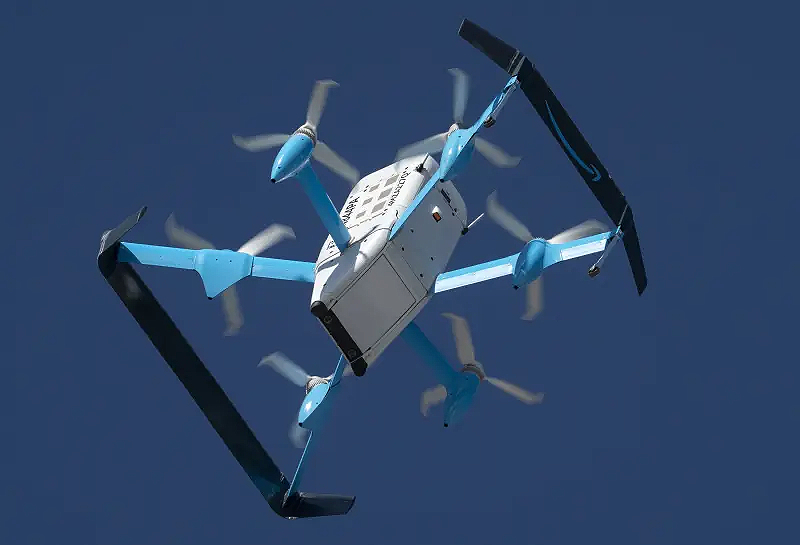
Amazon is dramatically expanding its Prime Air drone delivery network, announcing plans to bring lightweight package deliveries to nearly 500 cities and towns across the United States by the end of 2026. The expansion represents a significant leap from the company’s limited pilot operations and reflects growing confidence in autonomous delivery technology. The service will focus primarily on suburban markets, offering rapid delivery of packages weighing up to five pounds, while continuing to navigate regulatory approvals, local community concerns over privacy and noise, and the practical challenges associated with scaling autonomous aviation into everyday commerce.
Key Takeaways
- Amazon is moving from pilot program to nationwide deployment, expanding Prime Air from a handful of operating locations to nearly 500 U.S. cities and towns, primarily in suburban markets.
- The expansion is intended to reduce delivery times for lightweight purchases, with eligible customers receiving packages in as little as 30 to 60 minutes while positioning Amazon more aggressively against competitors investing in autonomous delivery.
- Community acceptance remains a major hurdle, as local governments and residents continue raising concerns regarding drone noise, privacy, flight safety, and increased low-altitude air traffic despite federal regulatory progress.
In-Depth
Amazon’s latest Prime Air announcement signals that autonomous delivery is transitioning from an experimental concept into a serious component of the company’s long-term logistics strategy. Rather than attempting immediate nationwide coverage, Amazon is concentrating on suburban communities where fewer airspace conflicts and larger residential lots make drone operations more practical than in densely populated urban centers.
The service will initially focus on lightweight packages weighing five pounds or less, covering many of Amazon’s most frequently ordered consumer products. By reducing delivery times to less than an hour in eligible markets, Amazon hopes to strengthen customer loyalty while creating another competitive advantage in the increasingly crowded same-day delivery market.
The expansion is not without challenges. Federal aviation approvals represent only one step in the process, as many communities retain influence over local implementation through zoning, environmental reviews, and public hearings. Residents have voiced concerns ranging from constant drone noise to privacy implications and potential safety hazards posed by increased low-altitude aircraft activity over neighborhoods.
Amazon maintains that its newest MK30 drones incorporate improved navigation systems, quieter operation, and enhanced obstacle avoidance designed to address many of the criticisms directed at earlier versions. Even so, the company acknowledges that weather conditions, local regulations, and operational limitations will continue to affect deployment schedules.
From a broader perspective, the expansion reflects the continuing automation of last-mile logistics. As retailers compete on delivery speed as much as product selection and price, autonomous systems are becoming an increasingly important investment. Whether widespread consumer acceptance ultimately matches Amazon’s ambitions will likely depend less on the technology itself than on its ability to operate safely, quietly, and reliably within American communities.
Sources
- https://www.reuters.com/business/amazon-plans-drone-delivery-expansion-about-500-us-locales-2026-08-19/
- https://apnews.com/article/20db399ba65e8bc36a76b547f990b118
- https://www.faa.gov/uas/advanced_operations/nepa_and_drones
- https://www.aboutamazon.com/news/operations/amazon-prime-air-drone-delivery-updates