

Artificial intelligence is being brought into one of history’s most challenging restitution efforts as researchers develop new tools to help identify and recover artwork stolen by the Nazi regime during World War II. A new AI-powered provenance assistant is designed to simplify the painstaking process of tracing ownership histories across fragmented international archives, allowing researchers and families to search complex databases using ordinary language instead of specialized queries. While the technology is still in its early stages and cannot replace expert historical or legal analysis, supporters believe it could significantly accelerate efforts to reunite surviving heirs with cultural property that has remained missing for more than eight decades. The initiative reflects a growing recognition that AI is most valuable when it enhances human investigation rather than attempting to replace it.
Key Takeaways
- AI is being deployed to streamline provenance research by allowing investigators to search multiple historical records through natural-language queries rather than manually navigating complex archival databases.
- Tens of thousands of artworks remain unclaimed despite decades of restitution efforts, with incomplete records, language barriers, and dispersed archives continuing to complicate ownership verification.
- Researchers emphasize that AI serves as an investigative aid rather than a final authority, with historians, archivists, legal experts, and claimants remaining essential to authenticating evidence and resolving ownership disputes.
In-Depth
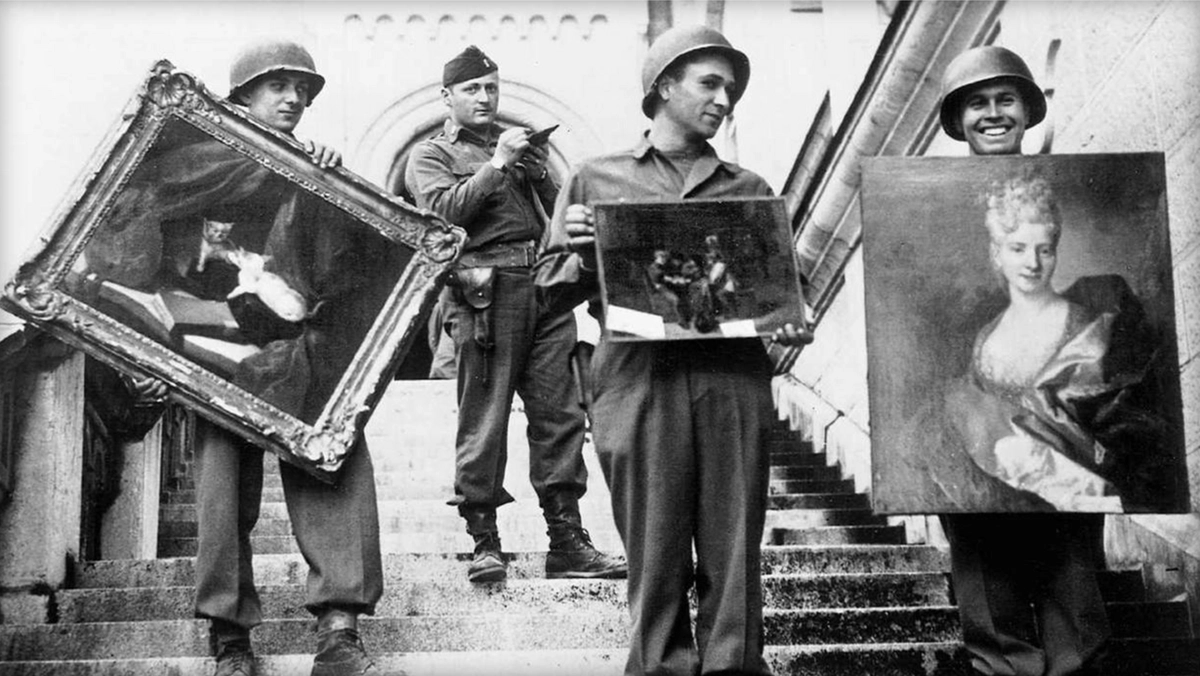
The theft of European cultural property by the Nazi regime remains one of the largest organized acts of looting in modern history. Although Allied forces recovered vast quantities of artwork after World War II, many pieces disappeared into private collections, museums, or unknown locations, leaving families and governments searching for rightful ownership generations later. The greatest obstacle has often been documentation rather than discovery. Records exist across numerous countries, languages, and archival systems, making comprehensive research extraordinarily labor-intensive.
The new AI provenance tool seeks to reduce that burden by translating ordinary language questions into database searches capable of identifying potentially relevant ownership records. Rather than requiring researchers to understand the structure of individual archives, the system is intended to surface connections that might otherwise remain hidden among thousands of historical documents. Such technology could expand access to provenance research beyond a relatively small community of specialists while allowing experts to devote more time to evaluating evidence instead of locating it.
Even so, developers acknowledge that artificial intelligence cannot determine legal ownership or authenticate historical claims on its own. Provenance disputes frequently involve conflicting documentation, incomplete records, and nuanced legal standards that require human judgment. As a result, AI is viewed as a force multiplier rather than a replacement for historians, archivists, attorneys, and museums. If the technology continues to mature while maintaining rigorous standards for verification, it could meaningfully accelerate restitution efforts and improve the likelihood that additional Nazi-looted artworks are identified and returned to their rightful heirs.