

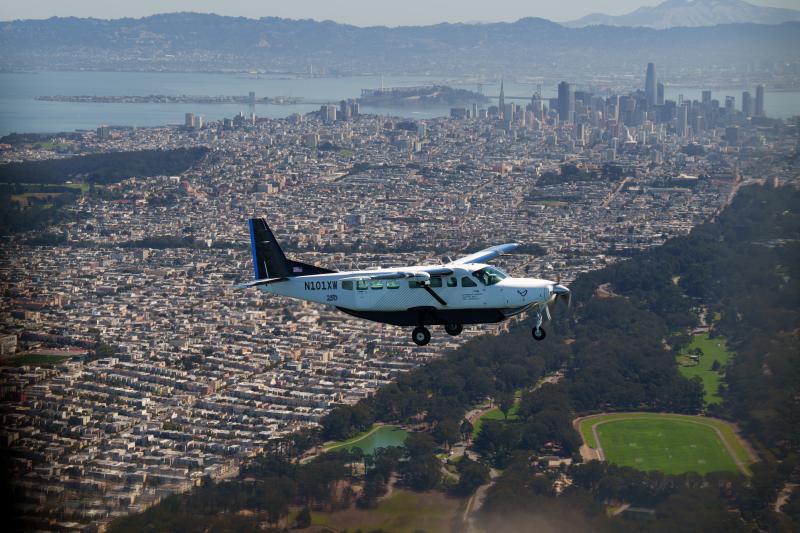
An autonomous aircraft equipped with Joby Aviation technology has completed what the company describes as the first autonomous flight across the United States, covering 3,199 miles from Concord, California, to North Carolina’s Outer Banks. The converted Cessna Caravan autonomously handled taxiing, takeoffs, navigation, cruising, and landings without control inputs from the safety pilot aboard the aircraft, while the flight was remotely supervised from locations as far as 2,323 miles away. The journey included operations in heavily trafficked airspace and rerouting around thunderstorms, offering a significant real-world demonstration of autonomous aviation beyond controlled test environments. The technology could eventually reshape freight delivery, emergency response, military logistics, and transportation to remote communities, although widespread deployment will depend on federal certification, safety standards, cybersecurity protections, and public confidence.
Key Takeaways
- The converted Cessna Caravan traveled 3,199 miles across the United States with zero control inputs from its onboard safety pilot, autonomously performing taxiing, takeoffs, navigation, cruising, and landings while remaining under remote supervision.
- The aircraft demonstrated capabilities beyond simple automated cruising, operating in busy airspace at Phoenix Deer Valley Airport and dynamically rerouting around thunderstorms, providing a more demanding test of autonomy under actual aviation conditions.
- Autonomous aviation could have major implications for commercial freight, medical deliveries, disaster response, remote communities, and military logistics, potentially reducing operating constraints while keeping human pilots out of dangerous missions.
In-Depth
Joby Aviation’s 3,199-mile autonomous flight across the United States marks a consequential step toward making pilotless aircraft a practical part of American aviation rather than a laboratory experiment. The converted Cessna Caravan traveled from Concord, California, to North Carolina’s Outer Banks while its onboard safety pilot made no control inputs. The aircraft autonomously taxied, took off, navigated, and landed, while personnel supervised operations remotely from locations as far as 2,323 miles away.
The significance is not simply that an airplane crossed the country under automated control. The system operated through real-world conditions, including busy airspace at Phoenix Deer Valley Airport and weather that required rerouting around thunderstorms. That matters because commercial autonomy will ultimately be judged on whether it can function safely amid ordinary aviation complications, not merely under carefully controlled test conditions.
The technology could have important applications in cargo transportation, disaster response, medical deliveries, remote communities, and military logistics. Autonomous aircraft could move supplies without exposing pilots to hazardous environments and potentially make smaller or uneconomical routes more practical.
Still, technological capability is only one part of the equation. Regulators must determine how autonomous aircraft can safely coexist with conventional aircraft, how remote supervision should work, and what standards should govern failures, communications interruptions, cybersecurity, and accountability.
America has historically benefited from permitting aviation innovation while insisting on rigorous safety standards. Joby’s flight suggests autonomous aviation is advancing. The challenge now is ensuring regulation protects the public without unnecessarily preventing American companies from developing a potentially transformative technology.
Sources
- https://www.jobyaviation.com/news/joby-completes-first-ever-fully-autonomous-flight-across-the-united-states
- https://avweb.com/aviation-news/joby-flies-autonomous-caravan-coast-coast/
- https://www.aviationconsumer.com/uncategorized/joby-completes-fully-autonomous-flight-across-u-s/
- https://evtolinsights.com/joby-completes-first-ever-autonomous-flight-across-the-united-states/
- https://aviationnews.eu/news/2026/09/jobys-autonomous-cessna-caravan-flies-3199-miles-across-u-s-without-pilot-intervention/