

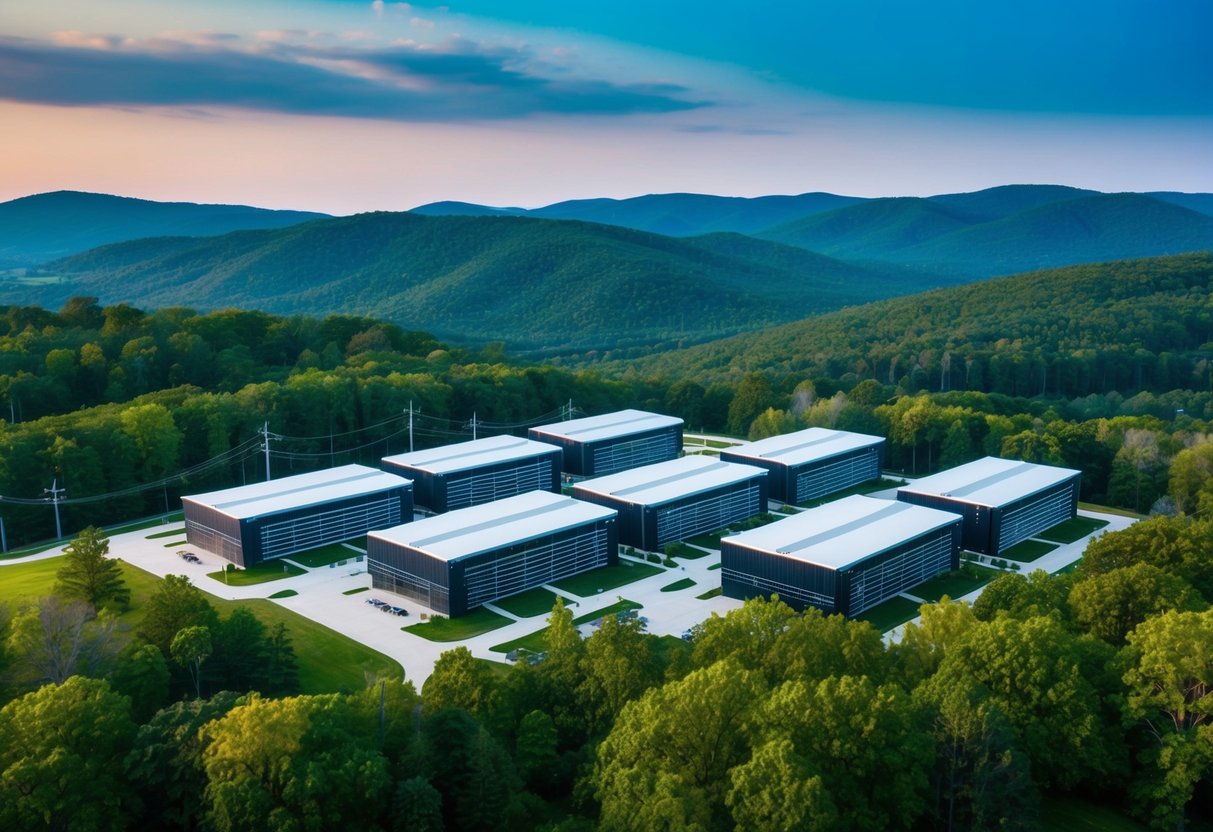
Loudoun County, Virginia—long known as the world’s largest concentration of data centers—is experiencing a growing public backlash as residents increasingly question whether the economic benefits of continued expansion outweigh mounting concerns over noise, visual blight, electricity demand, environmental impacts, and the changing character of their communities. What was once broadly accepted as an economic engine has evolved into a politically sensitive issue, with local officials considering development pauses and stricter oversight while similar debates spread across the country. The controversy reflects a broader national tension between the infrastructure required to support artificial intelligence and cloud computing and the quality-of-life concerns of the communities expected to host that infrastructure.
Key Takeaways
- • Public opposition to new data centers has accelerated rapidly, transforming what was once considered an economic development success into a contentious political issue centered on neighborhood impacts and infrastructure strain.
- • Loudoun County’s experience is increasingly serving as a national case study for communities weighing tax revenue and technology investment against concerns over land use, electricity consumption, noise, and environmental quality.
- • Policymakers across multiple states are beginning to reconsider permitting standards, tax incentives, and zoning rules as resistance to large-scale AI infrastructure becomes more organized and politically influential.
In-Depth
For years, Loudoun County stood as the unquestioned model for attracting digital infrastructure. Its concentration of hyperscale data centers generated substantial tax revenue while helping establish Northern Virginia as the backbone of much of the world’s internet traffic. Today, however, many residents argue that the cumulative effects of relentless expansion have fundamentally altered their communities in ways that tax receipts alone cannot offset.
Opponents point to the growing physical footprint of warehouse-sized facilities, constant construction, industrial noise, expanding transmission infrastructure, and increasing pressure on electric generation. Many residents contend that neighborhoods originally planned around residential and commercial growth are instead becoming dominated by massive computing facilities. These concerns have prompted calls for moratoriums, revised zoning ordinances, and greater public participation before additional projects receive approval.
Supporters counter that data centers remain critical infrastructure for cloud computing, artificial intelligence, financial services, and national economic competitiveness. They emphasize that the facilities contribute billions of dollars in local tax revenue, helping fund schools, transportation, and public services while reducing pressure on residential property taxes. Industry advocates also argue that limiting development could drive investment elsewhere without reducing overall demand for computing capacity.
The dispute increasingly extends beyond Virginia. Communities across the United States are confronting similar questions as AI dramatically increases demand for computing power. The debate is shifting from whether data centers are necessary to where they should be located, what standards they should meet, and how communities should balance economic development with the long-term interests of local residents. As AI infrastructure expands, Loudoun County has become an early indicator of the political and policy challenges likely to emerge nationwide.
Sources
- https://www.nytimes.com/2026/08/19/technology/data-centers-backlash-loudoun-virginia.html
- https://marylandmatters.org/2026/08/13/lowdown-from-loudoun-virginia-official-shares-data-center-tips-with-maryland-audience
- https://virginiamercury.com/2026/07/30/loudoun-county-other-virginia-localities-consider-hitting-the-brakes-on-data-center-development
- https://wtop.com/loudoun-county/2026/08/concrete-jungle-as-amazon-details-plans-for-new-ashburn-data-centers-some-residents-are-fed-up/