

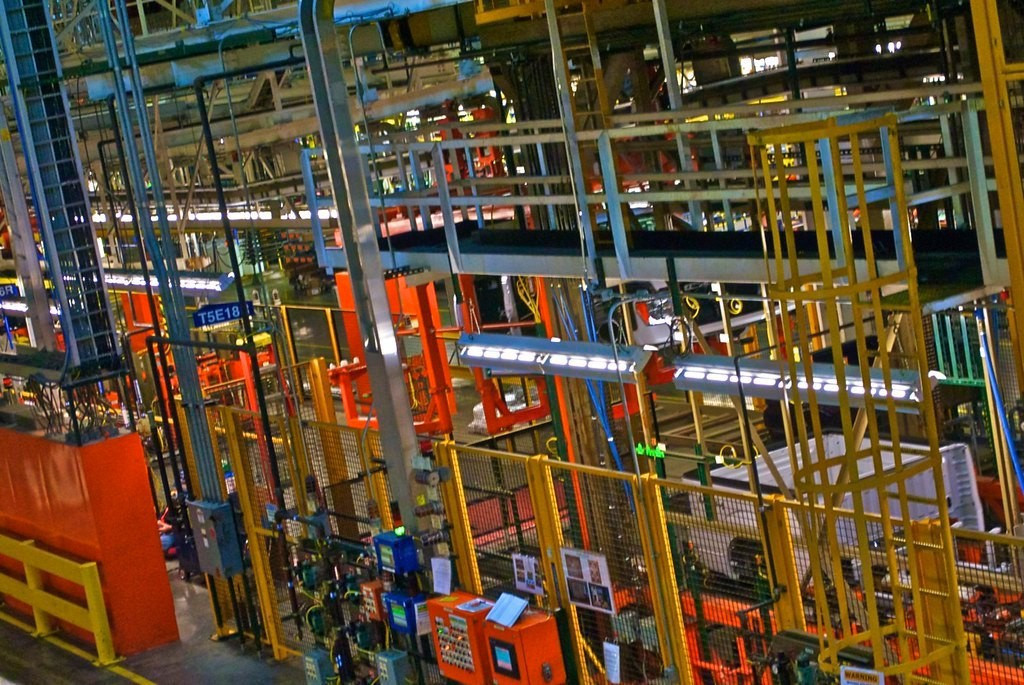
Ford Motor Company is investing $2 billion to transform its Louisville Assembly Plant into a facility capable of producing a new generation of affordable electric vehicles (EVs), starting with a mid-sized pickup truck priced at $30,000, slated for launch in 2027. This move marks a significant departure from the traditional moving assembly line system introduced by Henry Ford over a century ago. The company aims to reduce manufacturing costs and improve efficiency by implementing a new production system and universal EV platform. The initiative is driven by the need to compete with affordable EV offerings from China and to address declining sales of its current EV models. Despite the challenges, Ford’s leadership views this transformation as a strategic bet essential for the company’s future in the EV market.
Sources: TechCrunch, U.S. News, FOX Business
Key Takeaways
– Investment in Innovation: Ford’s $2 billion investment signifies a commitment to reimagining manufacturing processes to produce affordable EVs domestically.
– Departure from Tradition: The shift from the traditional moving assembly line reflects the company’s adaptability and willingness to embrace new technologies.
– Strategic Focus: By targeting the affordable EV segment, Ford aims to strengthen its position in the competitive automotive market.
In-Depth
In a bold move signaling a major shift in American manufacturing, Ford Motor Company announced it will retire the iconic moving assembly line pioneered by Henry Ford over a century ago in favor of a new production system designed for low-cost electric vehicles (EVs). The Louisville Assembly Plant will receive a $2 billion investment to produce a mid-sized electric pickup truck with an anticipated price of $30,000, set to hit the market in 2027.
This transformation reflects both an acknowledgment of global competitive pressures and a commitment to domestic innovation. With affordable EVs emerging from international competitors, particularly in China, Ford recognizes that staying relevant in the rapidly evolving automotive sector requires not just electrification but also cost efficiency. By streamlining production through a universal EV platform and reimagined assembly methods, the company aims to reduce overhead and deliver vehicles at prices more accessible to middle-class Americans.
Conservative observers may note that this approach blends traditional American ingenuity with strategic business pragmatism, showing that adaptation does not mean abandoning American labor or the domestic economy. While some may lament the departure from Ford’s historical assembly line legacy, the company’s leadership emphasizes that modernization is necessary to protect jobs and remain competitive.
Ultimately, Ford’s initiative is more than a corporate strategy; it is a statement about the future of American manufacturing—one that balances tradition, innovation, and fiscal responsibility to ensure that affordable, domestically produced EVs become a reality for everyday consumers.