

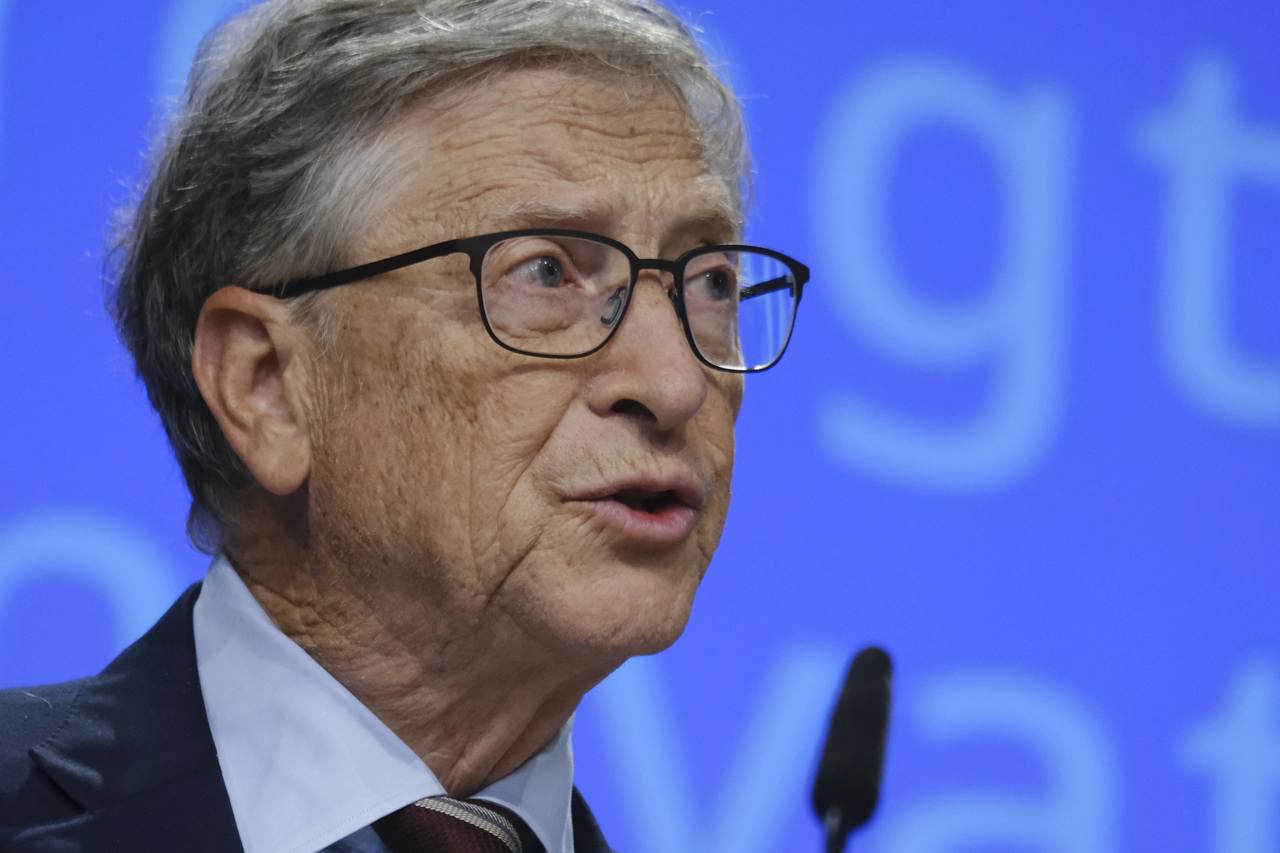
The Gates Foundation is committing at least $1 billion over the next two years to expand artificial-intelligence tools in health care, education, agriculture and digital infrastructure, particularly in lower-income countries and communities that commercial AI developers might otherwise overlook. The initiative directs roughly 40 percent each to health and education, 10 percent to agriculture and 10 percent to infrastructure such as datasets for languages poorly represented in current AI systems. The foundation is already working with major technology companies on projects ranging from clinical support and vaccine research to agricultural assistance and educational tools. Bill Gates argues that market forces alone are likely to deliver AI’s most advanced capabilities first to wealthy consumers and institutions, while warning separately that governments remain poorly prepared for AI’s broader effects on employment, cybersecurity and society. The initiative therefore represents something larger than conventional philanthropy: an effort by one of the world’s wealthiest private foundations, working alongside some of the world’s most powerful technology companies, to influence where and how AI is deployed as governments struggle to establish their own policies.
Key Takeaways
- The foundation plans to spend at least $1 billion over two years, with approximately $400 million devoted to health, $400 million to education, $100 million to agriculture and $100 million to digital infrastructure and datasets for underserved languages.
- Major technology companies are already involved: OpenAI has committed $50 million to an African health initiative, while Anthropic, Google and Microsoft are participating in projects involving health, agriculture, language infrastructure and other applications.
- Gates is simultaneously warning that governments are lagging behind AI’s development, raising a larger public-policy question about how much influence private foundations and technology corporations should exercise over technologies increasingly embedded in health care, education and economic life.
In-Depth
Bill Gates is putting substantial philanthropic capital behind the proposition that artificial intelligence should not remain primarily a technology for wealthy countries, corporations and consumers. The Gates Foundation’s new commitment of at least $1 billion over two years will finance AI applications across health care, education and agriculture while developing the language datasets and infrastructure needed to make those systems useful outside the English-dominated digital world.
The allocation is substantial: roughly $400 million each for health and education, $100 million for agriculture and another $100 million for digital infrastructure. Proposed applications include assisting clinicians in detecting overlooked symptoms, helping teachers identify concepts students have failed to master and giving farmers real-time guidance concerning weather, pests and fertilizer.
There is nevertheless an important governance question accompanying the technological promise. Gates says governments worldwide are significantly behind the technology and need greater international cooperation to address employment disruption, cyberattacks and other risks. At the same time, his foundation is partnering with some of the largest AI companies to determine where these systems will be deployed.
That combination deserves scrutiny. Private philanthropy can move faster than government and direct resources toward neglected problems, but enormous private foundations and technology companies are not substitutes for accountable public institutions. Even critics sympathetic to expanding AI access have questioned whether programs directed predominantly by foundations and corporations can deliver genuine local control.
The real test will therefore extend beyond how much money is spent. Success will depend on whether these tools produce measurable improvements while preserving local autonomy, transparency and accountability rather than merely transferring technological decision-making from governments to powerful private institutions.
Sources
- https://apnews.com/article/bill-gates-foundation-ai-united-nations-26ce25f9be20574a4fa04a5f983521ae
- https://www.reuters.com/world/asia-pacific/governments-worldwide-are-way-behind-ai-says-bill-gates-2026-09-15/
- https://www.geekwire.com/2026/gates-foundation-bets-1b-on-ai-to-boost-global-health-agriculture-and-education/
- https://qz.com/gates-foundation-billion-ai-global-health-education-agriculture-091526