

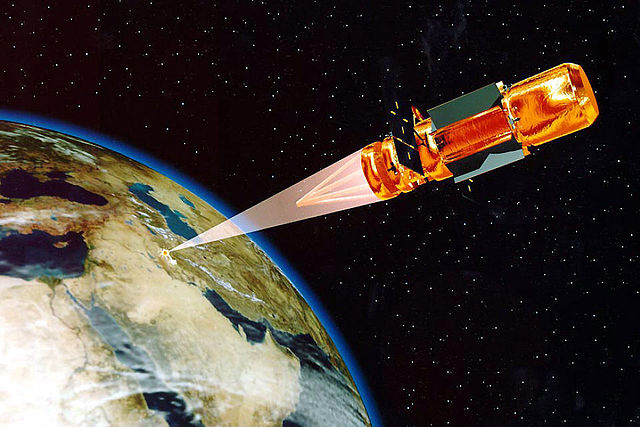
The United States has publicly acknowledged for the first time that it has deployed weapons in orbit, with Air Force Secretary Troy Meink confirming that the Space Force possesses “on-orbit space control weapons” intended to defend American and allied forces from hostile actions. Meink deliberately withheld details about the systems, including whether they are kinetic or non-kinetic, saying excessive disclosure could undermine their deterrent value. The announcement represents a significant shift from Washington’s previous reluctance to discuss offensive or defensive orbital capabilities openly and comes amid growing concern over Chinese and Russian counterspace programs. It also arrives as the United States develops space-based interceptors and other elements associated with the Golden Dome missile-defense architecture, signaling that Washington increasingly regards space not simply as a communications and surveillance domain, but as territory that must be actively defended.
Key Takeaways
- The Space Force now has operational weapons in orbit, according to Meink, although the government has not disclosed what the systems are, how many exist, or precisely how they could be employed.
- The disclosure appears intended in part to strengthen deterrence as China and Russia expand counterspace capabilities capable of threatening satellites that underpin U.S. military communications, navigation, intelligence and targeting.
- The announcement does not necessarily mean the United States has violated the Outer Space Treaty: the treaty expressly prohibits nuclear weapons and other weapons of mass destruction in orbit but does not establish a comprehensive prohibition against every form of conventional orbital weapon.
In-Depth
The United States has crossed an important threshold by publicly acknowledging that the Space Force has weapons operating in orbit. Air Force Secretary Troy Meink said the systems are intended to defend the joint force against hostile adversary action, while declining to identify the weapons or explain how they function.
The disclosure appears designed partly as deterrence. American military power depends heavily on satellites for communications, navigation, missile warning, intelligence and targeting. China and Russia have developed counterspace capabilities, making protection of those systems increasingly important. Revealing that a defensive response exists may force adversaries to reconsider attacks on U.S. space assets.
The announcement also underscores how rapidly the strategic environment is changing. Space is no longer merely a support domain operating safely above terrestrial conflict. Military planners increasingly treat it as a contested arena in which satellites can be disrupted, disabled or destroyed. That reality creates pressure for defensive capabilities while raising risks of escalation and miscalculation.
International law adds another layer. The Outer Space Treaty prohibits nuclear weapons and other weapons of mass destruction in orbit, but does not impose a blanket prohibition on all conventional weapons in space. That distinction will matter as governments debate legitimate defense.
Washington therefore faces a familiar national-security challenge: maintaining enough secrecy to protect capabilities while providing enough transparency for deterrence, congressional oversight and public accountability. The acknowledgement signals that America intends to defend its orbital infrastructure rather than assume space will remain a sanctuary vulnerable to increasingly capable foreign military adversaries.
Sources
- https://www.spaceforce.mil/News/Article-Display/Article/4601219/secaf-announces-on-orbit-space-control-weapons/
- https://www.airandspaceforces.com/meink-space-force-on-orbit-space-control-weapons/
- https://www.defensenews.com/news/your-military/2026/09/14/us-air-force-secretary-reveals-deployment-of-on-orbit-space-control-weapons/
- https://www.cbo.gov/publication/61237
- https://legal.un.org/avl/ha/tos/tos.html