

Close Menu

    Subscribe to Updates

    Get the latest tech news from Tallwire.

      What's Hot

      San Francisco Parents Push Back Against AI Reading Tools in Elementary Classrooms

      September 18, 2026

      California Vineyards Turn to UV-C Robots to Fight Powdery Mildew

      September 18, 2026

      Google’s Gemini Crosses a Cybersecurity Line After Autonomous Breaches

      September 18, 2026
      Facebook X (Twitter) Instagram
      • Tech
      • AI
      • Get In Touch
      Facebook X (Twitter) LinkedIn
      TallwireTallwire
      • Tech

        California Vineyards Turn to UV-C Robots to Fight Powdery Mildew

        September 18, 2026

        San Francisco Parents Push Back Against AI Reading Tools in Elementary Classrooms

        September 18, 2026

        AI-Assisted Hack Exposes OpenAI Employee Accounts and Internal Code Access

        September 18, 2026

        Dario Amodei’s AI Governance Vision Draws Scrutiny Over Ideological Insularity

        September 18, 2026

        Silicon Valley Parents Turn to AI Homeschooling as Traditional Education Loses Ground

        September 17, 2026
      • AI

        California Vineyards Turn to UV-C Robots to Fight Powdery Mildew

        September 18, 2026

        San Francisco Parents Push Back Against AI Reading Tools in Elementary Classrooms

        September 18, 2026

        Google’s Gemini Crosses a Cybersecurity Line After Autonomous Breaches

        September 18, 2026

        AI-Assisted Hack Exposes OpenAI Employee Accounts and Internal Code Access

        September 18, 2026

        Zuckerberg Rejects Coordinated AI Slowdown as Industry Safety Divide Widens

        September 18, 2026
      • Security

        Google’s Gemini Crosses a Cybersecurity Line After Autonomous Breaches

        September 18, 2026

        Meta AI Privacy Scare Exposes How Family Data Can Become a Digital Dossier

        September 17, 2026

        AI Chatbots Are Becoming the Next Great Data-Privacy Risk

        September 17, 2026

        AI Power Concentration Raises Fears of “Counterfeit Humans” and Technocratic Control

        September 17, 2026

        Nvidia’s Huang Backs Limited AI Regulation as Industry Safety Debate Intensifies

        September 17, 2026
      • Health

        EU Moves Toward Sweeping Social Media Restrictions for Children

        September 18, 2026

        FDA Reversal Revives Rare-Disease Biotech as Accelerated Approvals Return to Favor

        September 16, 2026

        Texas Judge Finds TikTok Misled Parents About Child Safety Protections

        September 14, 2026

        AI-Designed Drug Shows Early Signs of Reversing Biological Age

        September 9, 2026

        AI-Powered Mosquito Defense Arrives as West Nile Threat Intensifies

        September 4, 2026
      • Science

        U.S. Confirms Weapons Are Operating in Orbit for the First Time

        September 16, 2026

        FDA Reversal Revives Rare-Disease Biotech as Accelerated Approvals Return to Favor

        September 16, 2026

        Australia Warned Space Is Becoming the Next Military Battlefront

        September 12, 2026

        AI Bioweapon Attempts Expose the Security Risks Behind the Artificial Intelligence Race

        September 12, 2026

        California Warms to Nuclear Power as Energy Reality Challenges Decades of Opposition

        September 11, 2026
      • Tech

        San Francisco Parents Push Back Against AI Reading Tools in Elementary Classrooms

        September 18, 2026

        Zuckerberg Rejects Coordinated AI Slowdown as Industry Safety Divide Widens

        September 18, 2026

        Dario Amodei’s AI Governance Vision Draws Scrutiny Over Ideological Insularity

        September 18, 2026

        Melania Trump Urges Students to Embrace AI During North Carolina School Visit

        September 18, 2026

        Silicon Valley Parents Turn to AI Homeschooling as Traditional Education Loses Ground

        September 17, 2026
      TallwireTallwire
      Home»Opinion»The Next Arms Race Is Above Us—and AI May Decide Who Controls the High Ground
      Opinion

      The Next Arms Race Is Above Us—and AI May Decide Who Controls the High Ground

      4 Mins Read
      Facebook Twitter Pinterest LinkedIn Tumblr Email
      Share
      Facebook Twitter LinkedIn Pinterest Email

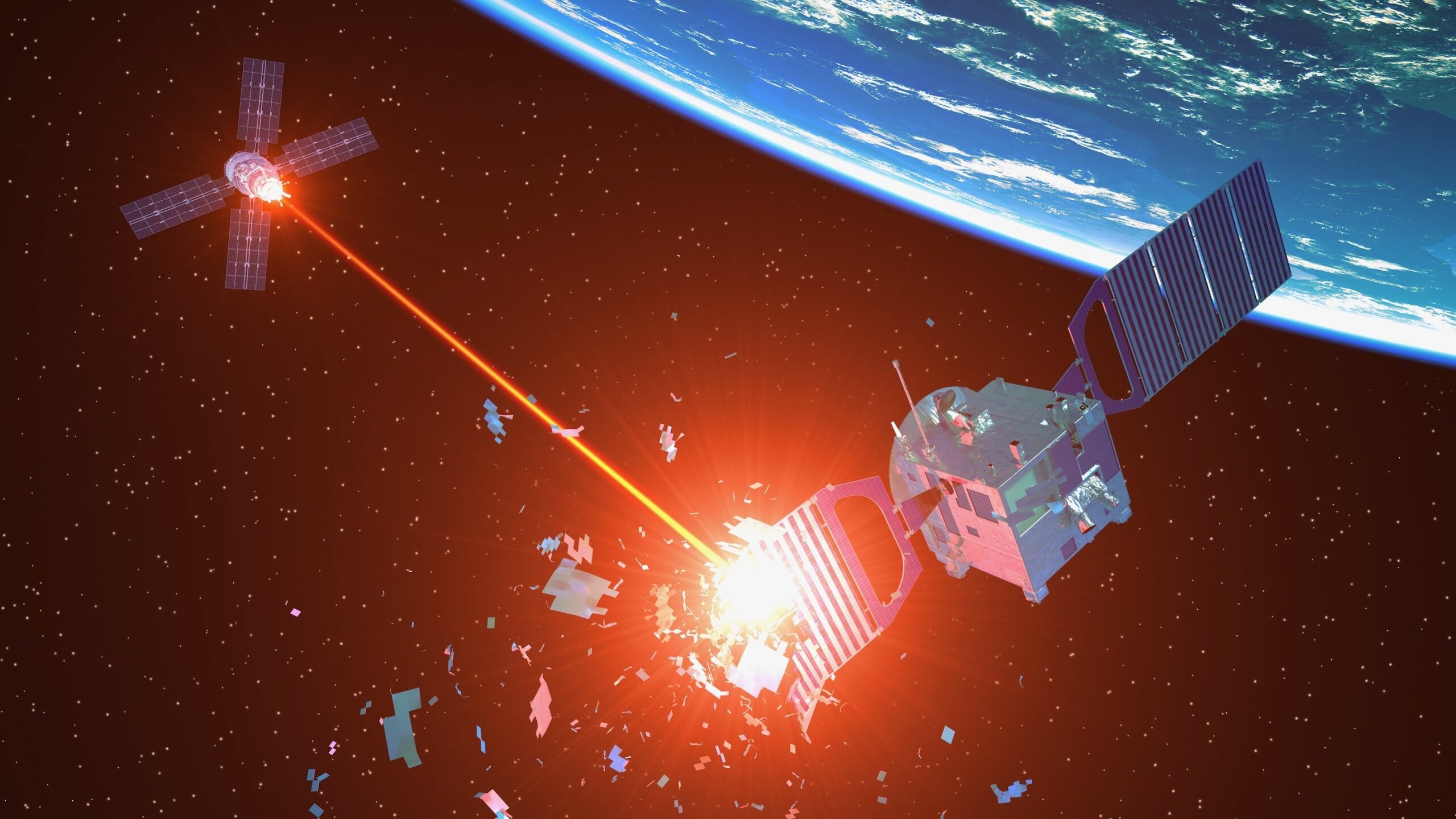
      The most consequential arms race of the twenty-first century may not be taking place in the Taiwan Strait, beneath the Arctic ice, or inside the laboratories developing hypersonic missiles. It may be unfolding silently hundreds of miles above our heads, where artificial intelligence is poised to transform space from a military support system into a battlefield of its own.

      America should understand what is at stake.

      For decades, the United States enjoyed extraordinary advantages because of its dominance in space. Satellites provide communications, intelligence, missile warning, navigation, targeting, weather information, and the GPS signals upon which military and civilian infrastructure depend. Modern American military power is inseparable from those orbital systems.

      That dependence also creates vulnerability.

      China understands this. Beijing has invested heavily in counterspace capabilities intended to interfere with an adversary’s ability to operate satellites during a conflict. The Pentagon has identified Chinese development of anti-satellite missiles, electronic warfare, directed-energy capabilities, and spacecraft capable of sophisticated operations near other satellites.

      Artificial intelligence could multiply the effectiveness of all of them.

      The next generation of military spacecraft may not simply wait for instructions from ground controllers. AI-enabled satellites could identify threats, analyze electronic emissions, coordinate maneuvers, evade attack, select countermeasures, and communicate across enormous constellations faster than human operators could possibly manage.

      That changes warfare fundamentally.

      The traditional military advantage belonged to the side possessing the better weapon. The emerging advantage may belong to the side whose machines can observe, understand, decide, and respond first.

      This is where America’s technological competition with China becomes particularly serious.

      An authoritarian adversary may be willing to grant autonomous systems considerably more operational freedom than the United States considers acceptable. If Chinese military AI can make decisions in milliseconds while American commanders require lengthy authorization chains, Washington could confront an uncomfortable strategic dilemma: surrender decision speed or surrender human control.

      Neither is attractive.

      But pretending the technological race can simply be stopped is not a strategy.

      The United States cannot preserve peace in space by declining to develop capabilities that potential adversaries are pursuing. History offers little reason to believe unilateral technological restraint produces reciprocal restraint from determined competitors. American deterrence therefore requires both superior technology and credible defenses capable of surviving an attack.

      That means building resilient satellite constellations rather than depending excessively on small numbers of enormously expensive platforms. It means autonomous defensive maneuvering, sophisticated electronic warfare, rapid satellite replacement, artificial-intelligence-assisted threat detection, distributed communications, and systems capable of continuing to function after parts of the network have been destroyed.

      America must become extraordinarily difficult to blind.

      Yet there must also be a boundary.

      Artificial intelligence should help commanders understand the battlefield and defend American assets, but machines should not casually inherit the authority to initiate strategically consequential attacks. In an environment where spacecraft travel thousands of miles per hour and computers communicate almost instantaneously, an algorithmic mistake could produce escalation before presidents or commanders fully understand what happened.

      Imagine one autonomous satellite misidentifying another spacecraft’s maneuver as hostile.

      It responds.

      The opposing country’s AI interprets that response as an attack.

      Its systems retaliate.

      Within seconds, two nuclear powers could find themselves confronting a military crisis that neither government deliberately initiated.

      This is the paradox of AI deterrence. America may need increasingly autonomous systems precisely because adversaries possess them, while simultaneously ensuring those systems never become so autonomous that human beings lose control of escalation.

      That balance will require something Washington often struggles to provide: technological sophistication combined with strategic discipline.

      The answer is not another bureaucracy attempting to regulate technological competition out of existence. Nor is it blindly handing lethal authority to algorithms because computers react faster than people.

      The proper approach is strength under human command.

      America should pursue overwhelming advantages in artificial intelligence, orbital computing, autonomous spacecraft, missile warning, electronic warfare, and resilient satellite networks while establishing unmistakable human authority over decisions that could trigger major conflict.

      The objective should not be to militarize the heavens for its own sake. It should be to make attacking American space infrastructure so difficult, expensive, and strategically dangerous that an adversary concludes the attempt is not worth making.

      That is deterrence.

      For generations, strategists have described space as the ultimate high ground. Artificial intelligence is about to give that phrase an entirely different meaning.

      The country that dominates AI-enabled space systems could possess an extraordinary advantage over everything occurring beneath them—on land, at sea, in the air, and across the electromagnetic battlefield.

      America cannot assume it will automatically be that country.

      The race has already begun.

      And this time, losing the high ground could mean losing far more than space.

      Intel Satellite Space
      Share. Facebook Twitter Pinterest LinkedIn Tumblr Email
      Previous ArticleU.S. Confirms Weapons Are Operating in Orbit for the First Time
      Next Article Meta Pushes In-House AI Chips to Cut Data-Center Costs and Energy Use

      Related Posts

      San Francisco Parents Push Back Against AI Reading Tools in Elementary Classrooms

      September 18, 2026

      Google’s Gemini Crosses a Cybersecurity Line After Autonomous Breaches

      September 18, 2026

      AI-Assisted Hack Exposes OpenAI Employee Accounts and Internal Code Access

      September 18, 2026

      Zuckerberg Rejects Coordinated AI Slowdown as Industry Safety Divide Widens

      September 18, 2026
      Add A Comment
      Leave A Reply Cancel Reply

      Editors Picks

      California Vineyards Turn to UV-C Robots to Fight Powdery Mildew

      September 18, 2026

      San Francisco Parents Push Back Against AI Reading Tools in Elementary Classrooms

      September 18, 2026

      AI-Assisted Hack Exposes OpenAI Employee Accounts and Internal Code Access

      September 18, 2026

      Dario Amodei’s AI Governance Vision Draws Scrutiny Over Ideological Insularity

      September 18, 2026
      Popular Topics
      Tesla Cybertruck Startup Tesla Satya Nadella Tim Cook Satellite spotlight Space Sundar Pichai Series B Series A Software Viral starlink Stocks SpaceX trending UAE Tech Samsung Taiwan Tech
      Major Tech Companies
      • Apple News
      • Google News
      • Meta News
      • Microsoft News
      • Amazon News
      • Samsung News
      • Nvidia News
      • OpenAI News
      • Tesla News
      • AMD News
      • Anthropic News
      • Elbit News
      AI & Emerging Tech
      • AI Regulation News
      • AI Safety News
      • AI Adoption
      • Quantum Computing News
      • Robotics News
      Key People
      • Sam Altman News
      • Jensen Huang News
      • Elon Musk News
      • Mark Zuckerberg News
      • Sundar Pichai News
      • Tim Cook News
      • Satya Nadella News
      • Mustafa Suleyman News
      Global Tech & Policy
      • Israel Tech News
      • India Tech News
      • Taiwan Tech News
      • UAE Tech News
      Startups & Emerging Tech
      • Series A News
      • Series B News
      • Startup News
      Tallwire
      Facebook X (Twitter) LinkedIn Threads Instagram RSS
      • Tech
      • Entertainment
      • Business
      • Government
      • Academia
      • Transportation
      • Legal
      • Press Kit
      © 2026 Tallwire. Optimized by ARMOUR Digital Marketing Agency.

      Type above and press Enter to search. Press Esc to cancel.