

Close Menu

    Subscribe to Updates

    Get the latest tech news from Tallwire.

      What's Hot

      Viral ‘Pro-Dubai’ Influencer Script Raises Questions About Coordinated Messaging

      March 14, 2026

      California Colleges Spend Hundreds of Thousands on AI Chatbots That Get Answers Wrong

      March 14, 2026

      AI Startup Scandal: Cluely CEO Admits Fabricating $7 Million Revenue Claim

      March 13, 2026
      Facebook X (Twitter) Instagram
      • Tech
      • AI
      • Get In Touch
      Facebook X (Twitter) LinkedIn
      TallwireTallwire
      • Tech

        Viral ‘Pro-Dubai’ Influencer Script Raises Questions About Coordinated Messaging

        March 14, 2026

        California Colleges Spend Hundreds of Thousands on AI Chatbots That Get Answers Wrong

        March 14, 2026

        NASA Impact Test Quietly Alters Asteroid’s Path Around The Sun

        March 13, 2026

        Hybrid Muscle: Corvette ZR1X Signals American Performance Renaissance

        March 13, 2026

        Israel’s Iron Beam Laser Defense Moves From Concept Toward Battlefield Reality

        March 13, 2026
      • AI

        California Colleges Spend Hundreds of Thousands on AI Chatbots That Get Answers Wrong

        March 14, 2026

        Viral ‘Pro-Dubai’ Influencer Script Raises Questions About Coordinated Messaging

        March 14, 2026

        AI Writing Tool Draws Criticism For Mimicking Real Experts Without Permission

        March 13, 2026

        Cyber Warfare Emerges as Central Battlefield in U.S.–Israel Confrontation With Iran

        March 13, 2026

        Integrated Defense Systems Aim To Shield Critical Infrastructure From Cyber Warfare

        March 13, 2026
      • Security

        Cyber Warfare Emerges as Central Battlefield in U.S.–Israel Confrontation With Iran

        March 13, 2026

        Integrated Defense Systems Aim To Shield Critical Infrastructure From Cyber Warfare

        March 13, 2026

        The Creepy Truth About Smartphone Tracking And Why Ads Seem To Read Your Mind

        March 12, 2026

        Israel Emerges As The World’s Most Targeted Nation For Geopolitical Cyberattacks In 2025

        March 12, 2026

        X Moves To Contain AI War Disinformation As Fake Iran Conflict Footage Floods Social Media

        March 11, 2026
      • Health

        Scientists Teach Living Human Brain Cells To Play Doom

        March 11, 2026

        Health Data Of 3.4 Million Americans Exposed In Major Healthcare Technology Breach

        March 10, 2026

        Expert Testimony Warns Social Media Is Rewiring Children’s Brains

        March 8, 2026

        Courtroom Scrutiny Grows Over Claims Instagram Tracked Usage While Pursuing Teens

        March 5, 2026

        Smartphone Use Creates A Daily “Vicious Cycle” Of Disconnection And Disengagement

        March 4, 2026
      • Science

        NASA Impact Test Quietly Alters Asteroid’s Path Around The Sun

        March 13, 2026

        Hybrid Muscle: Corvette ZR1X Signals American Performance Renaissance

        March 13, 2026

        Israel’s Iron Beam Laser Defense Moves From Concept Toward Battlefield Reality

        March 13, 2026

        How Engineers Modernized Chornobyl’s Nuclear Control Systems In The 1990s

        March 12, 2026

        Scientists Teach Living Human Brain Cells To Play Doom

        March 11, 2026
      • Tech

        Apple Quietly Expands Executive Bench With Three New Leaders

        March 8, 2026

        Silicon Valley’s Political Experiment Faces Internal Revolt

        March 7, 2026

        Sam Altman Says ‘AI Washing’ Is Being Used to Mask Corporate Layoffs

        February 28, 2026

        Zuckerberg Testifies In Landmark Trial Over Alleged Teen Social Media Harms

        February 23, 2026

        Gay Tech Networks Under Spotlight In Silicon Valley Culture Debate

        February 23, 2026
      TallwireTallwire
      Home»Tech»New Evidence Shows South Atlantic Anomaly Morphing, Not Just Weakening
      Tech

      New Evidence Shows South Atlantic Anomaly Morphing, Not Just Weakening

      Updated:December 25, 20254 Mins Read
      Facebook Twitter Pinterest LinkedIn Tumblr Email
      New Evidence Shows South Atlantic Anomaly Morphing, Not Just Weakening
      New Evidence Shows South Atlantic Anomaly Morphing, Not Just Weakening
      Share
      Facebook Twitter LinkedIn Pinterest Email

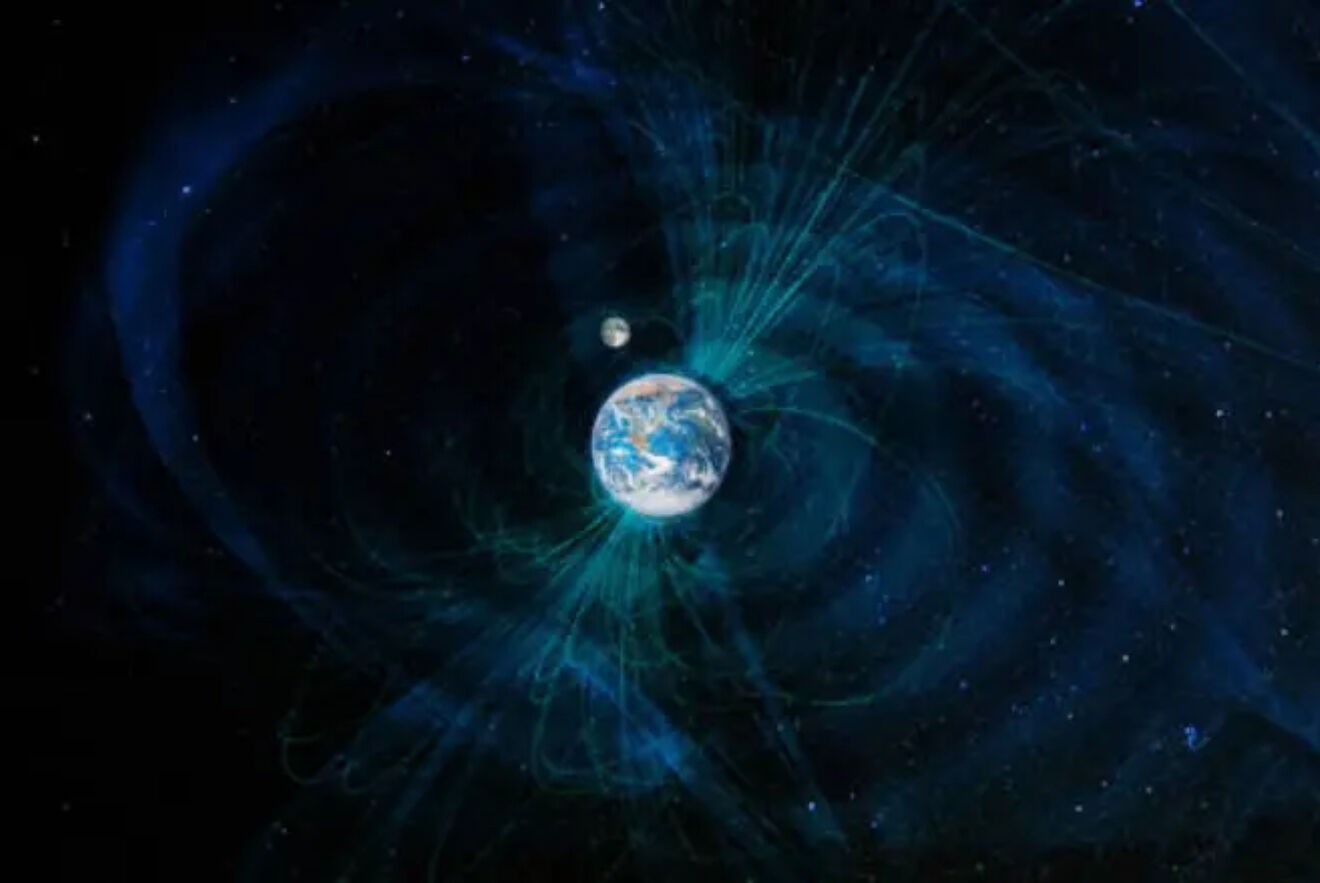
      Recent research digs deeper into how Earth’s South Atlantic Anomaly (SAA)—a region where Earth’s magnetic shield is unusually weak—is not only drifting and weakening, but now appears to be splitting into two distinct lobes. Scientists trace much of the effect to movements and irregularities deep in the Earth’s core: about 1,800 miles below the African continent lies what’s known as the African Large Low Shear Velocity Province, a dense region that seems to disrupt the geodynamo (the molten-iron flows generating the magnetic field). As the anomaly evolves, satellite operators are growing concerned: the splitting lobes may increase risks to space hardware, especially when satellites orbits pass through those zones. NASA and the European Space Agency (ESA) are using data from missions like ESA’s Swarm constellation and others to map these changes and refine geomagnetic models so future missions can better anticipate those effects. 

      Sources: Sustainability Times, European Space Agency, arXiv

      Key Takeaways

      – The South Atlantic Anomaly is evolving: it’s drifting northwest, weakening in strength, and currently splitting into two minima (“lobes”) of magnetic intensity. 

      – Deep internal Earth structure—and specifically the African large low shear velocity province—plays a key role in disrupting magnetic field generation, contributing to both the weakening and morphological change in the SAA. 

      – Operationally, this evolving anomaly poses rising risks for spacecraft and satellites: more exposure to solar radiation and charged particles, increased occurrence of single event upsets, and mission planning must increasingly account for these magnetic irregularities. 

      In-Depth

      Earth’s magnetic shield is often taken for granted, the invisible force field protecting our planet from a barrage of solar radiation and cosmic particles. But over the South Atlantic Ocean and parts of South America, that shield is showing signs of serious wear—and not just in strength, but in shape. The region known as the South Atlantic Anomaly (SAA) has long been under scientific scrutiny for being weaker than surrounding areas. Now, new research indicates it’s not a simple notch but may be splitting into two lobes—two separate centers of weakest magnetic field—each with their own risks attached.

      At the heart of this change is Earth’s geodynamo: molten iron and nickel swirling in the outer core generate most of our planet’s magnetic field. But that process isn’t uniform. Beneath Africa, approximately 1,800 miles down, lies a region called the African large low shear velocity province (LLSVP). This dense mantle structure seems to interfere with the flow patterns in the core and disrupt how the field is generated above. Also, the tilt between Earth’s magnetic and rotational axes exacerbates the issue, producing anomalies in field strength. 

      Satellite data—especially from ESA’s Swarm missions—is key in tracking how weak the SAA is becoming, how it’s shifting westward or northwestward, and how one of its centers of minimum magnetic strength has developed southwest of Africa. What’s striking is that the secondary center isn’t just a theoretical projection: it is already showing in the data. This has scientists recalibrating their geomagnetic models (like CHAOS-7) to account for multiple minima rather than a single dip. 

      For spacecraft and satellite operators, this is not just academic. The SAA exposes satellites to higher levels of harmful charged particles, raising the risk of single-event upsets—temporary or permanent malfunctions caused by high-energy protons or other particles. Even the International Space Station traverses parts of the anomaly. As the SAA evolves—splitting lobes, drifting motion—the zones of risk change. That means more complex planning, possibly more shielding, and better forecasting of when and where spacecraft will encounter weak-magnetic-field zones. 

      In the larger picture, the evolution of the SAA also tells us something about Earth itself: the deep interior is far from static. Mantle and core interactions, variations in flow, and heterogeneities beneath continents—all that stuff hidden deep off-limits to direct observation—are influencing phenomena we can track from space. And while there’s no indication that this anomaly signals an imminent magnetic pole reversal (which tends to unfold over many thousands of years), it does sharpen the need for vigilance. As our reliance on satellites, telecommunications, and space infrastructure grows, so does the imperative to understand and adapt to changes in Earth’s magnetic environment.

      Share. Facebook Twitter Pinterest LinkedIn Tumblr Email
      Previous ArticleNew Cosmic Discovery: Astronomers Spot the Most Powerful “Odd Radio Circle” Yet
      Next Article New HybridPetya Ransomware Exploits UEFI Vulnerability to Bypass Secure Boot

      Related Posts

      California Colleges Spend Hundreds of Thousands on AI Chatbots That Get Answers Wrong

      March 14, 2026

      Viral ‘Pro-Dubai’ Influencer Script Raises Questions About Coordinated Messaging

      March 14, 2026

      NASA Impact Test Quietly Alters Asteroid’s Path Around The Sun

      March 13, 2026

      Hybrid Muscle: Corvette ZR1X Signals American Performance Renaissance

      March 13, 2026
      Add A Comment
      Leave A Reply Cancel Reply

      Editors Picks

      Viral ‘Pro-Dubai’ Influencer Script Raises Questions About Coordinated Messaging

      March 14, 2026

      California Colleges Spend Hundreds of Thousands on AI Chatbots That Get Answers Wrong

      March 14, 2026

      NASA Impact Test Quietly Alters Asteroid’s Path Around The Sun

      March 13, 2026

      Hybrid Muscle: Corvette ZR1X Signals American Performance Renaissance

      March 13, 2026
      Popular Topics
      Satya Nadella Sam Altman Robotics Tim Cook Series A Ransomware Series B Tesla Cybertruck Quantum computing Tesla Samsung Startup spotlight SpaceX Taiwan Tech trending Qualcomm picks UAE Tech Sundar Pichai
      Major Tech Companies
      • Apple News
      • Google News
      • Meta News
      • Microsoft News
      • Amazon News
      • Samsung News
      • Nvidia News
      • OpenAI News
      • Tesla News
      • AMD News
      • Anthropic News
      • Elbit News
      AI & Emerging Tech
      • AI Regulation News
      • AI Safety News
      • AI Adoption
      • Quantum Computing News
      • Robotics News
      Key People
      • Sam Altman News
      • Jensen Huang News
      • Elon Musk News
      • Mark Zuckerberg News
      • Sundar Pichai News
      • Tim Cook News
      • Satya Nadella News
      • Mustafa Suleyman News
      Global Tech & Policy
      • Israel Tech News
      • India Tech News
      • Taiwan Tech News
      • UAE Tech News
      Startups & Emerging Tech
      • Series A News
      • Series B News
      • Startup News
      Tallwire
      Facebook X (Twitter) LinkedIn Threads Instagram RSS
      • Tech
      • Entertainment
      • Business
      • Government
      • Academia
      • Transportation
      • Legal
      • Press Kit
      © 2026 Tallwire. Optimized by ARMOUR Digital Marketing Agency.

      Type above and press Enter to search. Press Esc to cancel.