

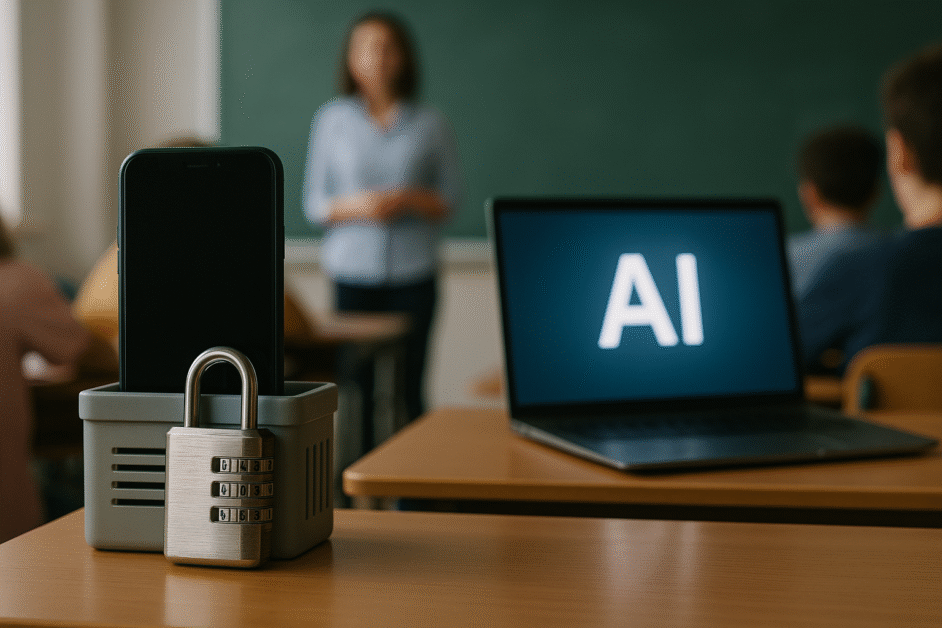
The nation’s two largest public-school systems are imposing significant restrictions on student use of generative artificial intelligence, potentially establishing a template for K-12 districts nationwide. New York City has enacted a one-year moratorium on student-facing generative AI from 2-K through eighth grade, affecting roughly 600,000 students, while permitting carefully controlled high-school programs and AI-literacy instruction. Los Angeles Unified has similarly halted student use of generative AI on district-owned devices during the current school year. The policies reflect mounting concerns among parents and educators over privacy, excessive screen time, academic integrity, unreliable AI-generated information, and whether introducing powerful technology before its educational benefits are established could weaken fundamental skills such as reading, writing, reasoning, and independent problem-solving. At the same time, both approaches raise a competing concern: schools must eventually prepare students for an economy in which AI competency is increasingly valuable, making the central question not simply whether schools should use AI, but when, how, and under whose supervision.
Key Takeaways
- New York City’s one-year moratorium prohibits student-facing generative AI through eighth grade while allowing limited, supervised high-school AI programs, career-related exceptions, and required AI-literacy instruction.
- Los Angeles Unified has imposed its own moratorium on student use of generative AI on district-owned devices, placing the country’s two largest school districts at the forefront of a broader reassessment of classroom technology.
- The emerging debate pits legitimate concerns about privacy, screen time, academic integrity, critical-thinking development, and corporate influence against the practical need to prepare older students for an AI-driven workplace.
In-Depth
The nation’s two largest school systems are putting the brakes on student-facing generative artificial intelligence, creating a model other districts may study as technology moves faster than educational research. New York City has imposed a one-year moratorium on student-facing generative AI from 2-K through eighth grade, affecting roughly 600,000 students, while allowing supervised high-school pilots and AI-literacy instruction. Los Angeles Unified has likewise imposed a moratorium on student use of generative AI on district-owned devices for the school year.
The shift reflects concern that schools adopted digital technology too quickly without sufficient evidence that it improved learning. Supporters of restrictions point to student privacy, screen exposure, unreliable AI-generated information, academic integrity and the danger that children may outsource reading, writing and reasoning to machines. New York’s policy also recommends limits on individual screen time and preserves exceptions for assistive technology and certain career-readiness programs.
Yet an outright retreat from AI carries risks. Artificial intelligence is rapidly becoming part of higher education and the workplace, making technological literacy increasingly important. New York’s approach attempts to split that difference: younger students are shielded from direct generative-AI use while high school students receive controlled exposure.
The larger question is whether other districts follow. New York and Los Angeles educate many students, giving their policies national influence. A cautious pause can provide time for independent research, stronger privacy standards and parental scrutiny. The objective is not banning technology permanently, but requiring technology to demonstrate educational value before schools make children its test subjects.
Sources
- https://www.schools.nyc.gov/about-us/policies/guidance-on-artificial-intelligence
- https://www.nyc.gov/mayors-office/news/2026/09/mayor-mamdani-and-chancellor-samuels-put-students-first-with-nat
- https://www.latimes.com/california/story/2026-09-02/lausd-student-ai-ban-policy
- https://www.edweek.org/technology/new-york-restricts-ai-in-elementary-and-middle-schools-will-other-districts-follow/2026/09