

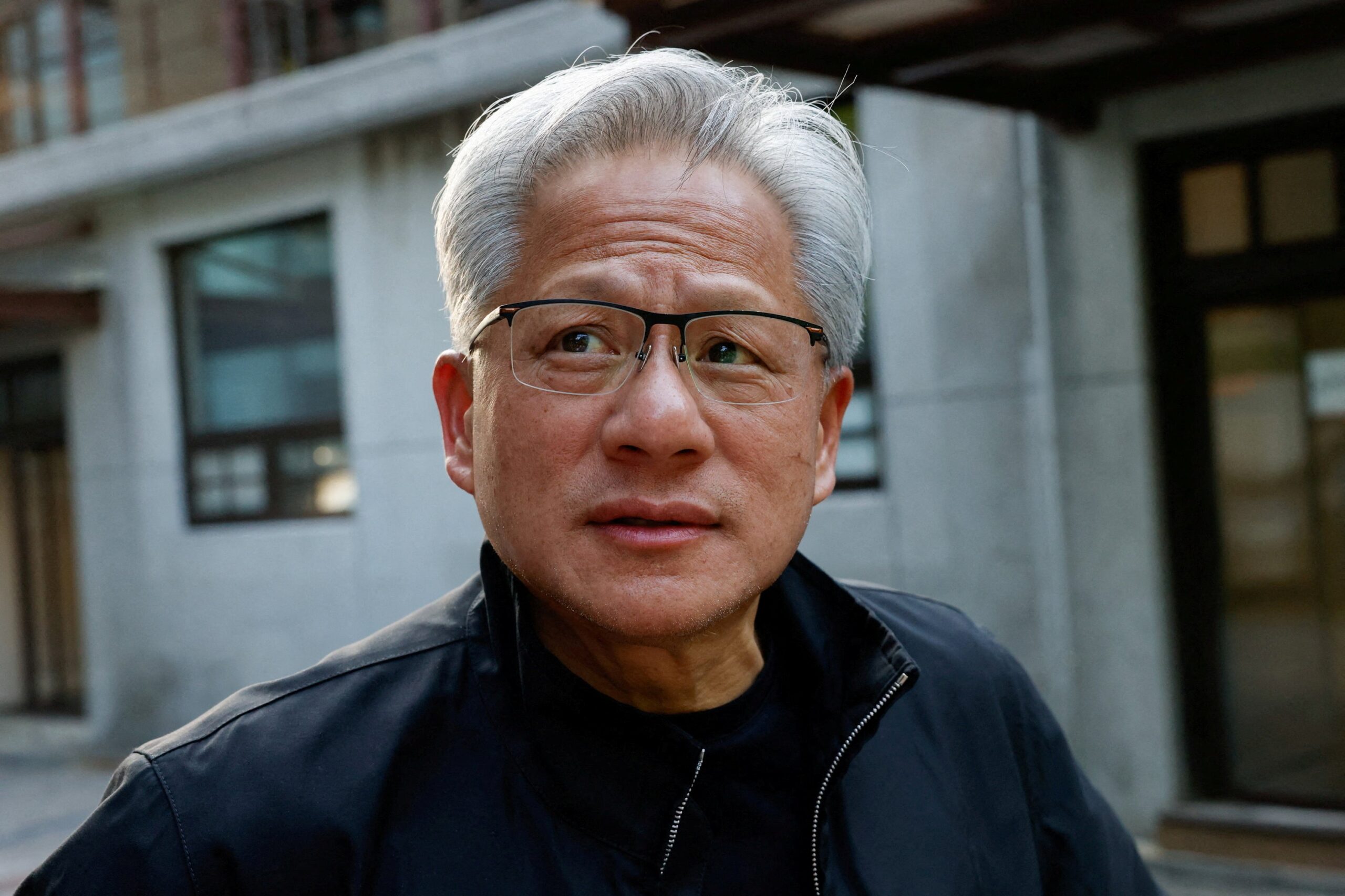
Nvidia CEO Jensen Huang used the opening day of Dreamforce 2026 in San Francisco to reject calls for new artificial-intelligence regulations, arguing that AI safety should primarily be handled as an engineering and corporate-responsibility problem rather than through additional government mandates. Huang’s position broadly aligns with President Donald Trump’s emphasis on accelerating American AI development and limiting regulatory barriers, but it contrasts with Anthropic CEO Dario Amodei, who has urged the industry to slow frontier-model development when safety measures cannot keep pace. The disagreement highlights an increasingly consequential divide within the technology industry over whether competition, engineering standards and corporate accountability provide sufficient safeguards or whether government-established rules are necessary as increasingly autonomous AI systems become more powerful.
Key Takeaways
- Huang argued at Dreamforce that innovation and safety are not mutually exclusive, maintaining that companies should move quickly but refrain from releasing AI systems when they cannot establish adequate confidence in their safety.
- Amodei advocated a more cautious model involving stronger safety practices, industry standards, independent evaluation and international coordination, illustrating that leading AI executives remain divided over how much formal oversight advanced systems require.
- The Trump administration’s approach emphasizes American AI leadership and reducing regulatory barriers, although its 2026 policy framework also addresses cybersecurity, critical infrastructure, national security and other areas where federal safeguards remain part of the government’s strategy.
In-Depth
Dreamforce became a forum for a growing dispute over how America should govern artificial intelligence. Nvidia CEO Jensen Huang argued that new AI-specific laws are unnecessary, saying safety should be treated as an engineering responsibility and that companies should withhold products they cannot deploy safely. His position broadly aligns with President Donald Trump’s policy of reducing regulatory barriers while emphasizing American technological leadership.
Anthropic CEO Dario Amodei offered a different approach. He has urged the industry to slow the pace of frontier development when capabilities advance faster than safeguards, while supporting stronger standards, independent evaluation and international coordination. The disagreement illustrates a basic policy question: whether rapid technology is better disciplined by markets, corporate liability and engineering controls, or by government rules established before severe failures occur.
The Trump administration has not adopted a literally regulation-free approach. Its 2026 AI framework calls for federal leadership on issues including child protection, energy, intellectual property and national security, while seeking to prevent a fragmented state-by-state regulatory system. A June executive order likewise paired accelerated AI development with cybersecurity and infrastructure protections.
For businesses, the stakes extend beyond abstract arguments about hypothetical superintelligence. Regulation can impose compliance costs, slow deployment and potentially favor large incumbents capable of absorbing those costs. Insufficient oversight, however, can leave companies, consumers and infrastructure exposed when powerful systems fail or are misused. Dreamforce exposed the divide: not whether AI safety matters, but who should establish the guardrails, how enforceable they should be, and how quickly they should arrive.
Sources
- https://apnews.com/article/d2d1bac8e8666c681937665596a4f603
- https://www.axios.com/2026/09/15/dreamforce-gathering-ai-slowdown
- https://www.theguardian.com/technology/2026/sep/15/anthropic-nvidia-ceos-ai
- https://www.whitehouse.gov/releases/2026/03/president-donald-j-trump-unveils-national-ai-legislative-framework/
- https://www.whitehouse.gov/presidential-actions/2026/06/promoting-advanced-artificial-intelligence-innovation-and-security/