

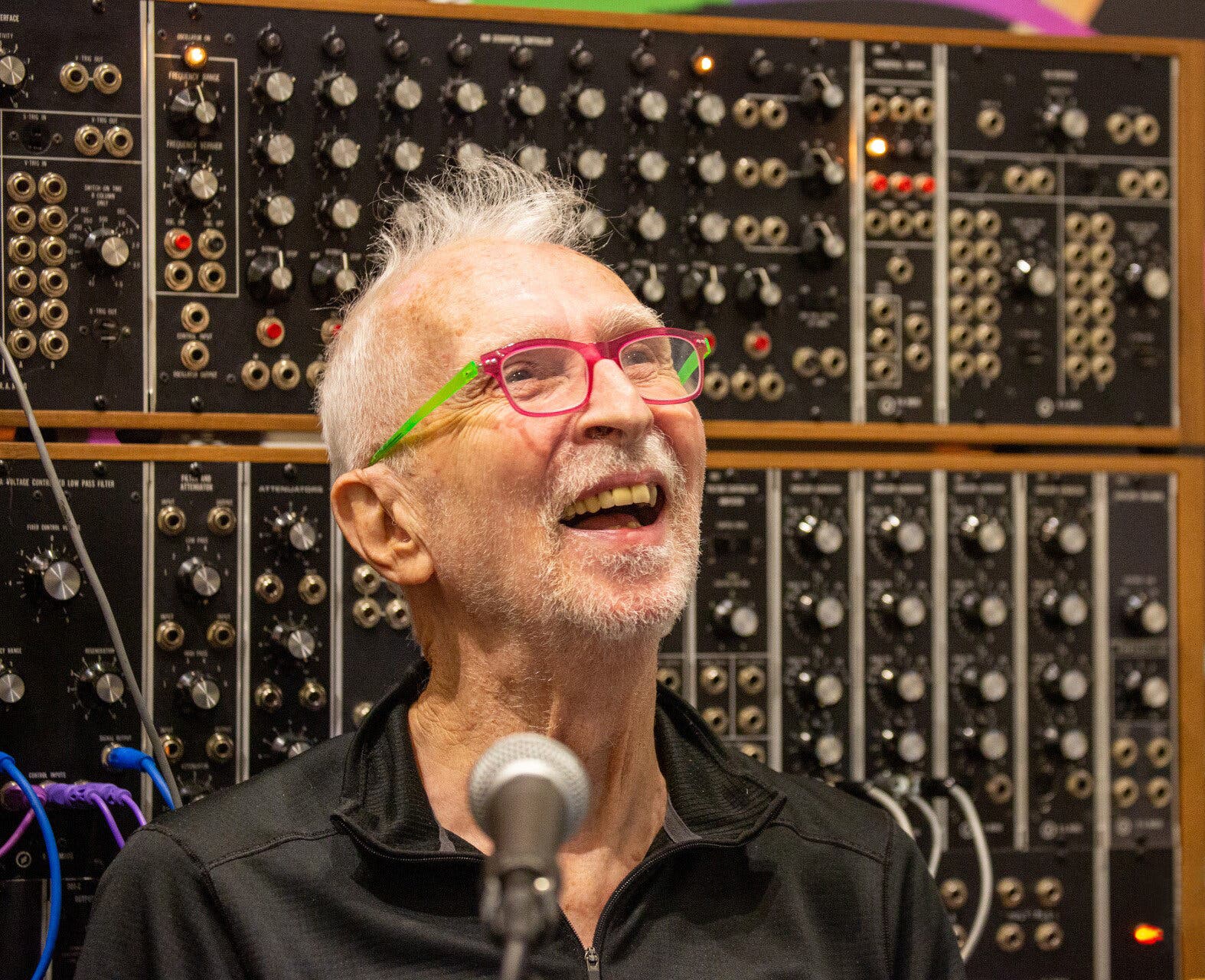
Patrick Gleeson, the pioneering synthesist, composer, producer and engineer who helped bring electronic instruments into mainstream jazz and popular music, died July 19 at age 91. After leaving an academic career teaching English literature in San Francisco, Gleeson immersed himself in electronic music, co-founded the influential Different Fur recording studio and became an early master of modular synthesizers. His collaboration with Herbie Hancock proved especially consequential: Gleeson’s work on Crossings and Sextant helped establish the synthesizer as a serious improvisational instrument in jazz and contributed to Hancock’s embrace of electronic music. Gleeson subsequently worked across more than 100 recordings, collaborated with major jazz and experimental artists, pursued an extensive solo career and contributed to film and television, including synthesizer work on Apocalypse Now. His career represents an important chapter in the development of electronic music, demonstrating how technological innovation, when placed in the hands of a disciplined musician rather than treated as a substitute for musicianship, can expand an established art form without abandoning its foundations.
Key Takeaways
- Gleeson helped move synthesizers beyond experimental studios and rock music, demonstrating through his work with Herbie Hancock that electronic instruments could function as legitimate expressive and improvisational voices within serious jazz.
- His San Francisco studio, Different Fur, became an important center of electronic experimentation, while Gleeson’s work on Crossings and Sextant helped influence the electronic direction that would become increasingly important to Hancock and jazz fusion generally.
- Gleeson’s career extended far beyond one celebrated collaboration, encompassing more than 100 recordings, solo electronic albums, production and engineering, film and television scoring, and work with artists spanning jazz, rock, avant-garde and experimental music.
In-Depth
Patrick Gleeson, the pioneering synthesist whose work helped move electronic sound from the experimental fringe into jazz, film, and popular music, died July 19 at 91. His career shows that lasting innovation often comes not from chasing fashion but from mastering a difficult craft and persuading serious artists that a new tool can serve music rather than replace it.
Gleeson began as an academic, teaching English literature in San Francisco before electronic music pulled him toward another vocation. After experimenting with Buchla equipment, he embraced the Moog modular synthesizer and co-founded Different Fur, the San Francisco studio central to his career. His breakthrough came through Herbie Hancock. Gleeson contributed electronic textures to Crossings, joined Hancock’s Mwandishi ensemble and worked on Sextant, helping establish the synthesizer as a legitimate improvisational instrument in jazz rather than a studio novelty.
His influence spread beyond those sessions. Gleeson produced, engineered, performed, and composed across more than 100 albums, worked with major artists across jazz and experimental music, and contributed to film and television. His credits included synthesizer work on Apocalypse Now, while his solo recordings explored electronic interpretations of classical material and original compositions.
Gleeson’s legacy is relevant in an era when technology can encourage shortcuts. He represented the opposite tradition: technical knowledge disciplined by musical judgment. He did not simply adopt new machinery; he learned its possibilities, brought it into demanding musical settings, and demonstrated that technological change can deepen an art form when guided by skill, taste, and human imagination and discipline.
Sources
- https://moog-foundation.hummingbirdmedia.com/the-bob-moog-foundation-announces-the-passing-of-electronic-music-pioneer-patrick-gleeson
- https://www.soundonsound.com/people/patrick-gleeson
- https://www.herbiehancock.com/music/discography/album/crossings/
- https://www.herbiehancock.com/music/discography/album/sextant/
- https://echoes.org/2026/07/27/electronic-artist-patrick-gleeson-r-i-p/