

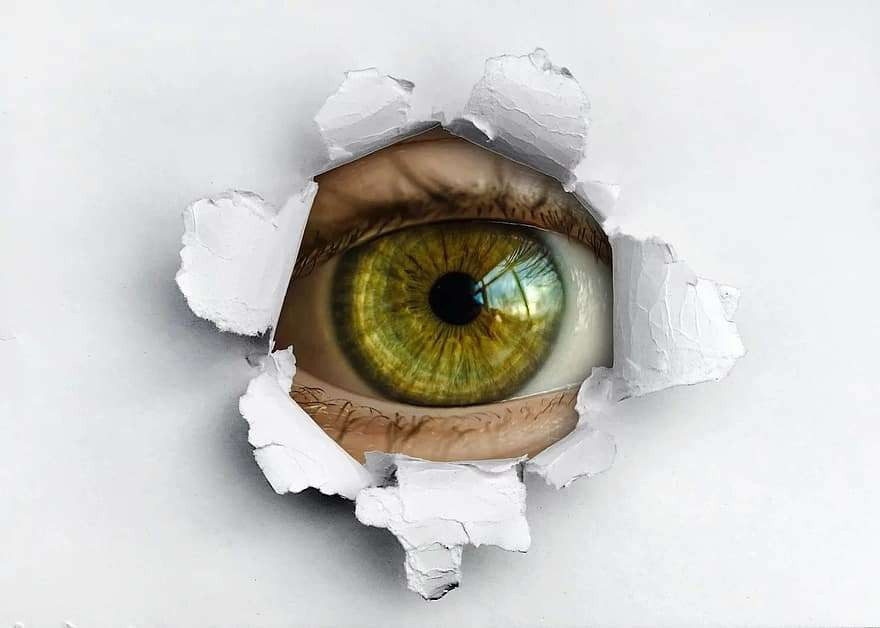
Every society must decide how much privacy it is willing to surrender in exchange for security. That question is hardly new. Governments have always monitored borders, investigated criminals, gathered intelligence, and watched individuals believed to pose threats to the public. What is new is the extraordinary power artificial intelligence brings to surveillance. AI can transform millions of cameras, microphones, databases, financial records, license-plate readers, and digital communications into something previous generations could scarcely have imagined: a system capable not merely of collecting information, but of continuously interpreting human behavior.
That capability presents legitimate opportunities. It also presents dangers that a free society should confront before technological convenience makes meaningful restraint politically impossible.
AI-powered surveillance can unquestionably serve useful purposes. Facial recognition can help locate dangerous fugitives or missing children. Algorithms can identify suspicious financial transactions associated with fraud or organized crime. Computer vision can alert authorities to abandoned objects in airports or unusual activity around critical infrastructure. Intelligence agencies can use automated systems to process enormous quantities of information that human analysts could never examine individually.
The ethical distinction, however, lies between surveillance directed toward a legitimate objective and surveillance directed toward an entire population merely because technology makes it possible.
Traditional American principles generally presume that government power requires justification. The citizen does not ordinarily have to prove why he deserves privacy; the government must establish why intrusion is warranted. AI threatens to invert that relationship because mass surveillance becomes inexpensive, automatic, and largely invisible.
Consider facial recognition. A government once needed officers to physically follow someone through a city. That required manpower, money, and investigative justification. A sufficiently sophisticated camera network could someday accomplish essentially the same thing automatically for millions of people simultaneously. The practical limitations that once restrained surveillance disappear.
The resulting danger is not simply that government officials might discover embarrassing information. Surveillance can alter behavior even when authorities never intervene.
People who believe they are constantly being watched naturally become more cautious about where they go, whom they meet, and what they say. A journalist meeting a confidential source, a citizen attending a controversial political rally, a whistleblower visiting a newspaper office, or an employee criticizing government policy may behave differently if every movement potentially becomes part of a permanent searchable record.
That chilling effect strikes directly at the culture necessary for representative government.
There is another danger: artificial intelligence can create an illusion of mathematical certainty. Algorithms produce scores, matches, probabilities, and classifications that appear objective. Yet AI systems inherit limitations from their training data, their designers, and the assumptions embedded within their models. A person incorrectly identified by facial recognition or categorized as suspicious by a predictive system may find himself forced to challenge a conclusion whose reasoning neither he nor the government employee relying upon it fully understands.
Due process becomes difficult when the accuser is effectively an algorithm.
The combination of public and private surveillance makes the issue still more complicated. Americans routinely generate enormous quantities of information through smartphones, automobiles, credit cards, social networks, navigation applications, security cameras, and connected household devices. Individual pieces of information may appear insignificant. Artificial intelligence changes their significance by making previously disconnected data searchable and interpretable at enormous scale.
A government need not install a camera in every home if the modern digital economy has already constructed much of the infrastructure necessary to reconstruct people’s activities.
Political abuse represents perhaps the gravest long-term concern. Americans should evaluate surveillance powers according to a simple standard: Would they be comfortable giving the same authority to their political opponents?
Administrations change. Prosecutors change. Agency leadership changes. Today’s trusted officials eventually surrender their powers to people their supporters may distrust profoundly. Surveillance architecture constructed for terrorism, violent crime, or national security can gradually migrate toward tax enforcement, regulatory investigations, political demonstrations, or other purposes never contemplated when the systems were created.
History suggests that governments rarely volunteer to surrender useful powers.
That does not mean AI surveillance should simply be prohibited. Government has a legitimate responsibility to protect citizens, investigate serious crimes, defend national security, and counter increasingly sophisticated threats. Refusing modern technology altogether could leave democratic societies vulnerable while authoritarian governments and criminal organizations exploit the same capabilities without restraint.
The better principle is proportionality.
Surveillance should be tied to clearly defined governmental purposes, appropriate legal authorization, meaningful oversight, data-retention limits, and penalties for deliberate abuse. Highly intrusive surveillance should require correspondingly stronger justification. Citizens should have mechanisms to challenge consequential algorithmic decisions, and government agencies should not be permitted to evade constitutional protections merely by purchasing information from private companies that would otherwise require legal process to obtain.
Most importantly, elected representatives—not technology companies or permanent bureaucracies acting alone—should establish the boundaries.
Artificial intelligence is making possible a form of governmental observation that previous generations lacked the technological ability to construct. Once that infrastructure becomes ubiquitous, reversing it may prove extraordinarily difficult. Cameras can be removed. Databases can theoretically be deleted. But institutions accustomed to possessing comprehensive information rarely welcome blindness.
The central question, therefore, is not whether AI surveillance can make society safer. In certain circumstances, it plainly can. The harder question is whether Americans can obtain those benefits without constructing machinery capable of monitoring innocent citizens simply because they exist.
A free society should never confuse technological capability with moral authority. The fact that government can watch everyone does not mean that it should. The enduring challenge will be ensuring that artificial intelligence remains a tool used by government under law rather than becoming an architecture through which government quietly acquires the power to observe, categorize, and ultimately influence the lives of the governed.