

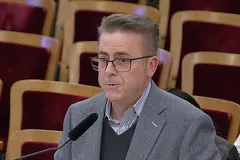
A senior technology official within the San Francisco Police Department has been placed on leave and is under investigation after emails revealed he asked companies that did business with the department to sponsor a magazine feature highlighting his work and the agency’s technology initiatives. William Sanson-Mosier, who served as the department’s chief information officer, contacted multiple technology vendors—including firms with active or pending contracts—to encourage them to advertise in a trade publication that ran a lengthy profile centered on him and the department’s expanding surveillance technology programs. The communications, sent from his official government email account, invited vendors to sponsor the article and align themselves with the department’s “technology journey,” according to records obtained through public information requests. City officials are now examining whether the solicitations violated municipal rules governing “behested payments,” which prohibit public employees from requesting money from companies doing business with their department because of the potential for pay-to-play arrangements. The investigation follows questions about the timing of the solicitations, which occurred shortly before the department issued a major technology contracting opportunity. Although the vendor ultimately awarded a contract reportedly worth nearly $10 million denies wrongdoing and there is no direct evidence that any sponsorship influenced the procurement process, the episode has renewed scrutiny of procurement ethics and vendor relationships within city government.
Sources
https://www.sfchronicle.com/sf/article/sfpd-william-sanson-mosier-21941362.php
https://www.theciocircle.com/be-inspired/will-sanson-mosier-cio-at-san-francisco-police-department
https://www.reddit.com/r/sanfrancisco/comments/1ri1zui/sf_police_director_asked_tech_vendors_to_sponsor/
Key Takeaways
- A San Francisco police technology executive is under investigation after emails showed he asked vendors that worked with the department to sponsor a magazine feature centered on his work and the agency’s technological initiatives.
- City law restricts government employees from soliciting payments from companies doing business with their departments in order to prevent conflicts of interest and potential pay-to-play arrangements.
- The controversy has drawn attention to the close relationships between law-enforcement agencies and technology vendors as departments expand surveillance systems such as drones, license-plate readers, and integrated data platforms.
In-Depth
The controversy surrounding William Sanson-Mosier illustrates the growing tension between public-sector technology expansion and the ethical guardrails meant to protect taxpayers from conflicts of interest. As the technology chief for the San Francisco Police Department, Sanson-Mosier played a central role in shaping the agency’s digital infrastructure, overseeing major initiatives involving surveillance tools, data platforms, and public-safety analytics. That position also placed him at the intersection of government procurement and private-sector innovation—a crossroads that has become increasingly sensitive in modern policing.
The issue now under investigation stems from emails in which Sanson-Mosier invited technology vendors to sponsor advertisements in a trade publication that planned to feature him and the department’s technology strategy. The publication ultimately ran an extensive profile highlighting SFPD’s technological capabilities and its partnerships with companies providing systems such as body-camera infrastructure, crime-data platforms, and automated license-plate readers. Several companies with existing or potential business ties to the department appeared as sponsors in the publication, raising questions about whether those sponsorships amounted to indirect financial support tied to a government official’s promotional coverage.
Municipal ethics rules exist precisely to prevent such circumstances. San Francisco’s regulations limit so-called behested payments—requests by public officials for funds from outside parties—particularly when the entities involved have contracts or financial relationships with the government agency making the request. These rules were strengthened after earlier corruption scandals in city government, underscoring how sensitive such transactions can be. Violations can carry financial penalties and potentially trigger broader disciplinary actions.
The timing of the solicitations has further fueled scrutiny. The requests reportedly occurred shortly before the police department launched a procurement process for a major technology contract tied to its expanding digital surveillance ecosystem. Ultimately, one of the vendors contacted about the sponsorship was later awarded a contract worth nearly $10 million, though officials say there is no direct evidence the advertising sponsorship influenced the procurement outcome. Sanson-Mosier himself has argued that he merely offered companies an optional promotional opportunity and did not require participation.
Still, the episode raises broader concerns about how tightly intertwined modern policing has become with private-sector technology firms. From drones and artificial intelligence tools to data-fusion centers that aggregate real-time information from cameras and sensors, law-enforcement agencies increasingly rely on sophisticated digital platforms developed by outside vendors. That reliance inevitably brings frequent interaction between public officials responsible for procurement and the companies seeking lucrative contracts.
For critics of government overreach and bureaucratic self-promotion, the situation reinforces a familiar concern: when public officials blur the line between professional partnerships and personal image-building, the perception of favoritism can undermine public trust. Even absent clear evidence of corruption, the optics of soliciting financial support from companies that stand to gain from government contracts can raise serious questions about accountability and transparency.
The investigation now underway will determine whether the actions in question crossed the line into a legal violation or merely represented a lapse in judgment. Either way, the case highlights a reality that has become increasingly obvious across American cities: as government agencies expand their technological capabilities, maintaining strict ethical boundaries between public officials and private vendors becomes not just advisable but essential for preserving confidence in public institutions.