

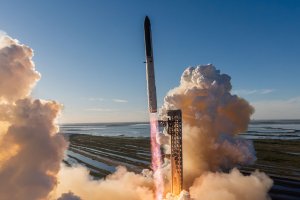
- SpaceX successfully captured its Starship spacecraft using mechanical launch tower arms Nov. 14, marking the first recovery of a Starship upper stage returning from orbit.
- The spacecraft completed 14 Earth orbits and deployed 26 Starlink satellites, although its Super Heavy booster was lost following a failed recovery attempt.
- The achievement advances SpaceX’s reusable rocket ambitions and NASA’s Artemis program, potentially reducing launch costs and strengthening American leadership in space exploration.
SpaceX achieved a milestone Saturday when its Starship spacecraft returned from orbit and was caught by mechanical arms at the company’s Starbase launch tower in Texas. The maneuver followed a 22-hour mission that began Friday with the launch of the Starship rocket. After separation, the upper stage deployed 26 Starlink satellites, completed 14 orbits around Earth and survived atmospheric reentry before executing a controlled descent into the tower’s arms.
The capture marked the first recovery of a Starship upper stage from orbit and advanced SpaceX’s goal of developing a fully reusable launch system. The mission exposed engineering challenges. The Super Heavy booster abandoned its tower recovery following a flight anomaly and was destroyed over the Gulf of Mexico. SpaceX must still demonstrate dependable recovery of both stages and orbital refueling. NASA is relying on Starship development for its Artemis lunar ambitions, including missions to return American astronauts to the moon.
Why It Matters
Starship’s successful capture provides evidence that private American engineering can deliver advances once considered beyond the reach of spaceflight. Recovering an orbital spacecraft directly at its launch tower could reduce refurbishment demands, launch costs and turnaround times. Those gains would strengthen America’s commercial launch industry, expand satellite deployment opportunities and support national leadership in space without requiring government agencies to design and operate every vehicle themselves.
But one successful recovery does not establish a reliable transportation system. The lost booster underscores how much testing remains before both stages can fly repeatedly, particularly when astronauts and lunar missions are involved. NASA’s investment in Starship makes those technical uncertainties a public concern as well as a private business challenge. Sustained progress will require rigorous testing, transparent performance standards and schedules. If SpaceX can deliver dependable reusability, American taxpayers, businesses and exploration programs could benefit from a more competitive and capable space industry.
Sources
- https://www.washingtonexaminer.com/policy/technology/4804048/spacex-starship-returns-orbit-captured-launch-pad-arms-dramatic-first/
- https://www.cbsnews.com/news/spacex-catch-starship-rocket/
- https://www.space.com/space-exploration/launches-spacecraft/spacex-chopsticks-catch-starship-upper-stage-flight-14
- https://www.wsj.com/science/space-astronomy/spacex-launches-starship-on-ambitious-bid-to-catch-spacecraft-5c806c9b