

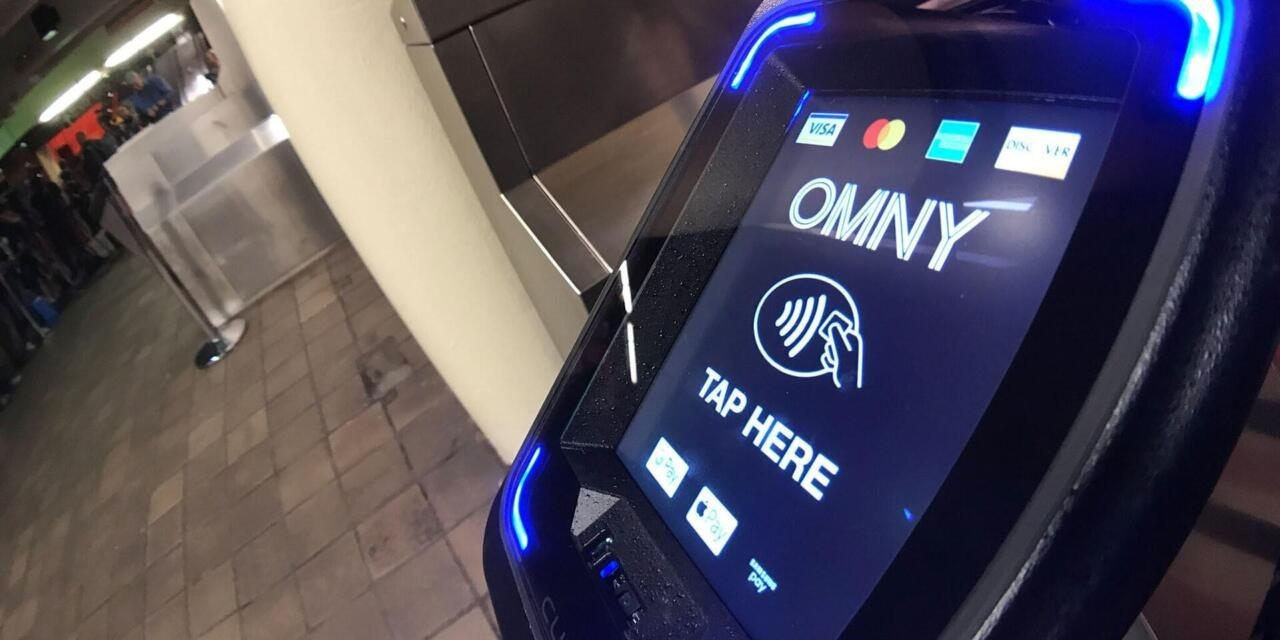
Cities across the United States and beyond are accelerating the rollout of contactless, open-loop fare systems (where riders tap a credit card, smartphone, or wearable) as a modernization push for public transit—following New York City’s success with OMNY and recent moves like BART’s “Tap and Ride” rollout on August 20, 2025. Yet the transition isn’t seamless: critics warn that unbanked and underbanked riders may be left out, security and fraud risks persist, and transit agencies are still reeling from steep budget shortfalls and dropping ridership in the post-pandemic era. While proponents view tap-to-pay as one tool in a suite of upgrades (digital navigation, service streamlining, better infrastructure), most agree it cannot singlehandedly resolve the existential challenges facing public transit today.
Sources: ABC7 News, Mass Transit Magazine
Key Takeaways
– Tap-to-pay systems are being adopted by major transit agencies (e.g. NYC’s OMNY system, BART’s new Tap & Ride, Rochester RTS) as part of a push to modernize fare collection and reduce friction for riders.
– Significant barriers remain: cost of implementation and maintenance, handling unbanked or low-income riders without access to credit cards or smartphones, and security/fraud risk concerns.
– Tap-to-pay is not a cure-all — most experts view it as a complement to broader service improvements, infrastructure investment, and fiscal support to prevent further deterioration of transit systems.
In-Depth
In recent years, public transit systems have increasingly turned their gaze to contactless payment methods—sometimes called “tap-to-pay” or “open-loop” fare systems—as a way to modernize fare collection and appeal to riders used to convenience in other areas of life. The Verge recently published a column exploring whether this shift could actually “save” public transit or simply act as one piece of a much larger puzzle. The case is compelling: if riders can tap their card or phone and move on, transit becomes more seamless. But the devil is in the details.
New York’s OMNY system is among the most mature examples. The MTA has moved to phase out the old MetroCard in favor of NFC-enabled cards, smartphones, and wearables. As of mid-2025, OMNY usage accounts for about 75 percent of transit taps. But rollout hasn’t been without friction—there have been security alerts (including concerns over location tracking), complaints about missing charges, and debates over how to ensure equity for low-income or unbanked populations. The Verge notes that while open-loop systems remove friction, they don’t eliminate the structural challenges transit faces after the pandemic.
In California, BART recently rolled out its own contactless payment option—called “Tap and Ride” as of August 20, 2025—allowing riders to use credit or debit cards (and mobile wallets) directly at fare gates, bypassing the Clipper card in many cases. However, not all facets of fare policy have shifted immediately: discounted fares and interagency transfers still require Clipper in many cases. Meanwhile in Rochester, the local Regional Transit Service (RTS) introduced tap-to-pay for its buses and on-demand services, maintaining fare capping benefits so riders aren’t penalized for occasional use patterns. Even smaller systems are experimenting.
But the technical and financial challenges of these systems are nontrivial. Transit agencies must negotiate costly contracts, integrate with legacy fare collection hardware, and deal with variable transaction fees charged by card networks. Some agencies struggle with lock-in from existing vendor contracts or the internal capacity to manage software, security, and operations. A consulting piece from L.E.K. highlights that the cost of maintaining open-loop systems (including fraud mitigation) is a key concern, and agencies must weigh whether to absorb or pass on costs to riders. Transit systems further complicate matters by needing modes of payment that cater to all users—including those who don’t have bank accounts or smartphones.
Studies of transit agencies (for example, California agencies surveyed in 2022) underscore that while many want open payments, they are wary of how to serve riders without access to modern financial tools. In some cases, systems preserve a cash or proprietary card fallback, or sell reloadable cards at retail outlets to bridge the gap. Some transit advocates caution that if too much of the public moves to digital payment modes, populations already marginalized by the digital divide could face new barriers to mobility.
From a macro perspective, tap systems are not magic bullets. Transit systems in many U.S. cities still face steep deficits. A Bloomberg analysis cited in the Verge article reports that the largest U.S. systems are collectively facing a multi-billion-dollar shortfall, while service cuts, fare hikes, and deferred maintenance are becoming more common. Critics warn of a “death spiral” in which worsening service leads to fewer riders, which further reduces revenue, and so on. Tap-to-pay may help reduce fare evasion, lower operational friction, and improve data analytics, but it cannot alone address chronic underfunding, aging infrastructure, or shifting demand patterns.
That said, integrated upgrades (real-time information, better reliability, streamlined transfers) paired with modern fare systems make transit more compelling. Some cities abroad are already pushing further: Greater Manchester in the UK just extended tap travel across buses and trams with automatic fare capping and seamless transfer logic. That kind of integration shows what’s possible when payments are just one cog in a sophisticated, unified transit experience.
In short: the momentum behind tap-to-pay is real, and it is likely to spread. But success will depend heavily on how agencies manage cost, equity, security, and system interoperability. In an era where many transit systems feel existential risk, tap-to-pay might serve as a necessary upgrade—but it must be paired with deeper investments to actually revive and sustain public transportation.