

Close Menu

    Subscribe to Updates

    Get the latest tech news from Tallwire.

      What's Hot

      Artemis II Splashdown Signals A Step Closer to Mass Space Travel

      April 12, 2026

      Anthropic Code Leak Raises Questions About AI Security and Industry Oversight

      April 8, 2026

      NASA Astronauts Use iPhones to Capture Historic Artemis II Mission Images

      April 8, 2026
      Facebook X (Twitter) Instagram
      • Tech
      • AI
      • Get In Touch
      Facebook X (Twitter) LinkedIn
      TallwireTallwire
      • Tech

        NASA Astronauts Use iPhones to Capture Historic Artemis II Mission Images

        April 8, 2026

        OpenAI Expands Influence With Strategic TBPN Media Acquisition

        April 8, 2026

        Cybersecurity Veteran Turns Focus To Drone Hacking After Decades Battling Malware

        April 6, 2026

        Anonymous Social App Surges In Saudi Arabia, Testing Limits Of Digital Freedom

        April 6, 2026

        Peter Thiel’s Bold Ag-Tech Gamble Signals High-Tech Disruption of Traditional Ranching

        April 6, 2026
      • AI

        Anthropic Code Leak Raises Questions About AI Security and Industry Oversight

        April 8, 2026

        The Rise Of Agentic AI Signals A Shift From Tools To Autonomous Digital Actors

        April 8, 2026

        AI Chatbots Draw Scrutiny As Teens Engage In Intimate Roleplay And Emotional Dependency

        April 8, 2026

        Ai-Powered Startup Signals Rise Of One-Person Billion-Dollar Companies

        April 8, 2026

        OpenAI Secures Historic $122 Billion Funding Round at $852 Billion Valuation

        April 7, 2026
      • Security

        Anthropic Code Leak Raises Questions About AI Security and Industry Oversight

        April 8, 2026

        DeFi Platform Drift Halts Operations After Multi-Million Dollar Crypto Hack

        April 7, 2026

        Fake WhatsApp App Exposes Users To Government Spyware Operation

        April 7, 2026

        ICE Deploys Controversial Spyware Tool In Drug Trafficking Investigations

        April 7, 2026

        Telehealth Firm Discloses Breach Amid Rising Digital Health Vulnerabilities

        April 6, 2026
      • Health

        European Crackdown Targets Social Media’s Impact on Children

        April 8, 2026

        AI Chatbots Draw Scrutiny As Teens Engage In Intimate Roleplay And Emotional Dependency

        April 8, 2026

        Australia Moves To Curb Social Media Addiction Among Youth With Expanded Under-16 Ban

        April 5, 2026

        Australia’s eSafety Regulator Warns Big Tech As Teens Circumvent Social Media Restrictions

        April 5, 2026

        Meta Finally Held Accountable For Harming Teens, But Real Reform Remains Uncertain

        April 2, 2026
      • Science

        Artemis II Splashdown Signals A Step Closer to Mass Space Travel

        April 12, 2026

        Peter Thiel’s Bold Ag-Tech Gamble Signals High-Tech Disruption of Traditional Ranching

        April 6, 2026

        White House Tech Advisor David Sacks Steps Down To Lead Presidential Science Advisory

        March 31, 2026

        Blue Origin’s Orbital Data Center Push Signals New Frontier in Tech Infrastructure

        March 27, 2026

        Quantum Cryptography Pioneers Awarded Computing’s Highest Honor

        March 25, 2026
      • Tech

        Peter Thiel’s Bold Ag-Tech Gamble Signals High-Tech Disruption of Traditional Ranching

        April 6, 2026

        Zuckerberg Quietly Offers Musk Support As Tech Titans Align Around Government Power

        April 4, 2026

        White House Tech Advisor David Sacks Steps Down To Lead Presidential Science Advisory

        March 31, 2026

        Another Billionaire Signals Exit As California’s Taxes Drives Out High-Profile Entrepreneurs

        March 28, 2026

        Bezos Eyes $100 Billion War Chest To Rewire Legacy Industry With AI

        March 28, 2026
      TallwireTallwire
      Home»Tech»Tap-to-Pay Systems Gain Traction in U.S. Transit — But Can They Avert a Transit “Death Spiral”?
      Tech

      Tap-to-Pay Systems Gain Traction in U.S. Transit — But Can They Avert a Transit “Death Spiral”?

      Updated:February 21, 20265 Mins Read
      Facebook Twitter Pinterest LinkedIn Tumblr Email
      Tap-to-Pay Systems Gain Traction in U.S. Transit — But Can They Avert a Transit “Death Spiral”?
      Tap-to-Pay Systems Gain Traction in U.S. Transit — But Can They Avert a Transit “Death Spiral”?
      Share
      Facebook Twitter LinkedIn Pinterest Email

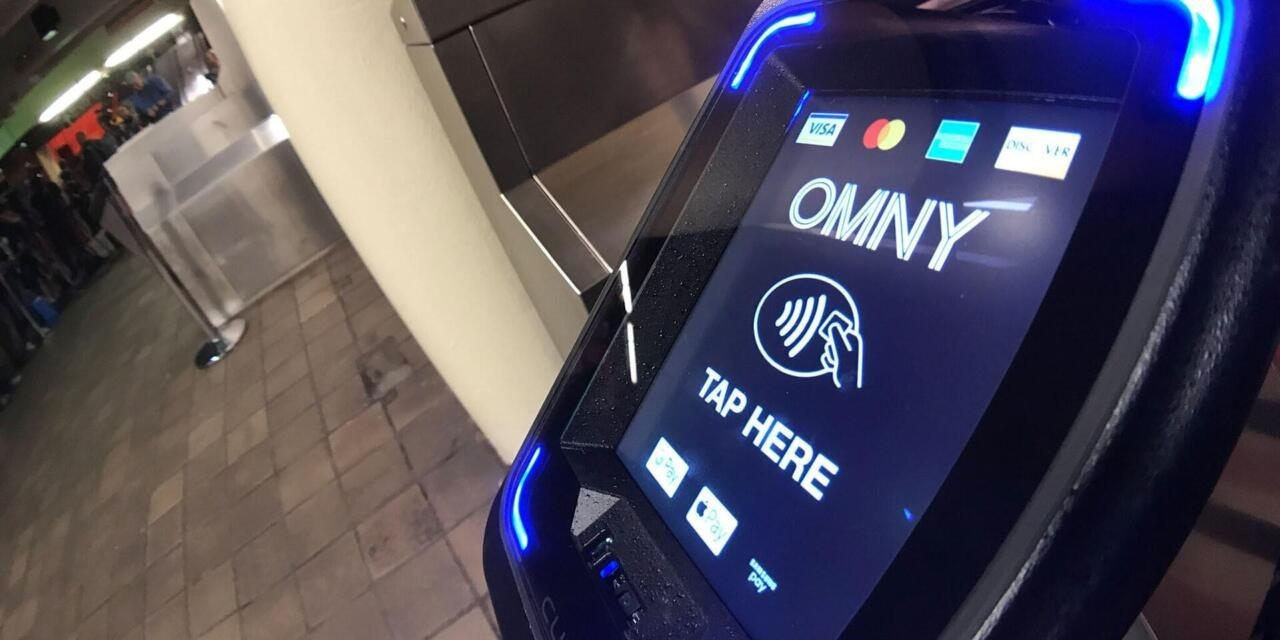
      Cities across the United States and beyond are accelerating the rollout of contactless, open-loop fare systems (where riders tap a credit card, smartphone, or wearable) as a modernization push for public transit—following New York City’s success with OMNY and recent moves like BART’s “Tap and Ride” rollout on August 20, 2025. Yet the transition isn’t seamless: critics warn that unbanked and underbanked riders may be left out, security and fraud risks persist, and transit agencies are still reeling from steep budget shortfalls and dropping ridership in the post-pandemic era. While proponents view tap-to-pay as one tool in a suite of upgrades (digital navigation, service streamlining, better infrastructure), most agree it cannot singlehandedly resolve the existential challenges facing public transit today.

      Sources: ABC7 News, Mass Transit Magazine

      Key Takeaways

      – Tap-to-pay systems are being adopted by major transit agencies (e.g. NYC’s OMNY system, BART’s new Tap & Ride, Rochester RTS) as part of a push to modernize fare collection and reduce friction for riders.

      – Significant barriers remain: cost of implementation and maintenance, handling unbanked or low-income riders without access to credit cards or smartphones, and security/fraud risk concerns.

      – Tap-to-pay is not a cure-all — most experts view it as a complement to broader service improvements, infrastructure investment, and fiscal support to prevent further deterioration of transit systems.

      In-Depth

      In recent years, public transit systems have increasingly turned their gaze to contactless payment methods—sometimes called “tap-to-pay” or “open-loop” fare systems—as a way to modernize fare collection and appeal to riders used to convenience in other areas of life. The Verge recently published a column exploring whether this shift could actually “save” public transit or simply act as one piece of a much larger puzzle. The case is compelling: if riders can tap their card or phone and move on, transit becomes more seamless. But the devil is in the details.

      New York’s OMNY system is among the most mature examples. The MTA has moved to phase out the old MetroCard in favor of NFC-enabled cards, smartphones, and wearables. As of mid-2025, OMNY usage accounts for about 75 percent of transit taps. But rollout hasn’t been without friction—there have been security alerts (including concerns over location tracking), complaints about missing charges, and debates over how to ensure equity for low-income or unbanked populations. The Verge notes that while open-loop systems remove friction, they don’t eliminate the structural challenges transit faces after the pandemic.

      In California, BART recently rolled out its own contactless payment option—called “Tap and Ride” as of August 20, 2025—allowing riders to use credit or debit cards (and mobile wallets) directly at fare gates, bypassing the Clipper card in many cases. However, not all facets of fare policy have shifted immediately: discounted fares and interagency transfers still require Clipper in many cases. Meanwhile in Rochester, the local Regional Transit Service (RTS) introduced tap-to-pay for its buses and on-demand services, maintaining fare capping benefits so riders aren’t penalized for occasional use patterns. Even smaller systems are experimenting.

      But the technical and financial challenges of these systems are nontrivial. Transit agencies must negotiate costly contracts, integrate with legacy fare collection hardware, and deal with variable transaction fees charged by card networks. Some agencies struggle with lock-in from existing vendor contracts or the internal capacity to manage software, security, and operations. A consulting piece from L.E.K. highlights that the cost of maintaining open-loop systems (including fraud mitigation) is a key concern, and agencies must weigh whether to absorb or pass on costs to riders. Transit systems further complicate matters by needing modes of payment that cater to all users—including those who don’t have bank accounts or smartphones.

      Studies of transit agencies (for example, California agencies surveyed in 2022) underscore that while many want open payments, they are wary of how to serve riders without access to modern financial tools. In some cases, systems preserve a cash or proprietary card fallback, or sell reloadable cards at retail outlets to bridge the gap. Some transit advocates caution that if too much of the public moves to digital payment modes, populations already marginalized by the digital divide could face new barriers to mobility.

      From a macro perspective, tap systems are not magic bullets. Transit systems in many U.S. cities still face steep deficits. A Bloomberg analysis cited in the Verge article reports that the largest U.S. systems are collectively facing a multi-billion-dollar shortfall, while service cuts, fare hikes, and deferred maintenance are becoming more common. Critics warn of a “death spiral” in which worsening service leads to fewer riders, which further reduces revenue, and so on. Tap-to-pay may help reduce fare evasion, lower operational friction, and improve data analytics, but it cannot alone address chronic underfunding, aging infrastructure, or shifting demand patterns.

      That said, integrated upgrades (real-time information, better reliability, streamlined transfers) paired with modern fare systems make transit more compelling. Some cities abroad are already pushing further: Greater Manchester in the UK just extended tap travel across buses and trams with automatic fare capping and seamless transfer logic. That kind of integration shows what’s possible when payments are just one cog in a sophisticated, unified transit experience.

      In short: the momentum behind tap-to-pay is real, and it is likely to spread. But success will depend heavily on how agencies manage cost, equity, security, and system interoperability. In an era where many transit systems feel existential risk, tap-to-pay might serve as a necessary upgrade—but it must be paired with deeper investments to actually revive and sustain public transportation.

      Bill Gates
      Share. Facebook Twitter Pinterest LinkedIn Tumblr Email
      Previous ArticleTaiwan Rebuffs U.S. “50-50 Chip Split” Proposal Amid Trade Talks
      Next Article Taylor Swift’s New Album Sparks Rumors of Dis Track vs. Charli XCX

      Related Posts

      NASA Astronauts Use iPhones to Capture Historic Artemis II Mission Images

      April 8, 2026

      OpenAI Expands Influence With Strategic TBPN Media Acquisition

      April 8, 2026

      Cybersecurity Veteran Turns Focus To Drone Hacking After Decades Battling Malware

      April 6, 2026

      Anonymous Social App Surges In Saudi Arabia, Testing Limits Of Digital Freedom

      April 6, 2026
      Add A Comment
      Leave A Reply Cancel Reply

      Editors Picks

      NASA Astronauts Use iPhones to Capture Historic Artemis II Mission Images

      April 8, 2026

      OpenAI Expands Influence With Strategic TBPN Media Acquisition

      April 8, 2026

      Cybersecurity Veteran Turns Focus To Drone Hacking After Decades Battling Malware

      April 6, 2026

      Anonymous Social App Surges In Saudi Arabia, Testing Limits Of Digital Freedom

      April 6, 2026
      Popular Topics
      UAE Tech Tesla Cybertruck Taiwan Tech Robotics SpaceX Startup Samsung Tim Cook spotlight Viral Series A Sundar Pichai Satya Nadella Series B Tesla Quantum computing trending Software Ransomware Sam Altman
      Major Tech Companies
      • Apple News
      • Google News
      • Meta News
      • Microsoft News
      • Amazon News
      • Samsung News
      • Nvidia News
      • OpenAI News
      • Tesla News
      • AMD News
      • Anthropic News
      • Elbit News
      AI & Emerging Tech
      • AI Regulation News
      • AI Safety News
      • AI Adoption
      • Quantum Computing News
      • Robotics News
      Key People
      • Sam Altman News
      • Jensen Huang News
      • Elon Musk News
      • Mark Zuckerberg News
      • Sundar Pichai News
      • Tim Cook News
      • Satya Nadella News
      • Mustafa Suleyman News
      Global Tech & Policy
      • Israel Tech News
      • India Tech News
      • Taiwan Tech News
      • UAE Tech News
      Startups & Emerging Tech
      • Series A News
      • Series B News
      • Startup News
      Tallwire
      Facebook X (Twitter) LinkedIn Threads Instagram RSS
      • Tech
      • Entertainment
      • Business
      • Government
      • Academia
      • Transportation
      • Legal
      • Press Kit
      © 2026 Tallwire. Optimized by ARMOUR Digital Marketing Agency.

      Type above and press Enter to search. Press Esc to cancel.