

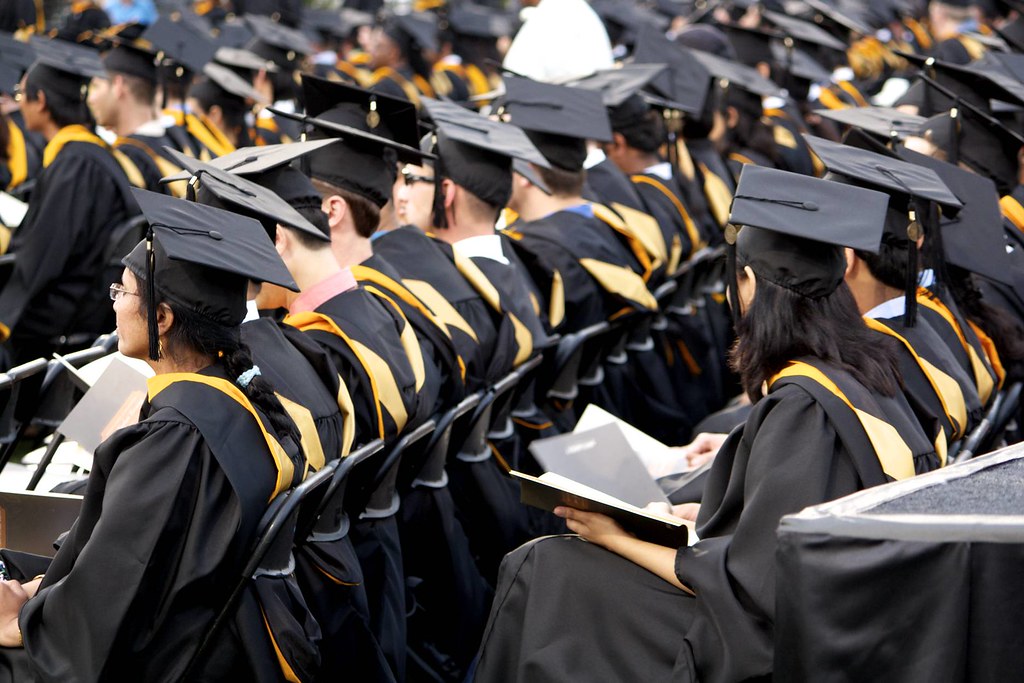
As the Class of 2026 enters the workforce, artificial intelligence is no longer being viewed merely as a technological advancement but as a direct challenge to economic stability, white-collar opportunity, and the value of higher education itself. Across graduation ceremonies nationwide, students openly booed AI-focused commencement speeches from tech executives and university leaders, reflecting mounting frustration over shrinking entry-level opportunities, AI-driven hiring systems, and a labor market increasingly favoring automation over human development. While universities and corporate leaders continue insisting AI will create future opportunity, many graduates see a far different reality: fewer pathways into stable careers, rising credential inflation, and employers demanding “AI-ready” workers without investing in long-term training. The growing backlash signals a generational collision between Silicon Valley optimism and a workforce increasingly convinced that technological disruption is arriving faster than society is prepared to manage.
Sources
https://www.washingtonpost.com/technology/2026/05/20/ai-upends-job-market-new-college-graduates-who-studied-computer-science
https://apnews.com/article/35aec9bac660eaeb05c5b8d392db2cac
https://www.axios.com/local/phoenix/2026/05/20/ai-backlash-college-graduations-job-fears
https://nypost.com/2026/05/19/opinion/gen-z-gets-heat-for-booing-ai-but-their-lives-have-been-disrupted-by-tech-more-than-any-generation-since-ww2
Key Takeaways
- Young graduates increasingly believe AI threatens entry-level white-collar employment, especially in technology, media, communications, and administrative sectors.
- Universities and corporate leaders are struggling to convince students that AI-driven disruption will ultimately benefit workers rather than replace them.
- The backlash against pro-AI commencement speeches reflects a broader cultural distrust of tech elites who promoted automation while tuition costs and economic insecurity continued climbing.
In-Depth
For years, Americans were told that earning a college degree—especially in technology-related fields—was the safest route to economic security. That promise is now being tested in real time. The Class of 2026 is graduating into a workforce rapidly reshaped by artificial intelligence, where even highly educated young professionals are questioning whether the jobs they trained for will still exist in meaningful numbers.
The reaction from graduates has been unusually blunt. At commencements across the country, students booed executives and university officials praising AI as the future. That hostility is not simply youthful pessimism. It reflects growing awareness that many corporations are openly discussing replacing entry-level labor with generative AI systems capable of performing coding, writing, research, scheduling, and analytical tasks once assigned to junior employees.
Conservatives have long argued that technological advancement is valuable only when it strengthens society rather than destabilizes it. What many graduates are witnessing instead is a corporate culture chasing efficiency without adequately considering social consequences. Businesses are increasingly demanding workers arrive “AI fluent,” while simultaneously reducing opportunities for those workers to gain practical experience in the first place.
At the same time, the frustration exposes another uncomfortable truth: universities have continued charging premium tuition rates while often failing to prepare students for a rapidly evolving labor market. Many graduates now find themselves competing not only against each other, but against algorithms capable of performing portions of their future jobs instantly and at minimal cost.
Artificial intelligence will almost certainly remain central to the American economy. But if political leaders, educators, and employers fail to balance innovation with human opportunity, the growing distrust now visible among young graduates may become a far larger social and economic backlash in the years ahead.