

Close Menu

    Subscribe to Updates

    Get the latest creative news from FooBar about art, design and business.

    What's Hot

    Malicious Chrome Extensions Compromise 900,000 Users’ AI Chats and Browsing Data

    January 12, 2026

    Microsoft Warns of a Surge in Phishing Attacks Exploiting Misconfigured Email Systems

    January 12, 2026

    SpaceX Postpones 2026 Mars Mission Citing Strategic Distraction

    January 12, 2026
    Facebook X (Twitter) Instagram
    • Tech
    • AI News
    Facebook X (Twitter) Instagram Pinterest VKontakte
    TallwireTallwire
    • Tech

      Malicious Chrome Extensions Compromise 900,000 Users’ AI Chats and Browsing Data

      January 12, 2026

      Wearable Health Tech Could Create Over 1 Million Tons of E-Waste by 2050

      January 12, 2026

      Viral Reddit Food Delivery Fraud Claim Debunked as AI Hoax

      January 12, 2026

      Activist Erases Three White Supremacist Websites onstage at German Cybersecurity Conference

      January 12, 2026

      AI Adoption Leaders Pull Ahead, Leaving Others Behind

      January 11, 2026
    • AI News
    TallwireTallwire
    Home»Tech»UCLA Engineers Unveil Room-Temperature, Quantum-Inspired Oscillator Computer
    Tech

    UCLA Engineers Unveil Room-Temperature, Quantum-Inspired Oscillator Computer

    Updated:December 25, 20253 Mins Read
    Facebook Twitter Pinterest LinkedIn Tumblr Email
    UCLA Engineers Unveil Room-Temperature, Quantum-Inspired Oscillator Computer
    UCLA Engineers Unveil Room-Temperature, Quantum-Inspired Oscillator Computer
    Share
    Facebook Twitter LinkedIn Pinterest Email

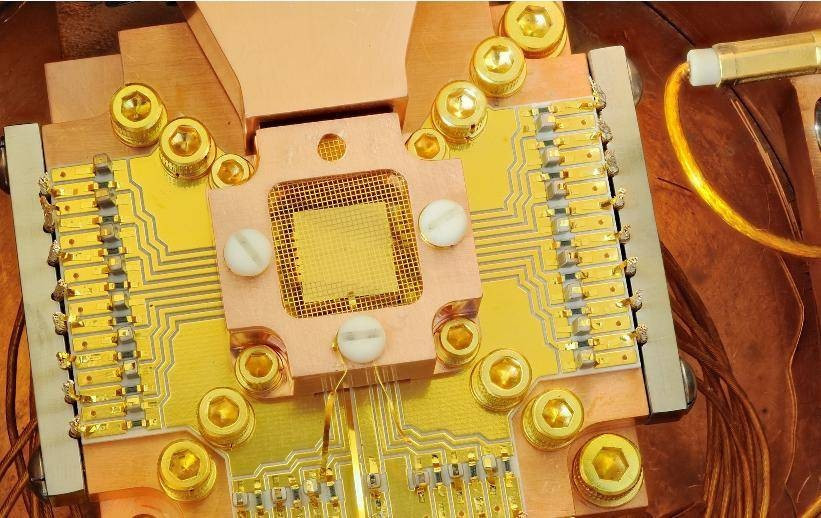
    UCLA and UC Riverside researchers have developed a physics-inspired computing prototype—an “Ising machine” that uses a network of synchronized oscillators instead of digital bits to tackle hard combinatorial optimization tasks at room temperature. The device leverages quantum-material properties of tantalum sulfide to couple electrical signals with atomic vibrations, enabling parallel computation with greater energy efficiency and compatibility with existing silicon technologies. Their findings, published in Physical Review Applied, promise a low-power alternative to traditional and cryogenic quantum systems and open pathways toward integrating such hardware into CMOS-based platforms.

    Sources: SciTechDaily, Deep Tech Bytes, DQ

    Key Takeaways

    – Room-Temperature Operation: The oscillator-based architecture solves complex tasks without requiring cryogenic cooling, a typical hurdle for quantum systems.

    – Energy-Efficient & Scalable: The design offers potentially lower power consumption and works toward easy integration with current silicon chip manufacturing.

    – Quantum-Informed, Classical-Compatible: Utilizing tantalum sulfide, the technology merges quantum phenomena with classical CMOS infrastructure to deliver enhanced computation for real-world applications.

    In-Depth

    In an era when computing bottlenecks and soaring energy demands weigh heavily on innovation, the UCLA-UC Riverside team has introduced a fresh take on solving some of the most difficult optimization problems—those that are essential to logistics, network design, and AI training.

    By foregoing binary bits and embracing a physics-inspired paradigm—an oscillator network known as an Ising machine—they let the system “naturally” sync up to a solution. That synchronization happens thanks to quantum behaviors embedded in a special form of tantalum sulfide, a material that links electrical charge with atomic vibrations. Published in Physical Review Applied, their proof-of-concept works at everyday room temperature, sidestepping the energy-intensive cooling demanded by most quantum machines. It’s a practical approach, striking at the heart of what chips—both classical and quantum—need to become: efficient, scalable, and ready to plug into the silicon economy.

    The speculative leap this represents is twofold: first, it signals a shift from strictly digital logic to computation grounded in physical phenomena; second, it takes us closer to hybrid systems that blend tried-and-true CMOS tech with quantum-informed hardware. As Professor Alexander Balandin and his collaborators argue, any new computing hardware will need to coexist with current infrastructure to make an actual difference—and this oscillator design could do just that.

    With funding from the Office of Naval Research and Army Research Office backing its potential for real-world deployment, the project may signal a turning point—where energy-efficient, parallel computation becomes standard in tackling complex challenges that underpin everything from supply chains to AI workflows.

    Share. Facebook Twitter Pinterest LinkedIn Tumblr Email
    Previous ArticleUber to Bring Blade Helicopters Aboard Its App by 2026, Paving the Way for Electric Air Taxi Expansion
    Next Article UCR Researchers Develop Method to Keep Slimmed‐Down AI Models Behaving Safely

    Related Posts

    Malicious Chrome Extensions Compromise 900,000 Users’ AI Chats and Browsing Data

    January 12, 2026

    Wearable Health Tech Could Create Over 1 Million Tons of E-Waste by 2050

    January 12, 2026

    Viral Reddit Food Delivery Fraud Claim Debunked as AI Hoax

    January 12, 2026

    Activist Erases Three White Supremacist Websites onstage at German Cybersecurity Conference

    January 12, 2026
    Add A Comment
    Leave A Reply Cancel Reply

    Editors Picks

    Malicious Chrome Extensions Compromise 900,000 Users’ AI Chats and Browsing Data

    January 12, 2026

    Wearable Health Tech Could Create Over 1 Million Tons of E-Waste by 2050

    January 12, 2026

    Viral Reddit Food Delivery Fraud Claim Debunked as AI Hoax

    January 12, 2026

    Activist Erases Three White Supremacist Websites onstage at German Cybersecurity Conference

    January 12, 2026
    Top Reviews
    Tallwire
    Facebook X (Twitter) Instagram Pinterest YouTube
    • Tech
    • AI News
    © 2026 Tallwire. Optimized by ARMOUR Digital Marketing Agency.

    Type above and press Enter to search. Press Esc to cancel.