

Close Menu

    Subscribe to Updates

    Get the latest tech news from Tallwire.

      What's Hot

      Artemis II Splashdown Signals A Step Closer to Mass Space Travel

      April 12, 2026

      Anthropic Code Leak Raises Questions About AI Security and Industry Oversight

      April 8, 2026

      NASA Astronauts Use iPhones to Capture Historic Artemis II Mission Images

      April 8, 2026
      Facebook X (Twitter) Instagram
      • Tech
      • AI
      • Get In Touch
      Facebook X (Twitter) LinkedIn
      TallwireTallwire
      • Tech

        NASA Astronauts Use iPhones to Capture Historic Artemis II Mission Images

        April 8, 2026

        OpenAI Expands Influence With Strategic TBPN Media Acquisition

        April 8, 2026

        Cybersecurity Veteran Turns Focus To Drone Hacking After Decades Battling Malware

        April 6, 2026

        Anonymous Social App Surges In Saudi Arabia, Testing Limits Of Digital Freedom

        April 6, 2026

        Peter Thiel’s Bold Ag-Tech Gamble Signals High-Tech Disruption of Traditional Ranching

        April 6, 2026
      • AI

        Anthropic Code Leak Raises Questions About AI Security and Industry Oversight

        April 8, 2026

        The Rise Of Agentic AI Signals A Shift From Tools To Autonomous Digital Actors

        April 8, 2026

        AI Chatbots Draw Scrutiny As Teens Engage In Intimate Roleplay And Emotional Dependency

        April 8, 2026

        Ai-Powered Startup Signals Rise Of One-Person Billion-Dollar Companies

        April 8, 2026

        OpenAI Secures Historic $122 Billion Funding Round at $852 Billion Valuation

        April 7, 2026
      • Security

        Anthropic Code Leak Raises Questions About AI Security and Industry Oversight

        April 8, 2026

        DeFi Platform Drift Halts Operations After Multi-Million Dollar Crypto Hack

        April 7, 2026

        Fake WhatsApp App Exposes Users To Government Spyware Operation

        April 7, 2026

        ICE Deploys Controversial Spyware Tool In Drug Trafficking Investigations

        April 7, 2026

        Telehealth Firm Discloses Breach Amid Rising Digital Health Vulnerabilities

        April 6, 2026
      • Health

        European Crackdown Targets Social Media’s Impact on Children

        April 8, 2026

        AI Chatbots Draw Scrutiny As Teens Engage In Intimate Roleplay And Emotional Dependency

        April 8, 2026

        Australia Moves To Curb Social Media Addiction Among Youth With Expanded Under-16 Ban

        April 5, 2026

        Australia’s eSafety Regulator Warns Big Tech As Teens Circumvent Social Media Restrictions

        April 5, 2026

        Meta Finally Held Accountable For Harming Teens, But Real Reform Remains Uncertain

        April 2, 2026
      • Science

        Artemis II Splashdown Signals A Step Closer to Mass Space Travel

        April 12, 2026

        Peter Thiel’s Bold Ag-Tech Gamble Signals High-Tech Disruption of Traditional Ranching

        April 6, 2026

        White House Tech Advisor David Sacks Steps Down To Lead Presidential Science Advisory

        March 31, 2026

        Blue Origin’s Orbital Data Center Push Signals New Frontier in Tech Infrastructure

        March 27, 2026

        Quantum Cryptography Pioneers Awarded Computing’s Highest Honor

        March 25, 2026
      • Tech

        Peter Thiel’s Bold Ag-Tech Gamble Signals High-Tech Disruption of Traditional Ranching

        April 6, 2026

        Zuckerberg Quietly Offers Musk Support As Tech Titans Align Around Government Power

        April 4, 2026

        White House Tech Advisor David Sacks Steps Down To Lead Presidential Science Advisory

        March 31, 2026

        Another Billionaire Signals Exit As California’s Taxes Drives Out High-Profile Entrepreneurs

        March 28, 2026

        Bezos Eyes $100 Billion War Chest To Rewire Legacy Industry With AI

        March 28, 2026
      TallwireTallwire
      Home»Tech»UCLA Engineers Unveil Room-Temperature, Quantum-Inspired Oscillator Computer
      Tech

      UCLA Engineers Unveil Room-Temperature, Quantum-Inspired Oscillator Computer

      Updated:February 21, 20263 Mins Read
      Facebook Twitter Pinterest LinkedIn Tumblr Email
      UCLA Engineers Unveil Room-Temperature, Quantum-Inspired Oscillator Computer
      UCLA Engineers Unveil Room-Temperature, Quantum-Inspired Oscillator Computer
      Share
      Facebook Twitter LinkedIn Pinterest Email

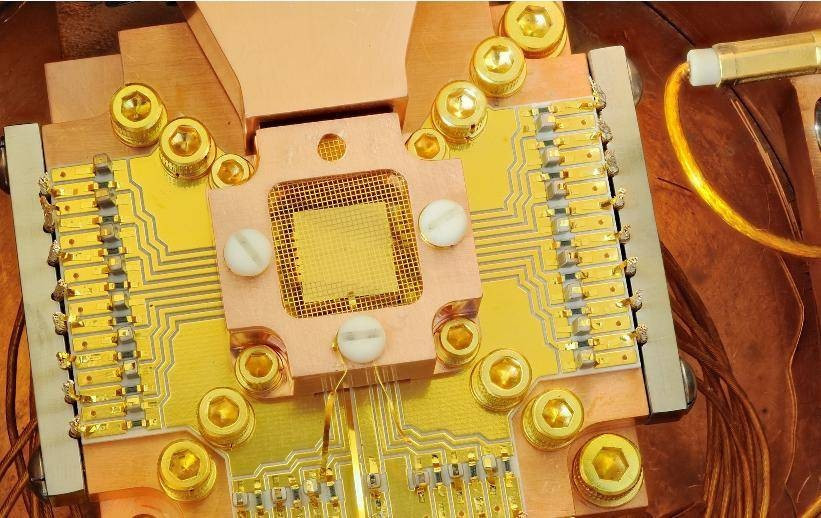
      UCLA and UC Riverside researchers have developed a physics-inspired computing prototype—an “Ising machine” that uses a network of synchronized oscillators instead of digital bits to tackle hard combinatorial optimization tasks at room temperature. The device leverages quantum-material properties of tantalum sulfide to couple electrical signals with atomic vibrations, enabling parallel computation with greater energy efficiency and compatibility with existing silicon technologies. Their findings, published in Physical Review Applied, promise a low-power alternative to traditional and cryogenic quantum systems and open pathways toward integrating such hardware into CMOS-based platforms.

      Sources: SciTechDaily, Deep Tech Bytes, DQ

      Key Takeaways

      – Room-Temperature Operation: The oscillator-based architecture solves complex tasks without requiring cryogenic cooling, a typical hurdle for quantum systems.

      – Energy-Efficient & Scalable: The design offers potentially lower power consumption and works toward easy integration with current silicon chip manufacturing.

      – Quantum-Informed, Classical-Compatible: Utilizing tantalum sulfide, the technology merges quantum phenomena with classical CMOS infrastructure to deliver enhanced computation for real-world applications.

      In-Depth

      In an era when computing bottlenecks and soaring energy demands weigh heavily on innovation, the UCLA-UC Riverside team has introduced a fresh take on solving some of the most difficult optimization problems—those that are essential to logistics, network design, and AI training.

      By foregoing binary bits and embracing a physics-inspired paradigm—an oscillator network known as an Ising machine—they let the system “naturally” sync up to a solution. That synchronization happens thanks to quantum behaviors embedded in a special form of tantalum sulfide, a material that links electrical charge with atomic vibrations. Published in Physical Review Applied, their proof-of-concept works at everyday room temperature, sidestepping the energy-intensive cooling demanded by most quantum machines. It’s a practical approach, striking at the heart of what chips—both classical and quantum—need to become: efficient, scalable, and ready to plug into the silicon economy.

      The speculative leap this represents is twofold: first, it signals a shift from strictly digital logic to computation grounded in physical phenomena; second, it takes us closer to hybrid systems that blend tried-and-true CMOS tech with quantum-informed hardware. As Professor Alexander Balandin and his collaborators argue, any new computing hardware will need to coexist with current infrastructure to make an actual difference—and this oscillator design could do just that.

      With funding from the Office of Naval Research and Army Research Office backing its potential for real-world deployment, the project may signal a turning point—where energy-efficient, parallel computation becomes standard in tackling complex challenges that underpin everything from supply chains to AI workflows.

      India Tech
      Share. Facebook Twitter Pinterest LinkedIn Tumblr Email
      Previous ArticleUber to Bring Blade Helicopters Aboard Its App by 2026, Paving the Way for Electric Air Taxi Expansion
      Next Article UCR Researchers Develop Method to Keep Slimmed‐Down AI Models Behaving Safely

      Related Posts

      NASA Astronauts Use iPhones to Capture Historic Artemis II Mission Images

      April 8, 2026

      OpenAI Expands Influence With Strategic TBPN Media Acquisition

      April 8, 2026

      Cybersecurity Veteran Turns Focus To Drone Hacking After Decades Battling Malware

      April 6, 2026

      Anonymous Social App Surges In Saudi Arabia, Testing Limits Of Digital Freedom

      April 6, 2026
      Add A Comment
      Leave A Reply Cancel Reply

      Editors Picks

      NASA Astronauts Use iPhones to Capture Historic Artemis II Mission Images

      April 8, 2026

      OpenAI Expands Influence With Strategic TBPN Media Acquisition

      April 8, 2026

      Cybersecurity Veteran Turns Focus To Drone Hacking After Decades Battling Malware

      April 6, 2026

      Anonymous Social App Surges In Saudi Arabia, Testing Limits Of Digital Freedom

      April 6, 2026
      Popular Topics
      spotlight UAE Tech Software Satya Nadella Sundar Pichai Tesla Cybertruck Series A trending Startup Series B Tim Cook Samsung Tesla Ransomware Robotics Sam Altman Viral Taiwan Tech SpaceX Quantum computing
      Major Tech Companies
      • Apple News
      • Google News
      • Meta News
      • Microsoft News
      • Amazon News
      • Samsung News
      • Nvidia News
      • OpenAI News
      • Tesla News
      • AMD News
      • Anthropic News
      • Elbit News
      AI & Emerging Tech
      • AI Regulation News
      • AI Safety News
      • AI Adoption
      • Quantum Computing News
      • Robotics News
      Key People
      • Sam Altman News
      • Jensen Huang News
      • Elon Musk News
      • Mark Zuckerberg News
      • Sundar Pichai News
      • Tim Cook News
      • Satya Nadella News
      • Mustafa Suleyman News
      Global Tech & Policy
      • Israel Tech News
      • India Tech News
      • Taiwan Tech News
      • UAE Tech News
      Startups & Emerging Tech
      • Series A News
      • Series B News
      • Startup News
      Tallwire
      Facebook X (Twitter) LinkedIn Threads Instagram RSS
      • Tech
      • Entertainment
      • Business
      • Government
      • Academia
      • Transportation
      • Legal
      • Press Kit
      © 2026 Tallwire. Optimized by ARMOUR Digital Marketing Agency.

      Type above and press Enter to search. Press Esc to cancel.