

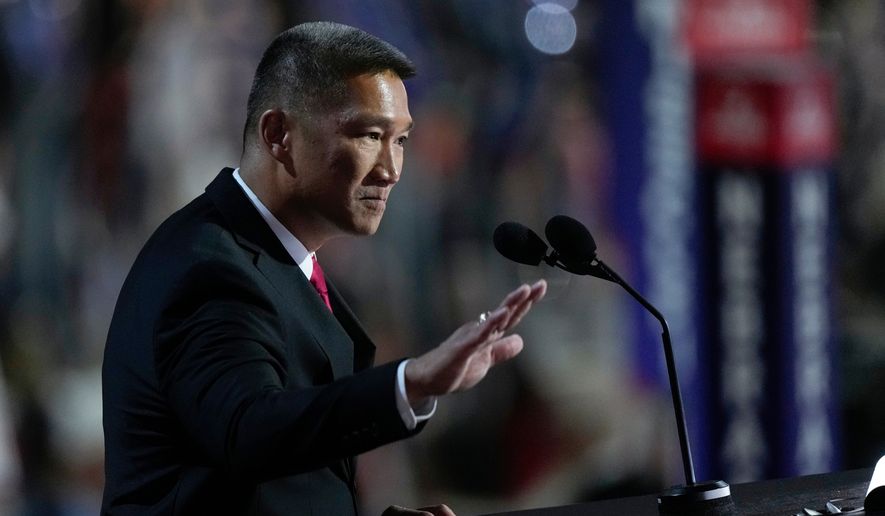
Acting Navy Secretary Hung Cao has directed sailors, Marines, civilian personnel, and their families to immediately review their social media accounts and remove publicly available information that could expose military affiliations, personal routines, or sensitive details. The warning comes amid what the Navy describes as an increasingly coordinated campaign by hostile foreign actors employing drones, cyberattacks, surveillance, doxxing, and other intelligence-gathering tactics against U.S. military personnel and installations. The guidance urges personnel to tighten online privacy settings, remain alert for suspicious activity around bases, and report potential threats without hesitation as the Navy strengthens force protection measures in response to an evolving security environment.
Key Takeaways
- • The Navy warns that foreign adversaries are using social media, cyber operations, drones, and physical surveillance together to collect intelligence and identify vulnerabilities affecting military personnel and installations.
- • Sailors, Marines, civilian employees, reservists, and even family members are being urged to privatize social media accounts, remove identifying information, and avoid posting details that reveal military affiliations or daily routines.
- • The directive reflects a broader shift toward heightened operational security, emphasizing that seemingly insignificant online information can be combined by adversaries into valuable intelligence capable of threatening personnel and military operations.
In-Depth
Acting Navy Secretary Hung Cao’s warning represents one of the clearest acknowledgments yet that the modern battlefield extends well beyond traditional military operations. The directive recognizes that hostile governments and affiliated actors increasingly rely on publicly available digital information to identify military personnel, map their daily habits, and develop intelligence that can be exploited during periods of heightened international tension.
Rather than treating cyber threats, drone incursions, physical surveillance, and online harassment as separate concerns, the Navy now views them as elements of a coordinated campaign designed to test American defenses and gather operational intelligence. That assessment reflects the reality that today’s adversaries often combine information from multiple sources, using publicly available social media posts alongside cyber intrusions and physical observation to build detailed intelligence profiles.
The guidance also broadens responsibility beyond uniformed service members. Families are encouraged to review their own online presence because photographs, location tags, employment information, and seemingly routine posts can inadvertently reveal deployment patterns, duty assignments, or other operational details. Such information can become valuable when aggregated by sophisticated intelligence services.
The directive reinforces a traditional military principle adapted for the digital age: operational security begins with individual discipline. While many Americans routinely share personal information online, military personnel occupy positions that make even ordinary details potentially significant to foreign intelligence services. By encouraging greater vigilance both online and around military installations, Navy leadership is signaling that protecting sensitive information has become as important to mission readiness as safeguarding physical facilities or classified documents in an increasingly contested global security environment.
Sources
- https://www.washingtontimes.com/news/2026/aug/25/navy-secretary-hung-cao-warns-personnel-review-social-media-accounts/
- https://taskandpurpose.com/news/navy-marines-warning-personnel-bases/
- https://news.usni.org/2026/08/07/acting-secretary-of-the-navys-warrior-ethos-alnav
- https://www.navytimes.com/news/your-military/2026/08/25/hung-cao-taps-civilian-to-stand-up-a-new-defense-industrial-base-office/