

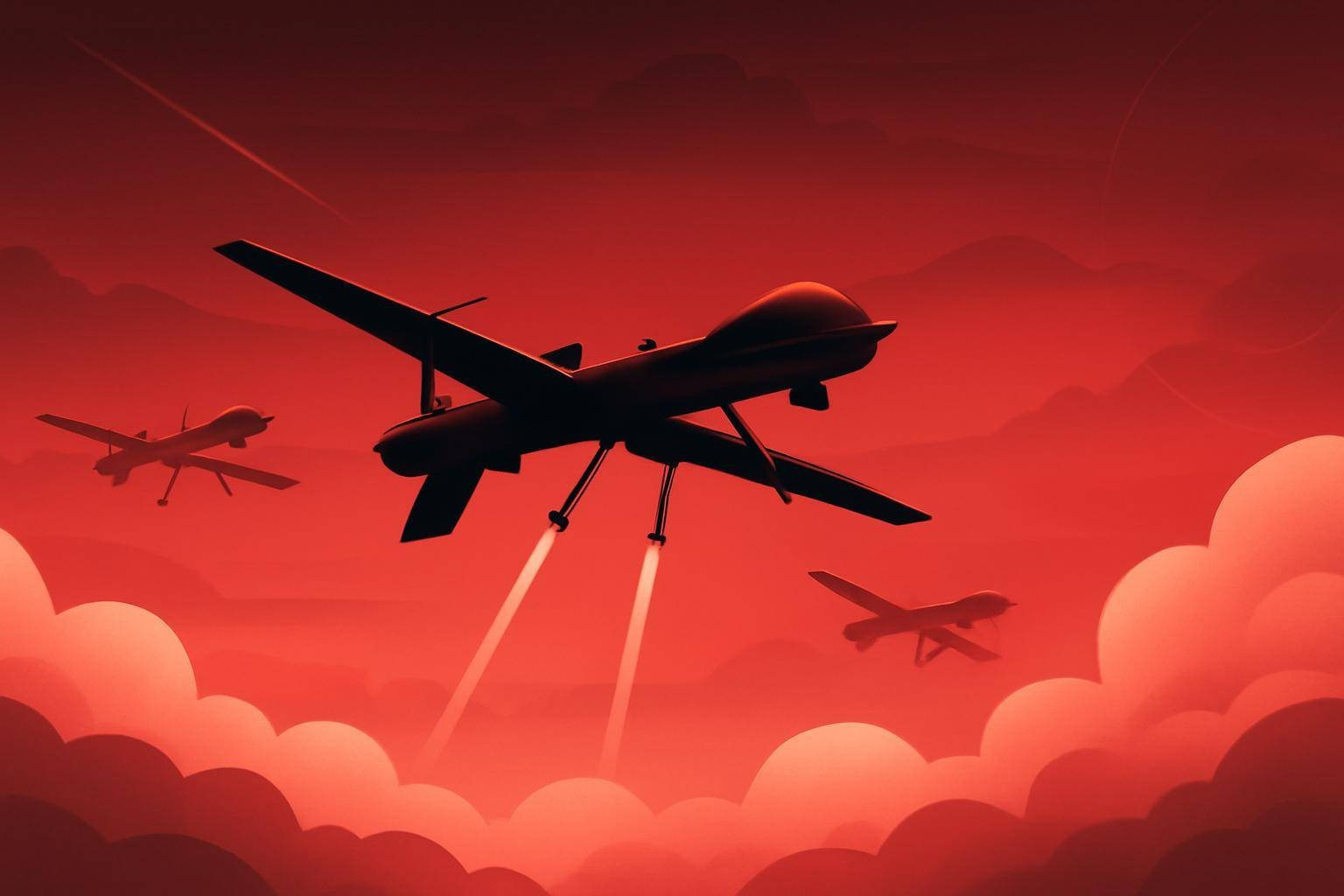
A little-known Pentagon office focused on accelerating military drone capabilities has secured what officials describe as the largest single funding increase in its history, signaling a decisive shift toward autonomous and unmanned warfare systems. The funding surge is intended to fast-track the development, procurement, and deployment of low-cost drones and counter-drone technologies across all branches of the armed forces. Defense leaders argue the move is necessary to keep pace with adversaries that have rapidly integrated drones into modern battlefield strategies, particularly in conflicts where inexpensive, expendable systems have proven highly effective. The initiative emphasizes scalability, rapid production, and battlefield adaptability, reflecting concerns that traditional defense procurement timelines are too slow for emerging threats. While supporters see the investment as long overdue, critics raise questions about oversight, long-term strategy, and the risks associated with expanding autonomous combat systems.
Sources
https://www.latimes.com/business/story/2026-04-21/pentagons-little-known-drone-office-just-claimed-largest-single-military-funding-surge-ever
https://www.defense.gov/News/News-Stories/Article/Article/
https://www.reuters.com/world/us/pentagon-expands-drone-investment-strategy-2026-04-21/
Key Takeaways
- The Pentagon is prioritizing rapid drone deployment and mass production to counter emerging global threats.
- The funding surge reflects growing concern over adversaries’ effective use of low-cost, scalable drone warfare.
- Questions remain about oversight, autonomy risks, and whether speed is being prioritized over long-term strategic discipline.
In-Depth
The Pentagon’s latest funding move marks a clear inflection point in how the United States approaches modern warfare. For years, defense planners have operated under the assumption that technological superiority—built through large, complex, and expensive systems—would remain the cornerstone of military dominance. That assumption is now being challenged by a new reality: smaller, cheaper, and more adaptable systems are reshaping battlefields faster than traditional procurement models can respond.
The office at the center of this funding surge has been tasked with breaking through bureaucratic inertia that has long plagued defense acquisition. Its mission is not just to develop drones, but to fundamentally rethink how they are produced, deployed, and integrated across military operations. This includes leveraging commercial technology, shortening development cycles, and ensuring that frontline units can access tools that evolve in real time alongside threats.
What’s driving this urgency is not theoretical. Conflicts abroad have demonstrated that relatively unsophisticated drone systems can disrupt supply chains, gather intelligence, and even neutralize high-value assets at a fraction of the cost of traditional weapons. That asymmetry is forcing a recalibration in Washington, where the focus is shifting from dominance through complexity to resilience through volume and adaptability.
Still, the aggressive push raises legitimate concerns. Expanding autonomous capabilities inevitably invites debate over control, accountability, and unintended escalation. There is also the question of whether rapid scaling could outpace the military’s ability to effectively train personnel and integrate these systems into coherent strategy.
Ultimately, the funding surge underscores a broader recognition: the nature of warfare is changing, and the institutions responsible for national defense are under pressure to adapt quickly. Whether this approach results in a sustainable advantage—or introduces new vulnerabilities—will depend on execution as much as intent.