

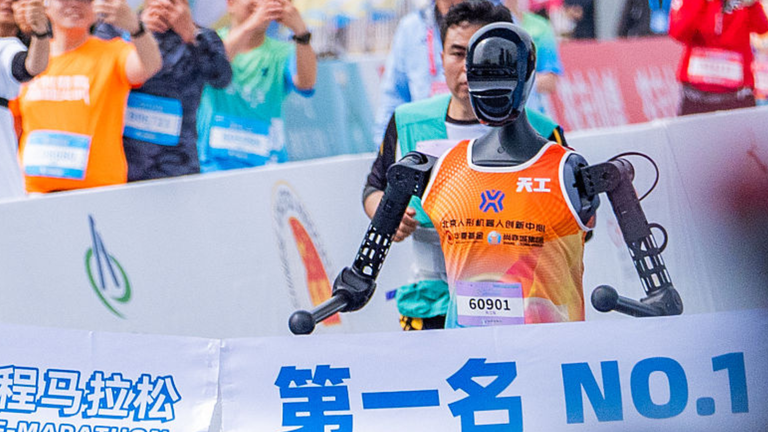
A humanoid robot named “Tiangong Ultra” stunned observers in Beijing by completing a half marathon in a record-setting time for robotic competitors, underscoring the accelerating pace of artificial intelligence and robotics development—particularly in China’s state-backed innovation ecosystem. The event, designed as both a technological demonstration and a signal of national capability, featured multiple robotic entrants, but Tiangong Ultra’s performance stood out for its balance, endurance, and autonomous navigation over the 13.1-mile course. While still far behind human elite athletes, the achievement reflects meaningful gains in mobility, energy efficiency, and machine learning integration. The spectacle also highlights intensifying global competition in robotics, where advancements are increasingly framed not just as commercial milestones but as strategic assets with implications for labor markets, defense, and geopolitical influence.
Sources
https://www.latimes.com/sports/story/2026-04-20/humanoid-robot-lightning-sets-half-marathon-record-in-beijing
https://www.reuters.com/technology/china-humanoid-robot-marathon-record-2026-04-20/
https://apnews.com/article/china-robot-half-marathon-ai-technology-2026
Key Takeaways
- China is aggressively demonstrating real-world applications of humanoid robotics as part of a broader push for technological leadership.
- The performance gap between robots and humans remains large, but improvements in endurance and autonomy signal meaningful progress.
- Robotics development is increasingly tied to national strategy, with implications for economic competitiveness and security.
In-Depth
The half-marathon performance by Tiangong Ultra is less about beating human runners and more about proving a concept: that humanoid robots are beginning to function reliably in dynamic, real-world environments over extended periods. That matters. For years, robotics has been dominated by controlled demonstrations—factory floors, lab settings, or carefully scripted tasks. A 13.1-mile outdoor course introduces variables like terrain inconsistencies, weather exposure, and mechanical fatigue, all of which stress-test both hardware and software. Completing that course is a statement that these systems are moving beyond novelty.
China’s role in this development is not incidental. The country has made robotics and AI central pillars of its industrial policy, backing companies and research institutions with funding, infrastructure, and strategic direction. Public demonstrations like this serve dual purposes: they validate domestic investment while signaling capability to global competitors. In a world where technological leadership increasingly translates into economic and military leverage, these optics matter.
At the same time, it’s worth keeping perspective. Even the most advanced humanoid robots are nowhere near replacing human athleticism or adaptability. The gap in efficiency, decision-making, and resilience remains wide. But that gap is narrowing incrementally, and history suggests that steady, compounding improvements tend to accelerate once key thresholds are crossed.
For policymakers and industry leaders, the takeaway isn’t that robots are about to replace people in endurance tasks. It’s that the foundational technologies—mobility, autonomy, energy management—are advancing in ways that will spill over into logistics, manufacturing, healthcare, and potentially defense. Ignoring that trajectory would be a mistake.