

Close Menu

    Subscribe to Updates

    Get the latest tech news from Tallwire.

      What's Hot

      AI Fingerprint Theft Fears Spark Debate Over Emerging Biometric Security Risks

      June 14, 2026

      British Lawmaker’s Lawsuit Against xAI Could Become Landmark Test of AI Accountability

      June 14, 2026

      Polymarket Alleges Corporate Espionage as Rivalry With Kalshi Boils Over

      June 14, 2026
      Facebook X (Twitter) Instagram
      • Tech
      • AI
      • Get In Touch
      Facebook X (Twitter) LinkedIn
      TallwireTallwire
      • Tech

        Five Eyes Alliance Warns China Is Using LinkedIn to Recruit Potential Spies

        June 13, 2026

        China Claims First Commercial Brain Chip Victory Over Musk

        June 13, 2026

        Schools Push Back Against Social Media as Concerns Over Student Well-Being Grow

        June 11, 2026

        AI Agents Enter the Arena as Silicon Valley Chases the Next Computing Revolution

        June 10, 2026

        AI Farms Are Transforming Rural America and Raising New Questions About Power

        June 10, 2026
      • AI

        British Lawmaker’s Lawsuit Against xAI Could Become Landmark Test of AI Accountability

        June 14, 2026

        UC Berkeley’s AI Problem Exposes a Growing Crisis in Higher Education

        June 13, 2026

        Nadella Rejects “Addictive AI” Strategy After Leaked Scout Memo Sparks Backlash

        June 13, 2026

        AI Election Answers Fail Accuracy Test in Major Chatbot Audit

        June 13, 2026

        Meta’s Smart Glasses Facial Recognition Code Ignites New Privacy Firestorm

        June 13, 2026
      • Security

        Polymarket Alleges Corporate Espionage as Rivalry With Kalshi Boils Over

        June 14, 2026

        AI Fingerprint Theft Fears Spark Debate Over Emerging Biometric Security Risks

        June 14, 2026

        Five Eyes Alliance Warns China Is Using LinkedIn to Recruit Potential Spies

        June 13, 2026

        Meta’s Smart Glasses Facial Recognition Code Ignites New Privacy Firestorm

        June 13, 2026

        Louisiana Intensifies Crackdown After Sex Offender Caught Targeting Child on Roblox

        June 13, 2026
      • Health

        China Claims First Commercial Brain Chip Victory Over Musk

        June 13, 2026

        Robot Caregivers Gain Ground as Aging Americans Seek Independence at Home

        June 12, 2026

        Drug-Resistant Typhoid Raises New Fears of a Global Health Crisis

        June 6, 2026

        AI Accessibility Breakthrough Shows Technology’s Best Use Case

        June 5, 2026

        Smart Tattoo Breakthrough Could Revolutionize Early Skin Cancer Detection

        June 4, 2026
      • Science

        China Claims First Commercial Brain Chip Victory Over Musk

        June 13, 2026

        Amazon’s Data Center Breakthrough Could Cement America’s AI Dominance

        June 7, 2026

        Drug-Resistant Typhoid Raises New Fears of a Global Health Crisis

        June 6, 2026

        AI Accessibility Breakthrough Shows Technology’s Best Use Case

        June 5, 2026

        Smart Tattoo Breakthrough Could Revolutionize Early Skin Cancer Detection

        June 4, 2026
      • Tech

        Nadella Rejects “Addictive AI” Strategy After Leaked Scout Memo Sparks Backlash

        June 13, 2026

        Arbitrator Orders Ex-Girlfriend of Former Google CEO Eric Schmidt to Pay More Than $10 Million

        June 12, 2026

        Reid Hoffman Steps Down From Microsoft Board To Refocus On AI Ventures

        June 10, 2026

        Gwynne Shotwell Emerges as the Operational Force Behind SpaceX’s Rise

        June 10, 2026

        Zuckerberg’s Superyacht Arrival Sparks Backlash Amid Meta Layoffs

        June 1, 2026
      TallwireTallwire
      Home»Opinion»The Quiet Trade-Off Between Innovation and Privacy in Smart Glasses
      Opinion

      The Quiet Trade-Off Between Innovation and Privacy in Smart Glasses

      5 Mins Read
      Facebook Twitter Pinterest LinkedIn Tumblr Email
      Share
      Facebook Twitter LinkedIn Pinterest Email

      There’s something undeniably compelling about the promise of smart glasses. The idea that a lightweight, everyday accessory can layer digital intelligence onto the real world feels like a natural evolution of the smartphone era. Navigation directions hovering in your field of view, real-time translations appearing as you speak, the ability to capture moments hands-free—it all sounds like progress. And in many ways, it is.

      But beneath the glossy surface of innovation lies a more complicated reality, one that deserves serious consideration: the normalization of constant surveillance through facial recognition technology embedded in these devices.

      Smart glasses are not just another gadget. They represent a shift in how technology interacts with the physical world—and more importantly, how it interacts with other people without their consent.

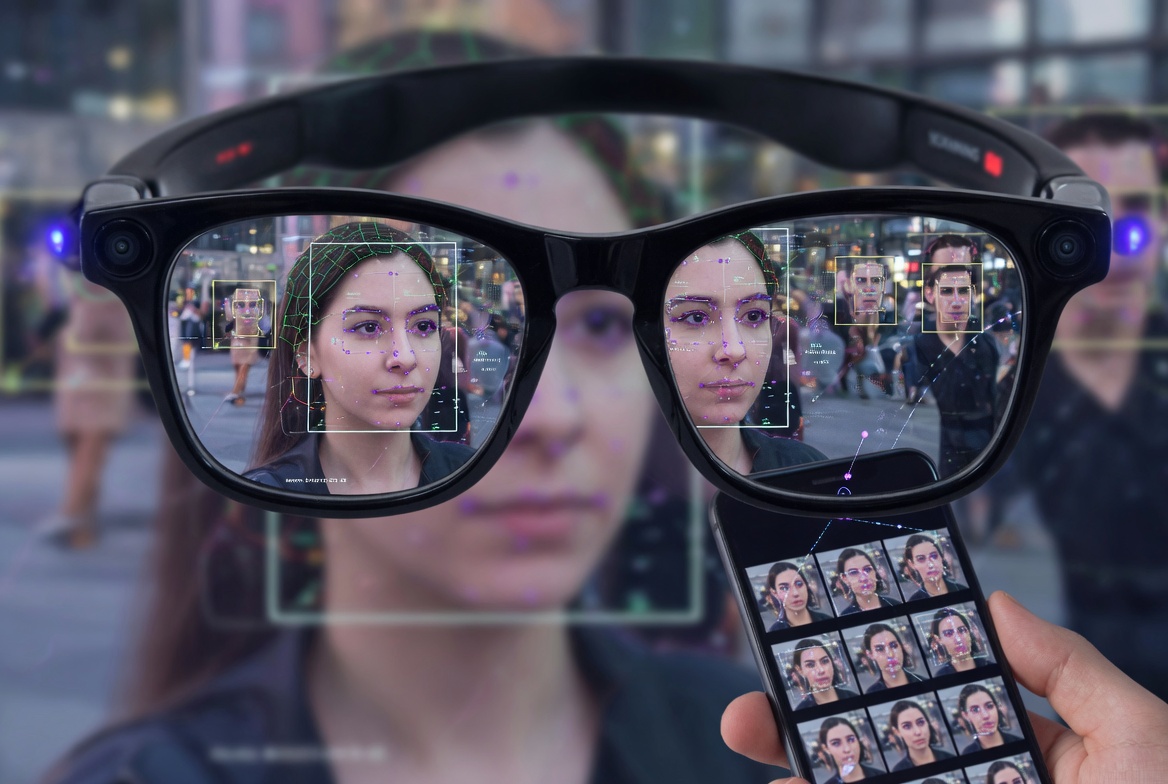
      At the heart of the issue is facial recognition. This isn’t a hypothetical concern or some far-off future scenario. The technology already exists, and in many cases, it’s frighteningly effective. With the right software, a pair of smart glasses could identify a stranger walking down the street, pull up their social media profiles, display personal details, and even track their movements over time. All of this could happen instantly, invisibly, and without the subject ever knowing.

      That should give anyone pause.

      Privacy, as traditionally understood, has always included a degree of anonymity in public spaces. You could walk through a city, attend an event, or simply go about your day without being cataloged, analyzed, or recorded by strangers. That expectation is now eroding. Smart glasses equipped with cameras—and potentially facial recognition—turn every wearer into a potential data collector.

      Supporters of this technology often argue that it’s simply the next step in convenience. After all, smartphones already take photos, record video, and run powerful apps. But there’s a meaningful difference between pulling out a phone to capture a moment and wearing a device that is always on, always watching, and always capable of identifying the people around you.

      Intent matters. Visibility matters. Consent matters.

      With a smartphone, there is at least a visible action when someone records or takes a picture. Smart glasses blur that line. A person could be scanning faces in a crowded room without any outward indication. The social contract—imperfect as it may be—breaks down when people can no longer tell when they are being observed or analyzed.

      There’s also the question of who controls the data. Facial recognition systems rely on massive databases of images and personal information. Where does that data come from? Who has access to it? How securely is it stored? And perhaps most importantly, how easily could it be misused?

      History doesn’t offer much reassurance here. Large tech platforms have repeatedly demonstrated a willingness to collect vast amounts of user data, often pushing the boundaries of privacy until public backlash forces a retreat. It’s not unreasonable to assume that, without clear limits, smart glasses could follow a similar trajectory—especially if the financial incentives are strong enough.

      Then there’s the issue of error and bias. Facial recognition systems are not infallible. They have been shown to produce false matches, sometimes with serious consequences. In a world where these systems are embedded in everyday eyewear, the potential for misidentification increases dramatically. An innocent person could be flagged, tracked, or confronted based on flawed data, all because someone nearby is wearing a device that quietly made a mistake.

      Some will argue that regulation can solve these problems. And to a degree, that’s true. Clear rules around data collection, storage, and usage are necessary. Restrictions on facial recognition in consumer devices could help preserve a baseline level of privacy. But regulation tends to lag behind innovation. By the time laws catch up, the technology is often already widespread and deeply integrated into daily life.

      That’s why the conversation needs to happen now, before smart glasses become as ubiquitous as smartphones.

      There’s a broader philosophical question at play here as well: just because we can do something, does that mean we should? Technological capability doesn’t automatically justify its application. A society that values individual freedom and personal privacy has to be willing to draw lines, even when doing so means limiting certain conveniences.

      None of this is to suggest that smart glasses are inherently harmful. Like any tool, they can be used responsibly. They have the potential to improve accessibility, enhance productivity, and open up new ways of interacting with the world. But the inclusion of facial recognition changes the equation in a fundamental way. It shifts the balance of power, placing unprecedented informational control in the hands of individuals—and, by extension, the companies that build and maintain these systems.

      That’s not a trivial shift.

      If this technology is going to move forward—and it likely will—it needs to do so with clear boundaries. Transparency should be non-negotiable. Users should know exactly what their devices are capable of, and the people around them should have reasonable expectations about how they might be affected. Opt-in systems, visible indicators when recording is active, and strict limits on facial recognition functionality are not unreasonable demands. They are basic safeguards.

      The alternative is a world where anonymity disappears entirely, replaced by a constant, invisible layer of identification and analysis. That may be efficient. It may even be useful. But it comes at a cost—one that shouldn’t be dismissed simply because the technology is impressive.

      Progress is not just about what we build. It’s about what we choose to protect along the way.

      Intel Software Space
      Share. Facebook Twitter Pinterest LinkedIn Tumblr Email
      Previous ArticleMeta’s Smart Glasses Facial Recognition Code Ignites New Privacy Firestorm
      Next Article Facebook Users To Receive Second Round Of Privacy Settlement Payments

      Related Posts

      British Lawmaker’s Lawsuit Against xAI Could Become Landmark Test of AI Accountability

      June 14, 2026

      AI Fingerprint Theft Fears Spark Debate Over Emerging Biometric Security Risks

      June 14, 2026

      UC Berkeley’s AI Problem Exposes a Growing Crisis in Higher Education

      June 13, 2026

      Five Eyes Alliance Warns China Is Using LinkedIn to Recruit Potential Spies

      June 13, 2026
      Add A Comment
      Leave A Reply Cancel Reply

      Editors Picks

      Five Eyes Alliance Warns China Is Using LinkedIn to Recruit Potential Spies

      June 13, 2026

      China Claims First Commercial Brain Chip Victory Over Musk

      June 13, 2026

      Schools Push Back Against Social Media as Concerns Over Student Well-Being Grow

      June 11, 2026

      AI Agents Enter the Arena as Silicon Valley Chases the Next Computing Revolution

      June 10, 2026
      Popular Topics
      Tesla UAE Tech Sundar Pichai Satya Nadella Satellite Space starlink spotlight Series B Stocks Viral Series A Samsung trending Taiwan Tech Tesla Cybertruck Tim Cook Software Startup SpaceX
      Major Tech Companies
      • Apple News
      • Google News
      • Meta News
      • Microsoft News
      • Amazon News
      • Samsung News
      • Nvidia News
      • OpenAI News
      • Tesla News
      • AMD News
      • Anthropic News
      • Elbit News
      AI & Emerging Tech
      • AI Regulation News
      • AI Safety News
      • AI Adoption
      • Quantum Computing News
      • Robotics News
      Key People
      • Sam Altman News
      • Jensen Huang News
      • Elon Musk News
      • Mark Zuckerberg News
      • Sundar Pichai News
      • Tim Cook News
      • Satya Nadella News
      • Mustafa Suleyman News
      Global Tech & Policy
      • Israel Tech News
      • India Tech News
      • Taiwan Tech News
      • UAE Tech News
      Startups & Emerging Tech
      • Series A News
      • Series B News
      • Startup News
      Tallwire
      Facebook X (Twitter) LinkedIn Threads Instagram RSS
      • Tech
      • Entertainment
      • Business
      • Government
      • Academia
      • Transportation
      • Legal
      • Press Kit
      © 2026 Tallwire. Optimized by ARMOUR Digital Marketing Agency.

      Type above and press Enter to search. Press Esc to cancel.