

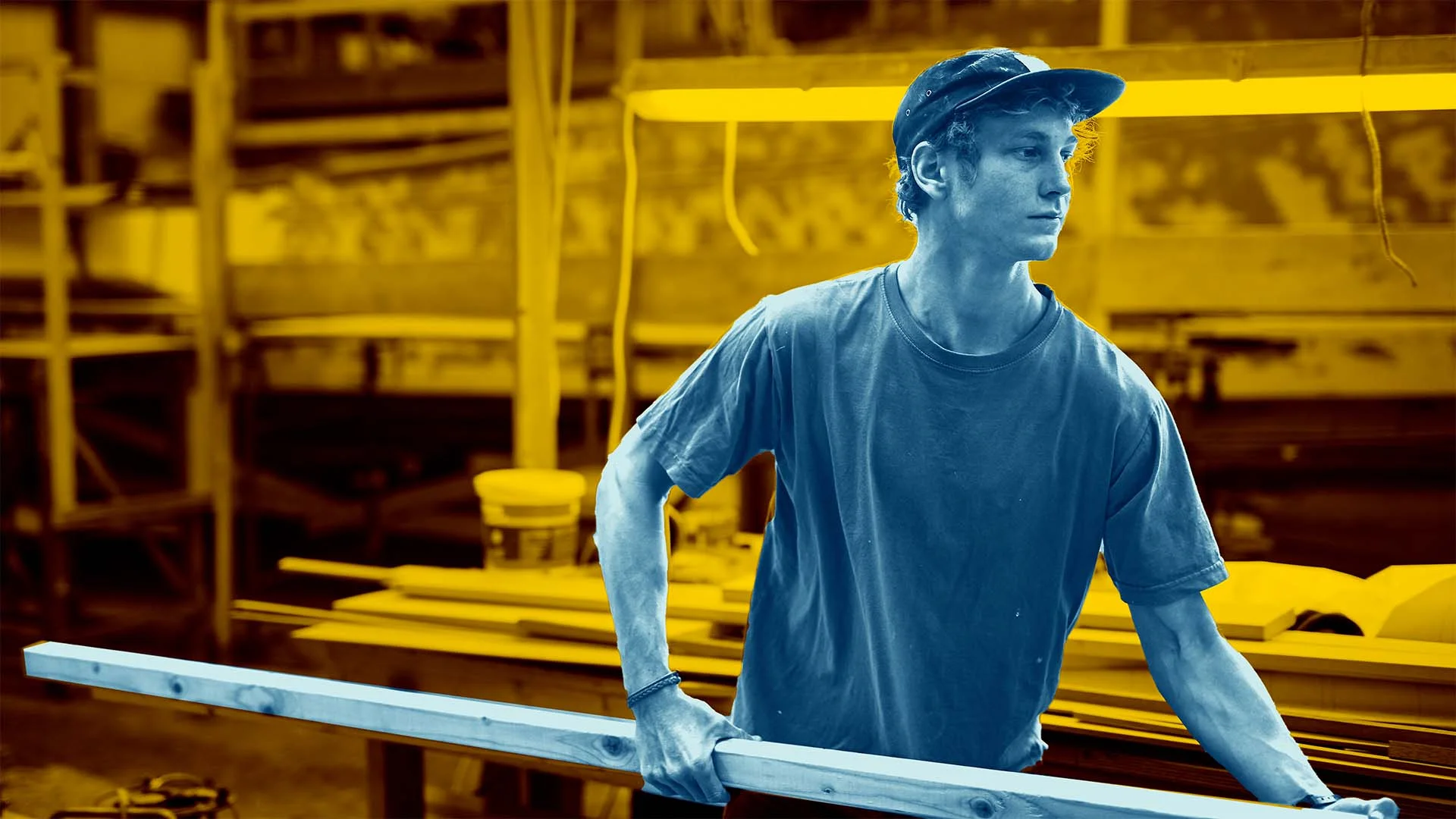
Despite relentless predictions that artificial intelligence will redefine the future of work, a growing body of research suggests Generation Alpha is taking a more practical view of career opportunities. A new survey of 2,000 parents and their children ages 5 to 16 found that an overwhelming majority of young people remain interested in careers requiring hands-on skills, creativity, and direct service to others. Rather than fearing automation, many children are gravitating toward occupations that involve building, repairing, protecting, and creating—jobs that are far more difficult for artificial intelligence to replace. The findings also indicate that parents increasingly recognize the value of skilled trades, reflecting a broader cultural shift away from the decades-long assumption that a four-year college degree is the only path to financial success.
Sources
- https://nypost.com/2026/06/23/lifestyle/heres-why-gen-alphas-still-interested-in-skilled-trades-in-the-ai-era
- https://nypost.com/2025/05/24/lifestyle/gen-z-turn-to-trade-jobs-ditch-white-collar-careers-amid-ai-uncertainty-poor-corporate-wages
- https://arxiv.org/abs/2605.00843
Key Takeaways
- Generation Alpha appears to be embracing careers that emphasize tangible skills, craftsmanship, and helping others, despite rapid advances in artificial intelligence.
- Rising college costs, growing uncertainty surrounding white-collar employment, and AI’s impact on office work are contributing to renewed interest in vocational education and skilled trades.
- Current labor-market research suggests AI is more likely to reshape many knowledge-based jobs than replace occupations requiring physical expertise, problem-solving, and on-site technical work.
In-Depth
For decades, America’s education establishment promoted the idea that success depended almost exclusively on obtaining a four-year college degree. Vocational education was frequently portrayed as a fallback option rather than a respected career path. That narrative now appears to be changing as economic realities collide with the rapid emergence of artificial intelligence.
New survey data indicate that today’s Generation Alpha is not buying into the notion that every future career belongs behind a computer screen. Instead, large numbers of young people express interest in occupations that allow them to build, repair, protect, and create with their hands. Firefighting, electrical work, welding, and similar professions continue to hold strong appeal because they combine practical skills with meaningful service and visible accomplishment.
This trend also reflects growing skepticism about the value proposition of expensive college degrees. Many older members of Generation Z have already discovered that substantial student debt does not necessarily guarantee stable employment or higher earnings. At the same time, AI continues to automate many routine white-collar tasks, making traditionally “safe” office careers appear less secure than they once did.
From a conservative perspective, these developments reinforce the importance of restoring respect for productive work, personal responsibility, and vocational excellence. Electricians, plumbers, mechanics, welders, HVAC technicians, and other skilled professionals perform work that keeps communities functioning and cannot easily be outsourced or replaced by software. While artificial intelligence will undoubtedly remain an important tool, America’s future prosperity will continue to depend upon millions of men and women whose expertise exists not only on a computer screen, but also in their minds, their experience, and their hands.