

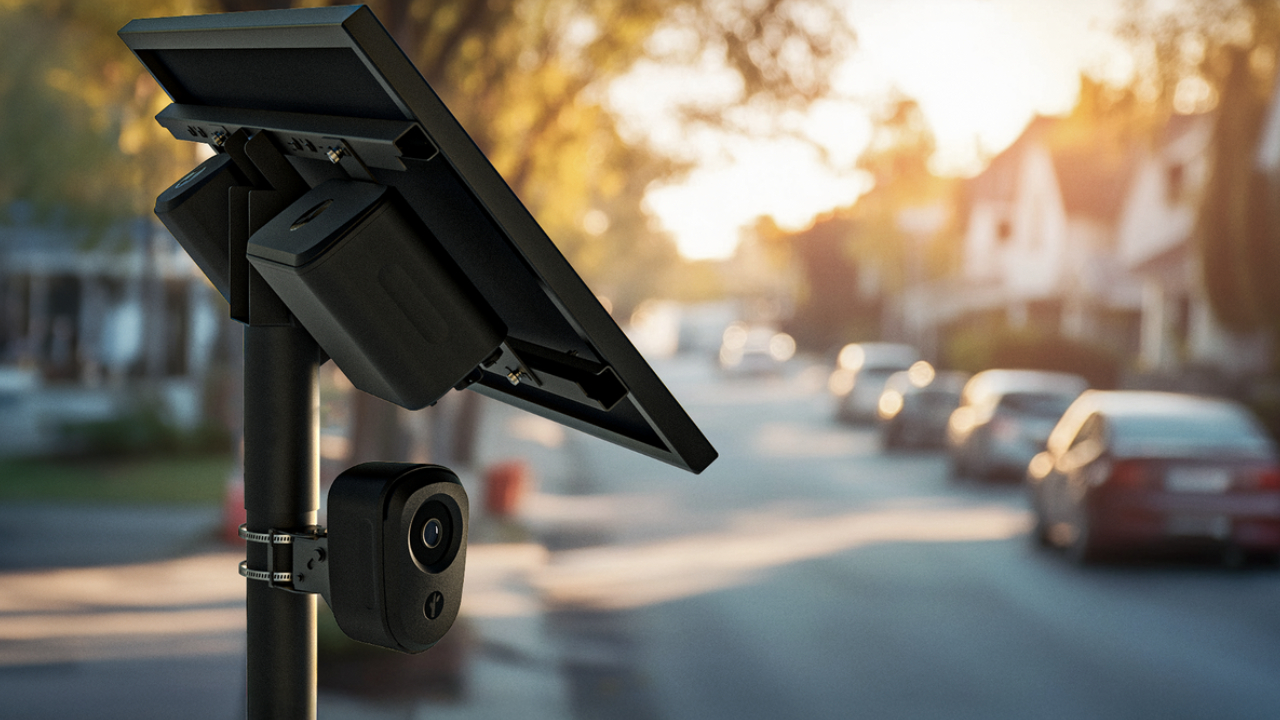
Flock Safety’s nationwide network of automated license plate reader cameras has ignited an increasingly bipartisan backlash as concerns mount over the ability of law enforcement to track the movements of millions of motorists. With roughly 120,000 cameras deployed across every state except Alaska and contracts with thousands of police agencies, the system has become a powerful investigative tool credited with locating stolen vehicles and criminal suspects. At the same time, citizens, privacy advocates, and even some local governments argue that the technology has outpaced meaningful legal safeguards, creating what critics view as a de facto nationwide vehicle-tracking network capable of recording the daily movements of law-abiding Americans. Recent resistance has included canceled contracts, moratoriums, lawsuits, vandalism, and demands for stronger oversight as communities wrestle with the balance between public safety and constitutional privacy protections.
Key Takeaways
- Flock Safety’s rapidly expanding camera network now provides thousands of law enforcement agencies with near-instant access to historical vehicle location data, dramatically expanding investigative capabilities.
- Opposition has become increasingly bipartisan, with conservatives, liberals, privacy advocates, and some local officials expressing concerns about warrantless surveillance, data retention, and inadequate oversight.
- Several jurisdictions have responded by suspending deployments, renegotiating contracts, or considering restrictions designed to strengthen privacy protections and limit government access to collected data.
In-Depth
The rapid spread of automated license plate reader technology illustrates how advances in surveillance often outpace the legal frameworks intended to govern them. While police departments emphasize the system’s ability to recover stolen vehicles, locate missing persons, and identify suspects more efficiently, many Americans are increasingly asking whether the government should possess the practical ability to reconstruct the travel history of ordinary citizens who have never been accused of a crime. That question has transformed what was once a niche law-enforcement tool into a broader debate over civil liberties.
From a conservative perspective, the concern extends beyond the technology itself to the enduring expansion of government power. History demonstrates that authorities rarely surrender investigative capabilities once acquired. Even if today’s officials use these systems responsibly, future administrations or agencies may adopt broader interpretations of acceptable surveillance. The existence of comprehensive vehicle movement databases raises legitimate questions about Fourth Amendment protections, due process, and the appropriate limits of state authority.
Recent decisions by several municipalities to suspend, restrict, or reconsider Flock deployments suggest that public skepticism is no longer confined to privacy advocacy groups. Communities are increasingly demanding clearer rules governing data ownership, retention periods, interagency sharing, judicial oversight, and independent auditing. The central issue is no longer whether automated license plate readers can help solve crimes—they unquestionably can—but whether Americans are willing to accept the creation of an infrastructure capable of monitoring virtually every driver’s movements in exchange for those investigative benefits.
Sources
- https://www.nytimes.com/2026/08/10/us/flock-cameras-can-track-every-car-in-america-police-love-them-citizens-dont.html
- https://www.latimes.com/california/story/2026-07-14/lapd-police-commission-license-plate-scanner-oversight
- https://www.atlantanewsfirst.com/2026/06/15/flock-says-its-cameras-dont-track-people-its-own-training-videos-say-otherwise-2
- https://www.houstonchronicle.com/news/houston-texas/article/flock-surveillance-cameras-backlash-22363916.php